Short answer: Noun Town 1.0 launched on Steam on 20 May 2026, exiting Early Access with 590+ reviews at 87% positive. The 1.0 release adds a free browser-based SRS practice tool (accessible from any device including mobile), a schools education edition, and all 12 language courses: Japanese, Korean, Chinese, Spanish, French, German, Italian, Russian, Greek, Arabic, and English. It costs $19.99 as a one-time purchase with no subscription.
It has been a long road from a Kickstarter project to a finished product on Steam, and this week Noun Town Language Learning officially crossed the finish line. Version 1.0 went live on 20 May 2026, closing out Early Access and marking the game as feature-complete.
This post covers everything that shipped with 1.0, what the developers have shared about what comes next, and why the browser SRS tool in particular deserves more attention than it has been getting.
If you have not come across it before: Noun Town is a 3D open-world language learning game on Steam. You play as a character dropped into a fully interactive town where every object, building, and NPC is part of the vocabulary curriculum. You pick things up, talk to characters using real speech recognition, and complete mini-games that require you to actually understand and recall words rather than just tap past them.
The learning system underneath is spaced repetition (SRS), the same memory science that powers dedicated study tools like Anki. But instead of sitting in front of a flashcard deck, you are playing a game. Words you find difficult come back more frequently. Words you have solidly learned appear less often. The game tracks it all quietly in the background while you explore.
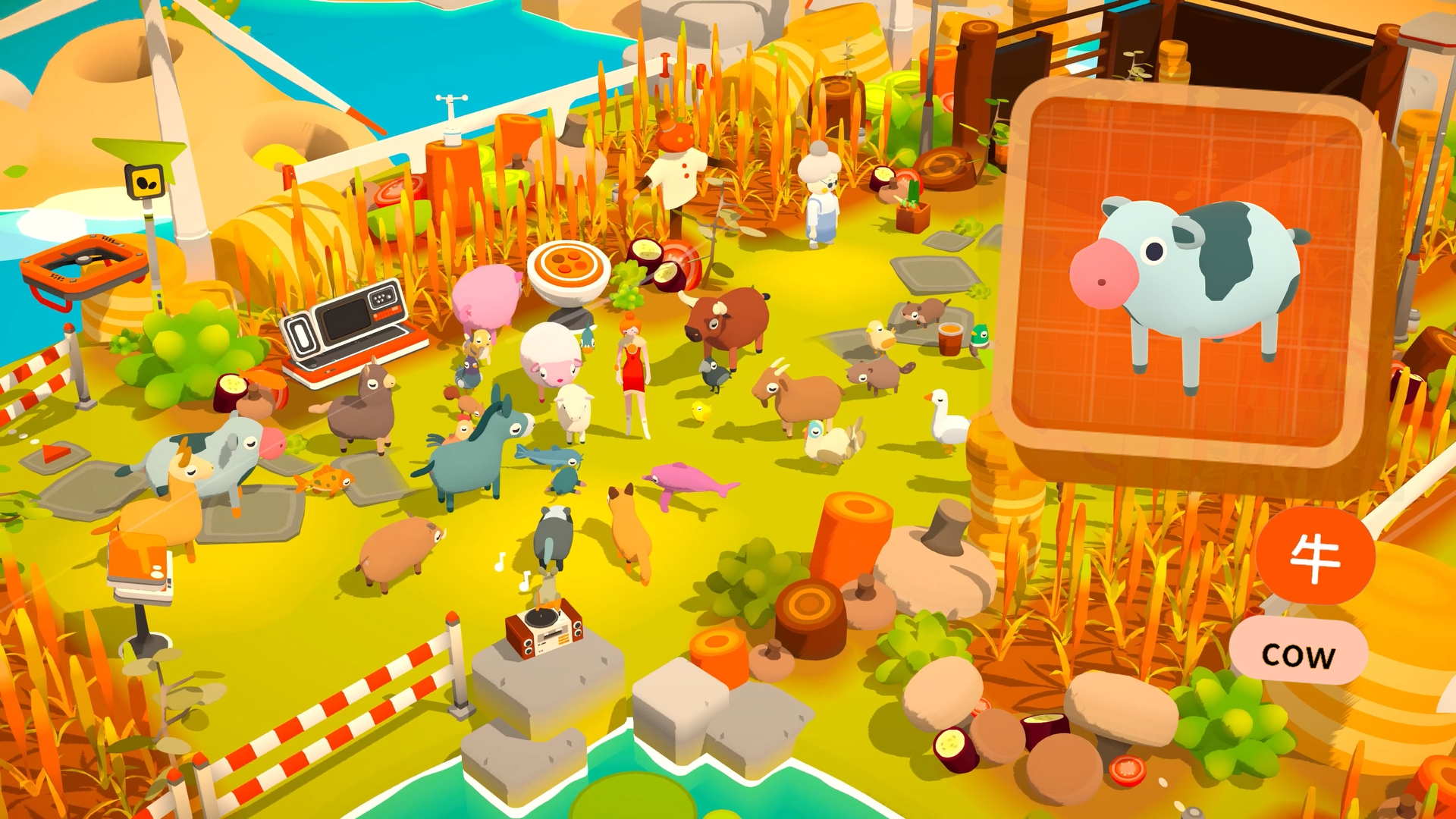
Vocabulary is introduced through the environment. You interact with objects to learn their names, with native speaker audio on every word.
The reason 1.0 matters is not just symbolic. During Early Access, the game was developed directly alongside its players. Features were added, adjusted, and sometimes rebuilt based on community feedback. The 1.0 release is the studio's sign that the core product is done: the full vocabulary curriculum, all 12 languages, the full set of mini-games, and the in-game SRS system are all present and stable. What launches from here is additions to that foundation rather than building it.
A few specific things shipped alongside the 1.0 release that are worth unpacking.
This is probably the biggest practical addition for existing players. Noun Town now has a free web-based spaced repetition review tool at noun.town. You link your Steam game to your noun.town profile using the in-game LINK feature, and your entire SRS review queue becomes available in any browser, on any device, including your phone.
The idea is straightforward. Most people do not carry their gaming PC with them everywhere. If you have a morning commute or five minutes between things, you can now keep up with your vocabulary reviews without needing to open Steam. The queue is the same one the game manages. The words that need reviewing appear, you work through them, and that feeds back into your progress.
The uptake on this has apparently been significant. Since the tool launched, tens of thousands of words have already been revised through the browser interface. That kind of engagement, especially on mobile, suggests there is real appetite for this kind of portable SRS access that does not require a standalone subscription app.
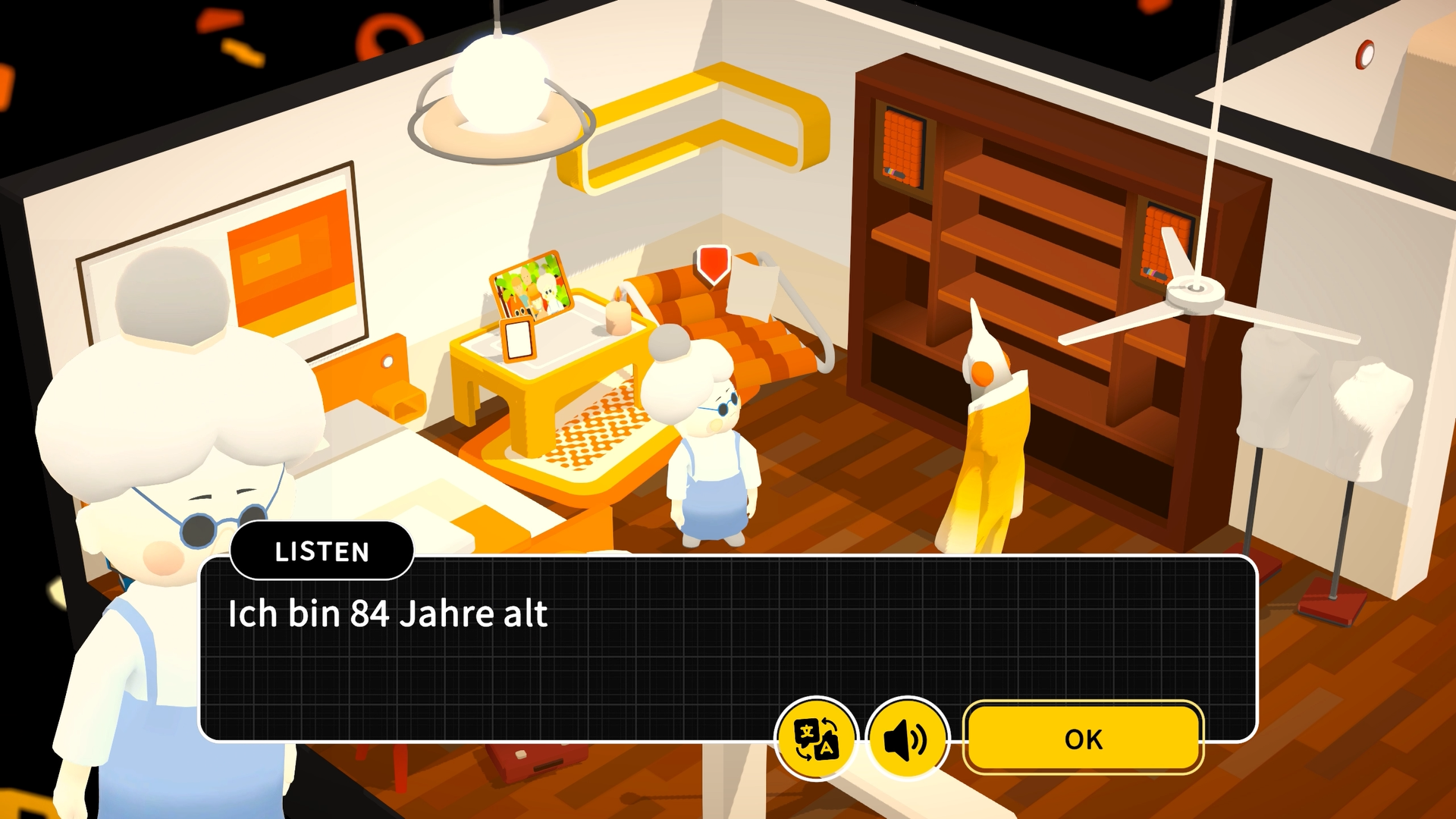
NPC conversations use real speech recognition. You speak your answers aloud and the game assesses whether you got it right.
One of the things that has been in Noun Town since Early Access but does not always get the credit it deserves is the real speech recognition built into NPC interactions. You do not type your answers. You say them. The game listens, assesses your pronunciation, and responds accordingly.
This puts Noun Town in a different category from most vocabulary apps, which rely entirely on reading and tapping. Speaking a word out loud is a different kind of memory encoding from recognising it on a screen, and it is the one that matters most when you actually need to use the language in the real world.
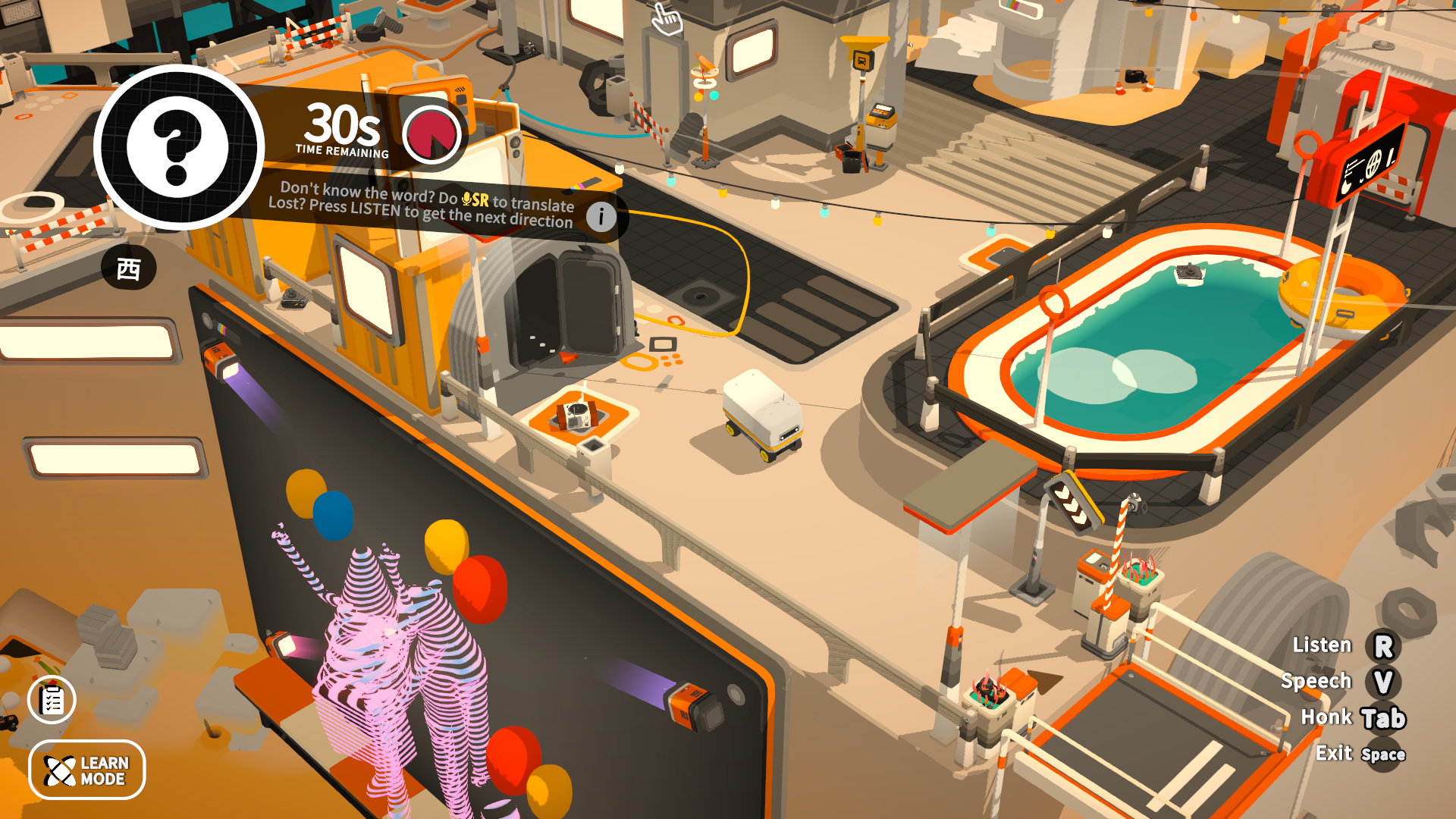
Mini-games like the delivery bot task require active recall, not passive recognition. You have to know the word to complete the task.
The mini-games in Noun Town are designed around active recall rather than passive recognition. There is a meaningful difference between seeing a word and its translation and having to produce the word yourself because the game is waiting for it.
The delivery bot is a good example. You receive instructions in your target language and have to correctly identify and deliver items around the town. If you do not know the word for what you are being asked to collect, you cannot complete the task. It is low-stakes, the kind of thing you figure out by exploring, but the recall it demands is real.
Alongside 1.0, the studio launched an education edition of Noun Town aimed at classroom use. This brings the game's vocabulary learning approach into schools with an appropriate licensing structure for educational settings.
Given that Noun Town was nominated for a Bett Award for Best Innovation in Education, the education market is clearly somewhere the studio sees genuine opportunity. There are not many vocabulary tools that are genuinely fun for students to use and also grounded in solid memory science. The game fills a gap there.
If you work in education and want details on licensing, the studio can be reached at contact@noun.town.
All 12 languages are included in the standard $19.99 purchase. There are no separate language packs, no additional charges for switching between them, and no subscription.
Each language has native speaker audio throughout, not text-to-speech. The audio matters a lot more than people expect. When you are building a mental connection between a word and its pronunciation, hearing a real voice rather than a synthesised one makes a genuine difference to how the word sounds in your head when you try to use it later.
Noun Town VR Language Learning launches on Meta Quest, bringing open-world vocabulary learning to virtual reality. The studio, founded by Dr. Jack Ratcliffe, a technology and cognition researcher, builds the game around his research into how spatial environments improve word retention.
Noun Town Language Learning launches on Steam in Early Access, bringing the same open-world vocabulary approach to PC and Mac players without a VR headset.
Early Access development runs in close collaboration with the player community. Every major Kickstarter milestone is delivered. Languages, mini-games, NPC interactions, and the SRS system are built out based on direct feedback from players.
Noun Town 1.0 launches on Steam. The game exits Early Access with 590+ reviews at 87% positive, 200,000+ players across all platforms, 12 languages, and a free browser SRS tool.
The 1.0 release closes out Early Access, but it is not the end of development. Here is what the studio has shared about where things go from here.
"Noun Town is now a fully featured vocabulary tool. The core product is done and we are proud of it. We may add more content in the future, but right now we are focused on supporting experiences and finding new ways to engage with the existing vocabulary. That might include a new game linked to the series."
"We are also seeing huge uptake on the browser SRS tool, including on mobile, which has already seen tens of thousands of words revised. That is exactly what we hoped for: people keeping up with their vocabulary between sessions, without needing to open Steam."
"We are not working on new languages at the moment, though that may change in the future. Our focus is on making the current 12 languages as rich and effective as possible."
"We are genuinely grateful for the reaction to the full release. It has been a long process and hearing from players who have actually made progress in a new language is what makes it worthwhile."
Dr. Jack Ratcliffe, co-founder, Super Hyper Mega
Reading between the lines a little: the mention of "a new game linked to the series" is interesting. It could be something quite different from the open-world vocabulary format, given the studio is actively exploring new ways to engage with the existing content. No details have been announced, but it is something worth watching.
There is a lot of noise right now about subscription fatigue. Learners are increasingly aware of how quickly small monthly charges stack up, and language apps have leaned heavily on recurring billing. Duolingo Super, Babbel, Rosetta Stone, Pimsleur: almost every major competitor charges monthly or annually.
Noun Town charges $19.99 once. You own the game. There are no tiers, no locked features, no gentle nudges toward an upgrade. The browser SRS tool is free for game owners. All 12 languages are included. If they add content updates, those have historically been free.
For a lot of learners, this is actually a meaningful reason to choose Noun Town over a subscription app. Paying once and knowing you are done is a different psychological experience from subscribing to something, and for vocabulary practice specifically, where you might dip in and out over months or years, the one-time ownership model just makes more sense.
Duolingo is the comparison that comes up most often, so it is worth being direct about it. Duolingo is good at habit formation. The streak system is genuinely effective at keeping people opening the app every day. What it is less good at is vocabulary depth. A typical Duolingo lesson covers words through translation exercises where you are recognising correct answers from multiple choice rather than producing the word yourself.
Noun Town does not have a streak. What it has is a game you actually want to come back to, because it is fun, and a vocabulary system that demands active recall. Whether that is better for you depends on what you need. If you struggle to stay consistent, Duolingo's streak mechanics might be the right tool. If you are already motivated and want the vocabulary to actually stick, Noun Town is the stronger option.
There is also a free demo on Steam, so you can try before deciding.
Noun Town has received three industry awards and been shortlisted for seven more across technical achievement, indie gaming, and VR disciplines. The studio was also nominated for a Bett Award for Best Innovation in Education, one of the more prestigious recognitions in educational technology.
For an independent studio, that track record is not nothing. It says something about the quality bar the team has maintained throughout Early Access, and it gives new players a degree of confidence that this is not a hobby project slapped on Steam as a language learning cash-in. There are real researchers and developers behind it.
Noun Town 1.0 is available on Steam for PC and Mac. A free demo is available before you buy. If you already own the game, the browser SRS tool is available at noun.town by linking your Steam account using the in-game LINK feature.
The VR edition, Noun Town VR Language Learning, is a separate title available on Meta Quest and Steam VR for headset owners.
For full details on supported languages, how the learning system works, and platform information, the main game page is at noun.town/language-learning-game.
Play Noun Town on SteamNoun Town 1.0 is the full release of the Noun Town Language Learning game on Steam, exiting Early Access on 20 May 2026. It is a 3D open-world vocabulary game supporting 12 languages with native speaker audio, speech recognition, spaced repetition, and mini-games. It costs $19.99 as a one-time purchase.
The 1.0 release adds a free browser-based SRS practice tool at noun.town (accessible on any device including mobile), an education edition for schools, and marks the completion of all features built during Early Access. The core vocabulary system, all 12 languages, and the full mini-game set are all included.
Noun Town supports 12 languages: Japanese, Korean, Mandarin Chinese, Spanish (Spain), Spanish (Latin America), French, German, Italian, Russian, Greek, Egyptian Arabic, and English. All are included in the one-time $19.99 purchase price.
There is a free demo on Steam. The full game costs $19.99 with no subscription, no ads, and no ongoing charges. The browser SRS review tool is also free for players who own the game.
It is a free web-based spaced repetition review tool available at noun.town. Game owners link their Steam account using the in-game LINK feature and can then access their full vocabulary review queue from any browser or phone, without needing to open Steam.
The studio is not working on new languages at the moment, though that may change in future. The current focus is on expanding how players learn the existing 12 languages, including potentially a new game linked to the series.
Yes. An education edition launched alongside 1.0. It is designed for classroom use with an appropriate licensing structure. Contact the studio at contact@noun.town for details on availability.
The Noun Town series has reached more than 200,000 players across all platforms. The Steam version has over 590 reviews at 87% positive, making it one of the highest-rated educational games on Steam.
Yes. Noun Town 1.0 runs on both PC and Mac. A free demo is available on both platforms through Steam.
Noun Town has won three industry awards and been shortlisted for seven more, across technical achievement, indie gaming, and VR categories. It was also nominated for a Bett Award for Best Innovation in Education.
Try the game for free on Steam before buying.
Play Noun Town on Steam ← Back to blog