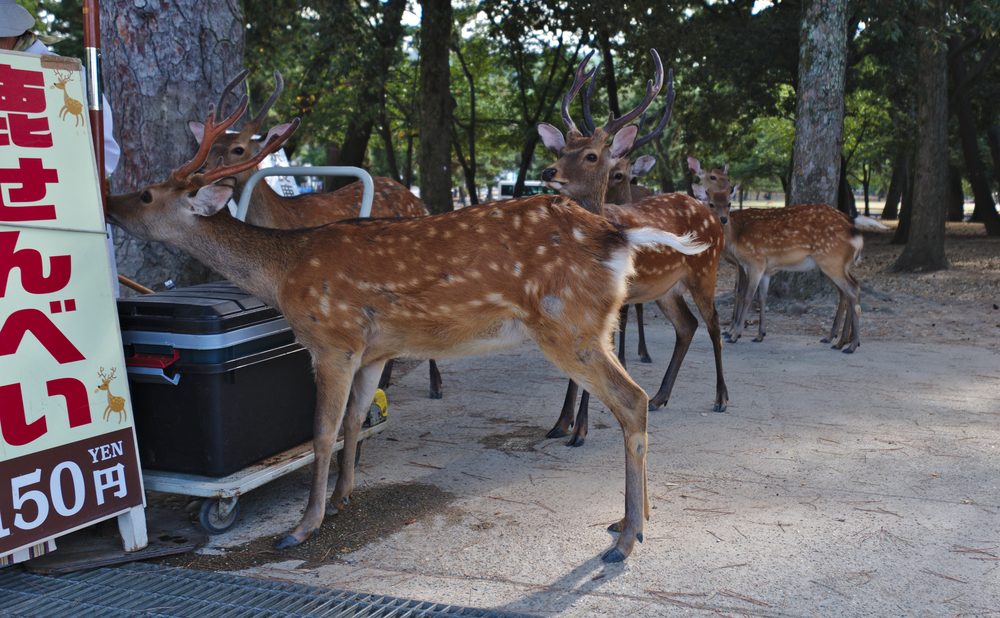
Photo: Steffen Flor / Wikimedia Commons (CC BY-SA 2.0)
Animal vocabulary is one of the first word sets most Japanese courses introduce, right after greetings and numbers, because the words are concrete and genuinely useful once you start reading children's books, watching nature documentaries, or visiting a zoo in Japan. This guide covers 50 common Japanese animal words, grouped into pets and farm animals, wild animals, birds, and sea creatures and insects. Each word is shown in kanji or kana with furigana, a plain pronunciation guide, and its English meaning, so you can start using them correctly from the first read-through.
Short answer: This list covers 50 Japanese animal words across four groups: 12 pets and farm animals, 14 wild animals, 8 birds, and 16 sea creatures and insects. Each word includes furigana, a plain pronunciation guide, and a note on its correct Japanese animal counter.
Animal vocabulary shows up constantly once you start paying attention to it in Japanese media: picture books, nature programs, zoo signage, and the kind of small talk that comes up when someone mentions a pet. It is also some of the most concrete vocabulary a new language has to offer. You can picture a dog or a whale without needing an abstract explanation, which makes the words easier to attach to memory than something like "however" or "nevertheless."
There is a second reason animal words are a good early target in Japanese specifically. A lot of common animal names use kanji that show up everywhere else in the language. Learning 犬 (いぬ, inu, dog) also means recognizing the same character in words like 犬小屋 (いぬごや, doghouse), and 魚 (さかな, sakana, fish) is the same kanji you will see on restaurant menus and in words like 魚市場 (うおいちば, fish market). According to the overview of kanji on Wikipedia, Japanese uses several thousand characters in everyday writing, and animal words are a low pressure way to start recognizing a handful of the most common ones.
Finally, animal words are high frequency without being overly simple. A beginner course that only covered greetings and numbers would leave you unable to describe much of the real world. Animals bridge that gap early, giving you enough vocabulary to talk about a trip to the zoo, a pet at home, or a nature documentary within the first few weeks of study.
Notice the mix of scripts here. Native or long established animals like 鹿 (deer) and 狐 (fox) have their own kanji, while animals that are not originally from Japan, like キリン (giraffe), シマウマ (zebra), and ライオン (lion), are written in katakana instead. That split is a genuinely useful shortcut: if an animal's name is in katakana, there is a decent chance it was introduced to Japan from elsewhere.
Watch this one: Japanese does not count animals the same way it counts objects, and birds get their own special case. Most small to medium animals use the counter 匹 (hiki), as in 犬一匹 (inu ippiki, one dog), while large animals like horses, cows, and elephants switch to 頭 (tou). Birds, including ペンギン and フクロウ above, use yet another counter, 羽 (wa), so "one owl" is フクロウ一羽 (fukurou ichiwa), not フクロウ一匹. There is no shortcut for which counter goes with which animal. It is simply something you pick up word by word.
Several words on this list, like 犬, 猫, and 魚, use a single kanji character that most Japanese learners end up memorizing early simply because it appears so often. Others, like うさぎ (rabbit) and ねずみ (mouse), are conventionally written in hiragana even though older kanji forms exist, because the kanji versions are rare enough that native speakers mostly skip them too.
Furigana, the small hiragana printed above or beside a kanji character to show its reading, is what makes it possible to read a word like 鷲 (わし, eagle) correctly before you have that specific kanji memorized. This is also the approach Noun Town settled on for teaching Japanese. The game used to show full romaji under every word, but feedback on that was mixed: some players liked having it, others felt it let them avoid learning the actual script. Furigana turned out to be the better middle ground, since it still asks you to read kana and kanji rather than Latin letters, while giving you the pronunciation right there if you need it.
If you want an official benchmark for how much kanji and vocabulary a given level of Japanese actually requires, the JLPT (Japanese Language Proficiency Test) website breaks down the five levels in detail, and the Japan Foundation, which administers the test, publishes additional resources for learners at every stage.
Fifty words in one sitting is too many for almost anyone to retain. These methods spread the work out in a way that actually sticks.
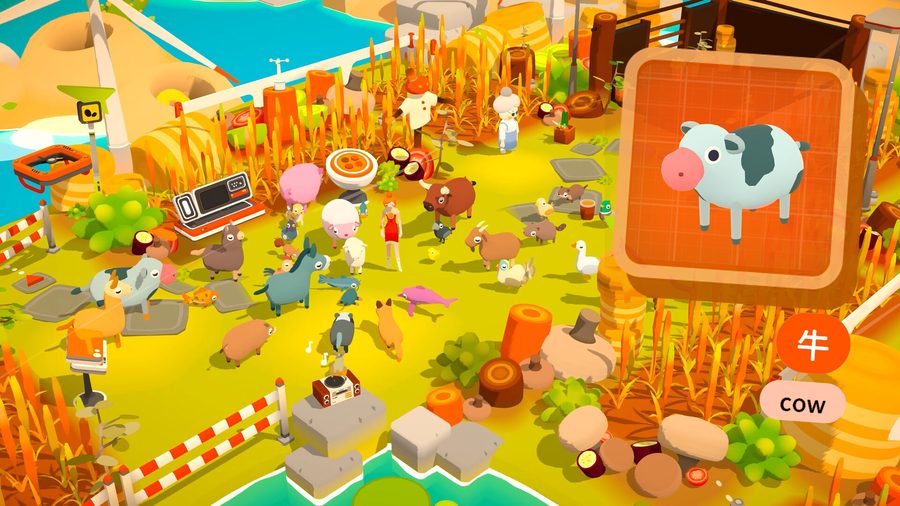
Screenshot from the Noun Town Steam store page, showing a farmyard vocabulary scene
A word list like this one is a good starting point, but vocabulary tends to stick better when it is attached to something more than a translation on a page. This is the idea behind Noun Town's language learning game, which places animal vocabulary and hundreds of other everyday words inside a 3D world, so you encounter 牛 standing in an actual field or 魚 swimming in an actual pond rather than sitting in a column next to its English translation.
Every word in the game is spoken by a native speaker, and a built-in spaced repetition system brings words back for review at the intervals that best support long term memory, the same principle behind the study tips above, just handled automatically instead of something you have to track yourself. The game also includes speech recognition, so you can practice saying クジラ or コウモリ out loud and get feedback on your pronunciation rather than only reading it silently.
Noun Town is a one-time $19.99 purchase on Steam for PC and Mac, with no subscription and nothing paywalled once you own it. That was a deliberate decision. The team behind it used the major subscription language apps themselves, found the ads and the locked lesson tiers frustrating, and heard the same complaint from a lot of other learners before building something without either.
Want to see animal vocabulary taught this way in action?
Try Noun Town on SteamThis guide covers 50 words, split into 12 pets and farm animals, 14 wild animals, 8 birds, and 16 sea creatures and insects. Each one includes furigana and a plain pronunciation guide.
All three. Common animals like inu (dog) and neko (cat) use kanji with furigana. Animals without a widely used kanji form, like usagi (rabbit), are usually written in hiragana, and animals not native to Japan, like kirin (giraffe) or pengin (penguin), are almost always written in katakana.
Japanese uses different counter words depending on the animal. Most small to medium animals use hiki, large animals like horses, cows, and elephants use tou, and birds use wa. Using the wrong counter sounds noticeably off to a native speaker, so it is worth learning alongside the vocabulary itself.
Yes. Furigana is small hiragana text printed above or beside a kanji character to show its reading, and it is the standard way Japanese learners handle unfamiliar kanji before they have memorized it outright.
Most learners can recognize and recall a list of 50 animal words within one to two weeks of regular short review sessions, and retain them long term if the words are revisited a few times over the following month rather than studied once and dropped.
Yes, particularly for retention. Seeing a word attached to an animal in a real scene, hearing it spoken by a native voice, and being tested on it again later through spaced repetition tends to stick better than reading a flat list alone, which is the basic idea behind vocabulary-focused language games.
Katakana is typically used for animals that are not native to Japan or were introduced relatively recently, such as kirin (giraffe) or raion (lion). Native Japanese fauna, like shika (deer) or kitsune (fox), generally have an established kanji form instead.
Break the list into smaller themed groups rather than trying to learn all 50 at once, aim for around 5 to 8 new words a day, and review each word again within 24 hours and then a few days later. Spaced repetition, where you see a word again right before you would naturally forget it, is consistently shown to beat single-session cramming.
Yes. Animals are typically introduced soon after greetings and numbers, since the words are concrete, easy to picture, and give beginners an early chance to recognize common kanji in a low pressure context.
Noun Town teaches vocabulary, including animal words, inside a 3D world where each word is tied to a real object or scene, backed by native speaker audio, furigana above any kanji, and a spaced repetition review system, rather than through a flat list or flashcard deck alone.