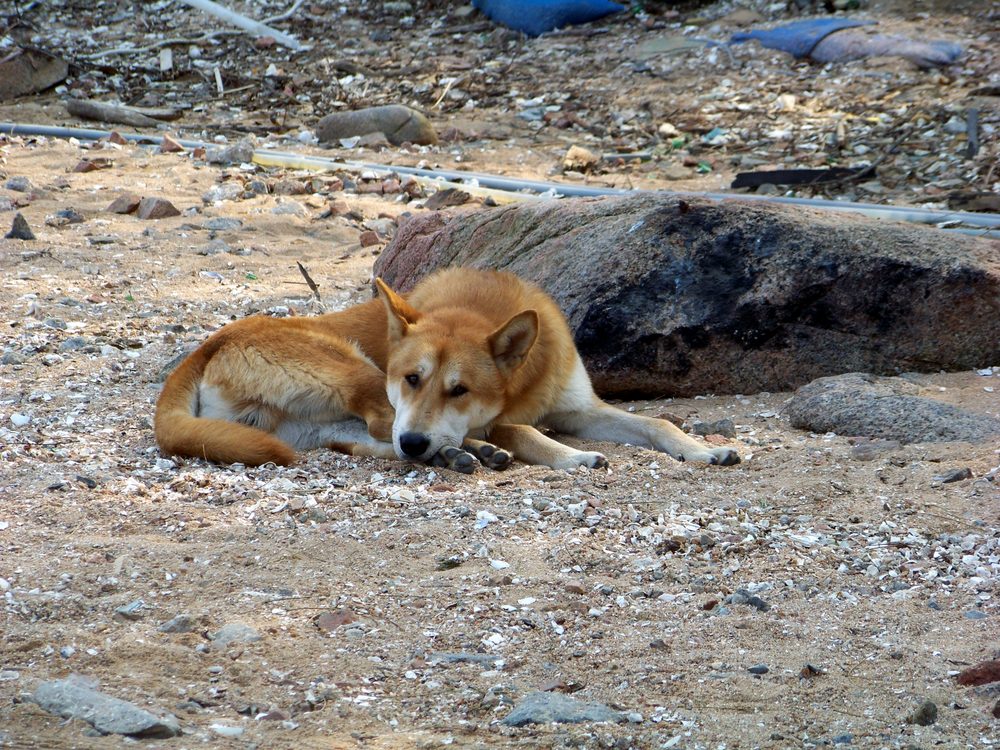
Photo: bein_korean / Wikimedia Commons (CC BY 2.0)
Animal vocabulary is one of the first word sets most Korean courses introduce, right after Hangul itself and basic greetings, because the words are concrete and genuinely useful once you start reading children's books, watching Korean shows, or visiting a zoo in Korea. This guide covers 50 common Korean animal words, grouped into pets and farm animals, wild animals, birds, and sea creatures and insects. Each word is shown in Hangul with a plain pronunciation guide and its English meaning, so you can start using them correctly from the first read-through.
Short answer: This list covers 50 Korean animal words across four groups: 12 pets and farm animals, 14 wild animals, 8 birds, and 16 sea creatures and insects. Each word includes Hangul, a plain pronunciation guide, and uses the single Korean animal counter, mari, regardless of species or size.
Animal vocabulary shows up constantly once you start paying attention to it in Korean: children's shows, nature documentaries, zoo trips, and the kind of small talk that comes up when someone mentions a pet. It is also some of the most concrete vocabulary a new language has to offer. You can picture a dog or a tiger without needing an abstract explanation, which makes the words easier to attach to memory than something like "however" or "nevertheless."
There is a second, more practical reason to start here. Korean animal words are a genuinely good training ground for Hangul reading practice, since most of them are short, two or three syllable blocks that use common consonants and vowels you will see again and again elsewhere. According to the overview of Hangul on Wikipedia, the alphabet was specifically designed in the 15th century to be learned quickly, and a list like this one is a practical way to put that design to the test early on.
Finally, animal words tend to be high frequency without being overly simple. A beginner course that only taught Hangul and numbers would leave you unable to describe much of the real world. Animals bridge that gap early, giving you enough vocabulary to talk about a trip to the zoo, a pet at home, or a wildlife documentary within the first few weeks of study.
A few of these are worth a second look because they are built from other Korean words rather than being a single root. 얼룩말 (eollukmal, zebra) literally combines eolluk (spots or patches) with mal (horse), and 코뿔소 (kobbulso, rhinoceros) combines ko (nose) with bbul (horn) and so (cow or ox), essentially describing the animal rather than naming it with a borrowed term.
Watch this one: Korean does not split animals into different counter words by size the way some other languages do. Every animal on this list, from 쥐 (mouse) to 코끼리 (elephant), uses the same counter, 마리 (mari), when you are counting them. One dog is 개 한 마리 (gae han mari), one elephant is 코끼리 한 마리 (kokkiri han mari), and the counter itself never changes, only the number in front of it. This makes Korean animal counting noticeably easier than in languages that assign different counters by animal size.
돌고래 (dolgorae, dolphin) is another compound word worth noticing. It is built from gorae, the word for whale already on this list, which reflects how dolphins were historically grouped together with whales in everyday Korean rather than treated as a wholly separate category of animal. Spotting patterns like this makes the list easier to remember as a connected set of words rather than 16 unrelated entries.
If you are brand new to Korean, it is worth learning to read Hangul itself before memorizing all 50 words above, even though it only takes a short amount of time. Hangul is a true alphabet, not a set of pictographic characters, and each block of Hangul breaks down into individual consonant and vowel letters that combine in predictable ways. The National Institute of Korean Language, the official government body responsible for standardizing the language, publishes reference material on exactly how the system works, and the King Sejong Institute Foundation, named after the king credited with commissioning Hangul, runs Korean language programs for learners outside Korea.
Once Hangul itself clicks, which usually takes a few days to a couple of weeks of practice, reading through a themed vocabulary list like this one becomes far more straightforward, since you are only learning new words rather than new words and a new writing system at the same time.
Fifty words in one sitting is too many for almost anyone to retain. These methods spread the work out in a way that actually sticks.

Screenshot from the Noun Town Steam store page, showing a timed recall challenge
A word list like this one is a good starting point, but vocabulary tends to stick better when it is attached to something more than a translation on a page. This is the idea behind Noun Town's language learning game, which places animal vocabulary and hundreds of other everyday words inside a 3D world, so you encounter 소 standing in an actual field or 물고기 swimming in an actual pond rather than sitting in a column next to its English translation.
Every word in the game is spoken by a native speaker, and a built-in spaced repetition system brings words back for review at the intervals that best support long term memory, the same principle behind the study tips above, just handled automatically instead of something you have to track yourself. The game also includes speech recognition, so you can practice saying 호랑이 or 코끼리 out loud and get feedback on your pronunciation rather than only reading it silently.
Noun Town is a one-time $19.99 purchase on Steam for PC and Mac, with no subscription and nothing paywalled once you own it. That was a deliberate decision. The team behind it used the major subscription language apps themselves, found the ads and the locked lesson tiers frustrating, and heard the same complaint from a lot of other learners before building something without either.
Want to see animal vocabulary taught this way in action?
Try Noun Town on SteamThis guide covers 50 words, split into 12 pets and farm animals, 14 wild animals, 8 birds, and 16 sea creatures and insects. Each one includes Hangul and a plain pronunciation guide.
No. Korean nouns, including animal words, do not have grammatical gender at all, and the base word itself does not change for plural. Context usually makes number clear, and a plural marker, deul, can be added when it needs to be explicit, as in gae deul for dogs.
Mari. Unlike Japanese, which uses different counters for different animal sizes, Korean uses mari for every animal regardless of species or size, so gae han mari (one dog) and koggiri han mari (one elephant) both use the same counter word.
Not particularly. Hangul is a phonetic alphabet designed to be learned quickly, and most learners can read it within a few days to a couple of weeks, well before they need a large vocabulary list like this one.
Most learners can recognize and recall a list of 50 animal words within one to two weeks of regular short review sessions, and retain them long term if the words are revisited a few times over the following month rather than studied once and dropped.
Yes, particularly for retention. Seeing a word attached to an animal in a real scene, hearing it spoken by a native voice, and being tested on it again later through spaced repetition tends to stick better than reading a flat list alone, which is the basic idea behind vocabulary-focused language games.
A handful of Korean animal words share a root or a sound pattern, such as dolgorae (dolphin) containing gorae (whale), since dolphins were historically described as a smaller relative of whales. These overlaps are a useful memory aid rather than something to worry about.
Break the list into smaller themed groups rather than trying to learn all 50 at once, aim for around 5 to 8 new words a day, and review each word again within 24 hours and then a few days later. Spaced repetition, where you see a word again right before you would naturally forget it, is consistently shown to beat single-session cramming.
Yes. Animals are typically introduced soon after Hangul, greetings, and numbers, because the words are concrete, easy to picture, and useful for practicing counters and basic sentence patterns early on.
Noun Town teaches vocabulary, including animal words, inside a 3D world where each word is tied to a real object or scene, backed by native speaker audio and a spaced repetition review system, rather than through a flat list or flashcard deck alone.