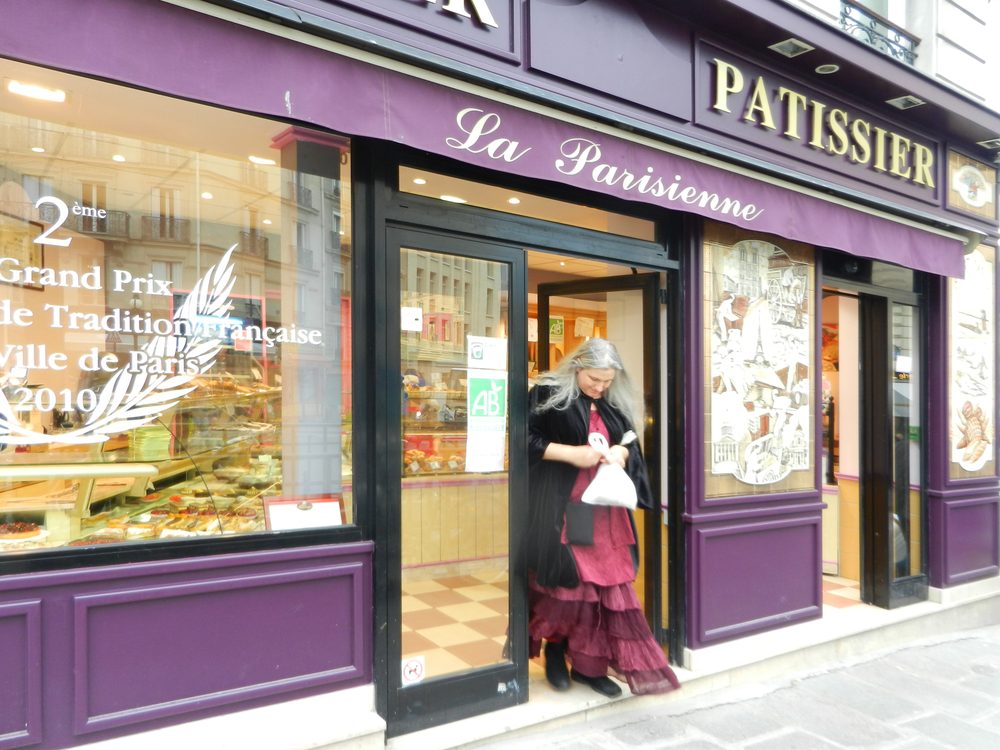
Photo: Lake Lou / Wikimedia Commons (CC BY 2.0)
A good Duolingo alternative for French is one that covers what Duolingo tends to gloss over: why a noun is masculine or feminine, how verb conjugation actually maps across tenses, and how words really sound once liaison runs them together. For most learners that means Noun Town for vocabulary immersion with native audio, Babbel or Language Transfer for grammar, and italki for real speaking practice. No single app does all three well, which is the main reason French learners eventually go looking for something to pair with, or replace, Duolingo.
Short answer: For vocabulary immersion with native French audio, Noun Town is the strongest pick at $19.99 one time, no subscription. For structured grammar, Babbel runs roughly $7 to $15 a month depending on plan length. For free grammar logic, Language Transfer's French course costs nothing. For speaking practice, italki tutors start around $5 an hour. Most serious French learners combine at least two of these rather than sticking with Duolingo alone.
Duolingo is a genuinely good habit-forming tool. The streaks, the daily reminders, the bite-sized lessons, all of it is designed to get you opening the app every day, and for a lot of people that works. The problem shows up a few months in, once the novelty wears off and the gaps in what you actually know start to matter.
French in particular tends to expose those gaps faster than some other languages. Duolingo teaches largely through translation and pattern matching, which works fine for vocabulary but is a weak way to absorb a grammar system with as many moving parts as French has. Learners often find they can complete a whole tree and still freeze up trying to order a coffee, because the app never explained why "le café" takes "le" and "la boulangerie" takes "la," it just drilled the pairing until it stuck, sometimes.
There is also the business model to consider. Duolingo's free tier comes with ads and a limited number of mistakes before you hit a paywall or a "hearts" system that locks you out. Plenty of learners find that frustrating enough on its own to start looking elsewhere, regardless of how the actual French course holds up. It is one of the reasons the team behind Noun Town built the game as a single $19.99 purchase with nothing held back afterward, having used the big mobile apps themselves and run into the same ad breaks and paywalled tiers other learners complain about.
Grammatical gender is the first wall most French learners hit. Every noun is either masculine or feminine, and that choice ripples out into the article you use, the adjective endings, and even some pronouns. English has nothing comparable, so there is no intuition to lean on. Duolingo drills gender through repeated exposure, which works eventually for common words but leaves learners guessing on anything less frequent, since the app rarely explains the handful of patterns (like most words ending in "-tion" being feminine) that would make guessing far more reliable.
Verb conjugation is the second wall, and it is a bigger one. French conjugates for person, number, tense and mood, and irregular verbs like "être," "avoir," and "aller" show up constantly in everyday speech, so you cannot avoid them while you get comfortable with the regular patterns. Duolingo introduces conjugated forms as they come up in sentences rather than mapping out the system directly, which means learners often develop a feel for individual sentences without ever seeing the full shape of, say, the passé composé versus the imparfait.
The third wall is pronunciation, specifically liaison and elision, the way French blends word endings into the next word depending on what follows. "Les amis" is pronounced with a hard "z" sound connecting the two words, something a written sentence gives no hint of. Duolingo's audio tends to be clear but deliberately slowed down, which does not prepare learners for how quickly liaison happens in natural speech. Hearing native pace audio attached to real context, rather than an isolated audio clip read by a narrator, closes that gap far faster.
Here is how the main options stack up, based on what each one is actually built to do well.
Noun Town is a PC and Mac game on Steam that teaches French through a 3D open world rather than a lesson screen. Objects around you are labelled in French, characters speak using native French audio at natural pace, and you practise speaking back using built-in speech recognition. A spaced repetition system tracks which words are sticking and schedules reviews so you are not left guessing what to revisit. French is one of 12 supported languages, and it has 590+ reviews on Steam with an 87% positive rating across the series. It costs $19.99 as a one-time purchase, no subscription, and there is a free demo available before you buy.
Babbel is a paid subscription app that has consistently put more grammar explanation into its French course than Duolingo does. Lessons are organised around practical situations, ordering food, asking directions, making small talk, and each one walks through the grammar behind the sentences rather than just having you translate them. It is not free, running roughly $7 to $15 a month depending on how many months you commit to upfront, but for learners specifically frustrated by Duolingo's thin grammar explanations, it is a reasonable trade.
Language Transfer is completely free and takes a different approach entirely. Instead of drilling vocabulary, it walks you through French grammar logic in audio form, prompting you to work out conjugations and sentence structure yourself before confirming the answer. It is slower to get through than a gamified app, and it will not teach you much vocabulary on its own, but for actually understanding why French grammar works the way it does, it is one of the better free resources available.
italki connects learners with native French tutors for one-to-one video sessions. Community tutors, who are native speakers without formal teaching credentials, typically start around $5 to $10 an hour, while certified teachers with structured lesson plans run higher, often $15 to $20 an hour. For French specifically, regular speaking practice matters because liaison and natural rhythm only really click once you are producing the language yourself rather than just listening to it.
Pimsleur takes an audio-only approach focused on spoken recall, prompting you to produce French phrases from memory at increasing intervals. It runs around $20 a month, and while it will not teach you to read or write, it is genuinely effective for building comfortable pronunciation and quick verbal responses early on. LingQ works better once you have some vocabulary already, letting you read and listen to real French articles, podcasts and stories while it tracks which words you know. It costs roughly $10 to $15 a month and suits learners who want exposure to authentic French rather than another round of structured drills.
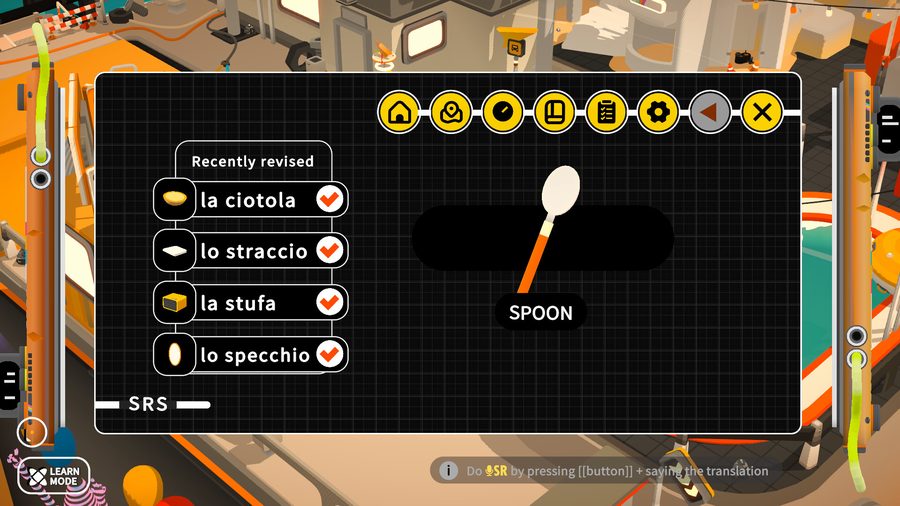
Screenshot from the Noun Town Steam store page, showing the spaced repetition review screen
Most learners are not purely one type or the other. Someone who wants to actually speak French at a decent level within a year typically needs vocabulary exposure, grammar structure and speaking practice at some point, which is exactly why the ranked list above rarely narrows to a single winner. The honest answer is usually two tools working together rather than one tool doing everything.
| Tool | Best for | Price | Grammar depth |
|---|---|---|---|
| Noun Town Vocabulary | Immersive vocab, native audio, speaking | $19.99 one-time | Low (vocabulary focus) |
| Babbel Grammar | Structured lessons, conversation-based grammar | ~$7-$15/month | High |
| Language Transfer | Free grammar logic course, audio-only | Free | High |
| italki Speaking | Real conversation with native tutors | $5-$20/hour | Tutor-dependent |
| Pimsleur | Pronunciation, spoken recall | ~$20/month | Low (audio only) |
| LingQ | Reading and listening immersion | ~$10-$15/month | Moderate (implicit) |
Over a single month, the subscription tools look cheap enough not to worry about. Stretch that out to a year or two, though, and the gap widens fast. A $15 a month subscription runs $180 a year, and most learners keep at least one grammar or speaking tool running alongside whatever they use for vocabulary. Noun Town's $19.99 covers French for good, with the other 11 languages included if you ever branch out.
None of this means the free and low-cost options are worse, just built for a narrower job. Language Transfer costs nothing and genuinely earns its reputation for grammar logic. The honest budget-conscious stack for most learners is Noun Town once for vocabulary, Language Transfer for free grammar, and occasional italki sessions paid by the hour rather than a recurring subscription.
The most efficient setup for most learners pairs Noun Town for vocabulary, since it handles native audio, spatial context and spaced repetition in one place, with Language Transfer or Babbel for the grammar structure that a vocabulary-first tool will never fully cover on its own. Add italki sessions once a month or so to keep liaison and natural rhythm from staying purely theoretical.
That combination costs less over two years than a single mid-tier subscription app used alone, and it covers the three things French specifically punishes learners for skipping: gender, conjugation, and the way the spoken language runs words together. Duolingo is not a bad starting point, but for most people it stops being enough well before fluency, and French tends to make that gap obvious earlier than some other languages do.
Want to try Noun Town for French? There is a free demo on Steam.
Try Noun Town on SteamIt depends on the gap you are trying to close. For vocabulary immersion with native French audio, Noun Town is the strongest option at $19.99 one time. For structured grammar lessons, Babbel is a solid paid option built specifically around French sentence structure. For a free, logic-first explanation of French grammar, Language Transfer is hard to beat. For speaking practice, italki connects you with native French tutors from around $5 an hour. Most learners end up combining two or three of these rather than relying on one alone.
Yes. French is one of the 12 languages supported in Noun Town. The game teaches vocabulary through a 3D open world using native French speaker audio, speech recognition for speaking practice, and a built-in spaced repetition system. It is available on PC and Mac via Steam for $19.99 as a one-time purchase, with a free demo available.
French is generally considered one of the easier languages for English speakers to pick up, largely thanks to shared vocabulary and Latin roots. The harder parts are grammatical gender, since every noun is either masculine or feminine and this affects articles and adjectives, verb conjugation, which changes substantially across tense and subject, and liaison, where the pronunciation of a word shifts depending on what follows it.
The most common complaints are that Duolingo drills noun gender through repetition rather than explaining the patterns behind it, that verb conjugation is introduced piecemeal without a clear map of the tense system, and that the app's slowed-down audio does not prepare learners for how fast native French is actually spoken, especially with liaison and elision blending words together.
Contextual learning paired with native audio and spaced repetition tends to produce the fastest long-term retention. Tools like Noun Town attach vocabulary to objects and scenes so words are encoded with meaning rather than as an isolated translation pair. Supplementing that with regular listening to native French speech helps your ear catch up to real spoken pace.
Babbel generally offers more structured grammar explanation for French than Duolingo does, with lessons built around practical conversation topics and clearer progression through tenses. It is a paid subscription rather than free, so the right choice depends on whether you value grammar depth enough to pay for it, or prefer Duolingo's free, gamified format.
No. Language Transfer offers a genuinely thorough free French course built around understanding grammar logic rather than memorising rules, and Duolingo's free tier still teaches useful vocabulary. A paid tool tends to help most with either deeper grammar structure, native speaking practice, or immersive vocabulary exposure, but a determined learner can get a long way on free resources alone.
The Foreign Service Institute classifies French as a Category I language for English speakers, estimating around 600 to 750 hours of study to reach professional working proficiency. Conversational ability tends to arrive well before that, often somewhere between 250 and 350 hours of consistent, varied practice covering vocabulary, grammar and speaking.
No. Noun Town has no adverts and no content locked behind an additional paywall once you own the game. The team built it this way after using major mobile language apps themselves and getting frustrated by ad breaks and paywalled lesson tiers, then hearing the same complaint from other learners. It is a single $19.99 purchase with everything included.
Further reading: French grammar on Wikipedia covers gender and conjugation in more depth. The liaison (French) article explains how word endings blend in natural speech. The Common European Framework of Reference for Languages from the Council of Europe outlines the proficiency levels referenced by most French courses. The Alliance Française is the standard reference for French language courses and certification internationally. Background on the review technique used by Noun Town and several apps above is on the spaced repetition Wikipedia page.
← Back to blog