A Duolingo alternative for Greek is any tool that covers what Duolingo's Greek course tends to leave underexplained: the language's three grammatical genders, its four-case system, and the aorist, the verb form Greek uses to mark a completed action. For most learners that means Noun Town for vocabulary immersion with native audio, italki for real speaking correction, and Clozemaster or Pimsleur for extra sentence or listening practice. Duolingo does offer a Greek course, and it's a reasonable way to pick up the alphabet and early vocabulary, but the grammar underneath tends to catch learners out earlier than it does in languages with simpler case systems.
Short answer: For vocabulary immersion with native Greek audio, Noun Town is the strongest pick at $19.99 one time, no subscription. For real speaking practice, italki connects you with native Greek tutors from roughly $5 to $20 an hour. Clozemaster covers Greek sentence practice at around $8 to $13 a month once you have some vocabulary, and Pimsleur offers an audio-led Greek course at about $20 a month. Babbel does not currently offer Greek at all, which rules out one of the more commonly recommended paid options.
Why Greek Learners Look Beyond Duolingo
Duolingo earns its popularity from habit formation rather than depth. The streaks, the short daily lessons and the constant nudges are genuinely good at getting someone to open the app every day, and for the first few weeks of Greek, while the alphabet is still new, that's mostly what a learner needs. The trouble tends to start once the 24 letters stop being the main obstacle, because that's exactly when Greek's grammar starts doing most of the work.
Greek nouns carry one of three genders, masculine, feminine or neuter, and that gender affects the article, the adjective ending and sometimes the noun ending itself. On top of that sits a four-case system, lighter than Russian's six but still enough to change a word's ending depending on its role in a sentence. Duolingo teaches mostly through translation and repeated sentence patterns, which works reasonably well for vocabulary but doesn't explain why an ending changes from one sentence to the next. Learners often reach a decent vocabulary size while still guessing at which form of a word to use.
There's also the format itself to contend with. Duolingo's free tier runs ads and uses a "hearts" system that locks a lesson once you've made too many mistakes, which pushes some learners toward other options regardless of how the Greek course itself is structured. It's part of why Noun Town shipped as a single $19.99 purchase with nothing held back afterward. The team behind it had used the big mobile apps themselves, hit the same ad breaks and paywalled lesson tiers, and heard the identical complaint from thousands of other learners before building it differently.
The Best Duolingo Alternatives for Greek, Ranked
Here's how the realistic options compare, ranked by what each one actually does best for Greek.
-
Noun Town
$19.99 one time
Best for vocabulary immersion with native Greek audio and built-in speaking practice. Objects in a 3D open world are labelled and voiced by native speakers, so pronunciation and word recognition build together instead of as a separate exercise bolted onto a translation drill.
-
italki
$5 to $20 / hour
Best for real speaking practice and grammar correction. Connects learners with native Greek tutors for one-to-one video sessions, priced by the hour, which is usually the fastest way to get direct feedback on gender agreement and case endings in actual conversation.
-
Clozemaster
~$8 to $13 / month
Best once a working vocabulary already exists. A fill-in-the-blank sentence app with a sizeable Greek sentence bank, useful for drilling case endings and word order at speed once the basics are in place.
-
Pimsleur
~$20 / month
Best for pronunciation and spoken recall. An audio-only method that prompts you to produce Greek phrases from memory at increasing intervals, useful for building comfort with the sound of the language without looking at any text.
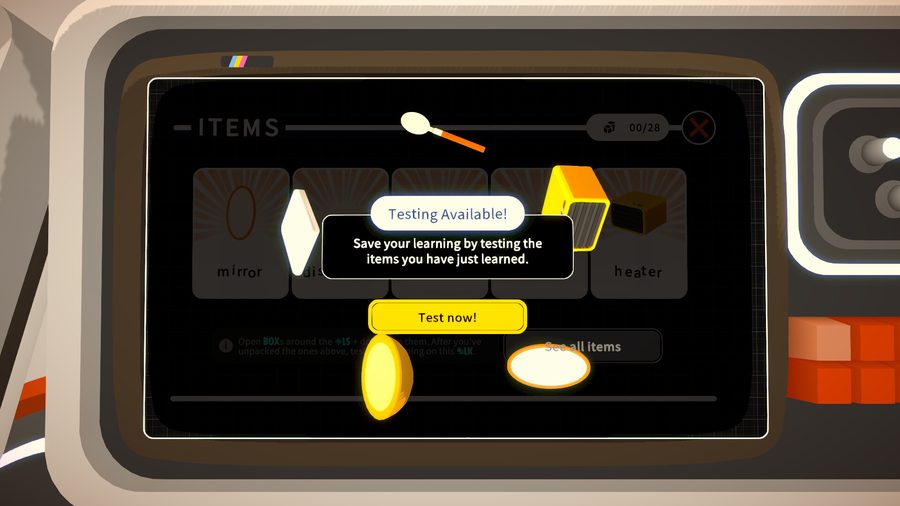
Noun Town teaches Greek through a 3D open world rather than a lesson screen, with native speaker audio at natural pace and speech recognition for practising words back. A spaced repetition system tracks which words are sticking and schedules reviews automatically. Greek is one of 12 supported languages, and the game has 590+ reviews on Steam with an 87% positive rating across the series and 200,000+ players. A free demo is available on Steam before you buy.
The Greek Alphabet Isn't the Real Obstacle
A lot of people rule out Greek before starting because the alphabet looks unfamiliar on the page. In practice it's one of the easier parts of the language. Greek has 24 letters, and several of them, alpha, beta, pi, delta, are already familiar from maths and science notation, which gives most learners a running start. Most people who stick with it can read Greek script reasonably comfortably within one to two weeks, a similar timeline to learning Cyrillic for Russian.
Worth knowing: the friction in Greek shows up after the alphabet, not during it. Gender, the case system and verb aspect are what actually slow learners down, which is exactly the part a translation-first app tends to skim over.
That's a useful thing to know before picking a learning method, because it means the alphabet shouldn't be the deciding factor in choosing a tool. What matters more is whether the tool you pick actually addresses the grammar once the script stops being new.
What Greek Grammar Actually Demands
Three things cause more trouble for Greek learners than anything else, and none of them get solved by vocabulary drilling on its own.
- Three grammatical genders. Every Greek noun is masculine, feminine or neuter, and that gender changes the article and often the adjective ending that goes with it. English dropped grammatical gender centuries ago, so there's little instinct to fall back on at first.
- A four-case system. Nominative, genitive, accusative and vocative each change the ending of a noun depending on its role in a sentence. It's lighter than Russian's six cases, but still enough to trip up a learner who's only ever seen Greek nouns in their dictionary form.
- The aorist. Greek marks whether an action is completed or ongoing through verb aspect, most visibly in the aorist form used for a single, finished action in the past. Getting this wrong doesn't just sound off, it can change what the sentence actually means.
None of this is covered well by an app built mainly around matching a Greek sentence to its English translation. A learner can get the translation right without understanding why the ending changed, and that gap tends to show up the moment they try to build an original sentence instead of tapping through a pre-written one.
What It Costs Over a Year
A $10 or $20 monthly subscription doesn't feel like much across a single month. Stretched across the year or more it typically takes to get comfortable with Greek's grammar, the gap between paying once and paying every month becomes a lot more obvious.
| Tool |
Approx. cost |
Over 1 year |
| Noun Town |
$19.99 once |
$19.99 total |
| Clozemaster Pro |
$8–$13/month |
~$60–$80 |
| Pimsleur |
~$20/month |
~$240 |
| italki tutoring |
$5–$20/hour |
Depends on sessions booked |
| Babbel |
Not available for Greek |
N/A |
None of this makes the subscription tools a bad deal for what they offer. italki's live tutors catch a mistake the moment it happens, and Pimsleur's audio drilling builds a kind of spoken recall that a visual app can't quite replicate. The point is simply that a one-time cost and a recurring one add up very differently once you're a year or two into learning a language with a grammar system like Greek's.
The Combination That Works for Greek
The most efficient setup for most learners pairs Noun Town for vocabulary, since it bundles native audio, spatial context and spaced repetition into one place, with italki sessions every couple of weeks once there's enough vocabulary to attempt real conversation. Clozemaster or Pimsleur can slot in afterward for extra sentence volume or spoken recall practice, depending on which gap shows up first.
That combination costs less over two years than a single mid-tier subscription used alone, and it covers the two things Greek specifically punishes learners for skipping: case endings and the aorist. Duolingo's Greek course is a fine place to start, especially for the alphabet, but the grammar tends to make the limits of a translation-only app obvious earlier than it does in languages without a case system at all.
Written by Callan Ratcliffe
Want to try Noun Town for Greek? There is a free demo on Steam.
Try Noun Town on Steam
Common questions
What is the best Duolingo alternative for learning Greek?
It depends on what you need beyond Duolingo. For vocabulary immersion with native Greek audio, Noun Town is the strongest option at $19.99 one time. For real speaking practice, italki connects learners with native Greek tutors from around $5 an hour. For sentence drilling once you have a base vocabulary, Clozemaster covers Greek at roughly $8 to $13 a month, and Pimsleur offers an audio-led Greek course at around $20 a month. Most learners combine two or three of these rather than relying on Duolingo alone.
Does Noun Town teach Greek?
Yes. Greek is one of the 12 languages supported in Noun Town. The game teaches vocabulary through a 3D open world using native Greek speaker audio, speech recognition for speaking practice, and a built-in spaced repetition system. It is available on PC and Mac via Steam for $19.99 as a one-time purchase, with a free demo available.
Does Duolingo have a Greek course?
Yes, Duolingo offers a Greek course covering the alphabet and core vocabulary through its usual translation-based exercises. It's a reasonable starting point for the alphabet and basic words, but it doesn't spend much time explicitly teaching grammatical gender, the case system or verb aspect, which tend to become the main obstacle once the early vocabulary is in place.
Is Greek hard to learn for English speakers?
The Foreign Service Institute places Greek in its third difficulty category for English speakers, alongside languages like Russian and Hebrew, estimating around 1,100 class hours, roughly 44 weeks of full-time study, to reach professional working proficiency. The unfamiliar alphabet is usually learnable within a couple of weeks; the grammar underneath takes considerably longer.
Does Babbel offer Greek?
No. Babbel does not currently include Greek among its language courses. Its catalogue covers languages including Spanish, French, German, Italian, Portuguese, Russian, Dutch, Turkish and several Scandinavian languages, but Greek isn't one of them, which rules it out as an option regardless of price.
What is the fastest way to learn Greek vocabulary?
Contextual learning paired with native audio and spaced repetition tends to produce the fastest long-term retention. Tools like Noun Town attach vocabulary to objects and scenes with native pronunciation built in, so a word is encoded alongside its sound and context rather than sitting alone as a flashcard-style translation pair.
Is the Greek alphabet hard to learn?
Not especially. Most learners pick up the 24-letter Greek alphabet within one to two weeks, helped by the fact that several letters are already familiar from maths and science notation. The real difficulty in Greek shows up afterward, in the grammar: three genders, a four-case system and the aorist verb form, not in the script itself.
Do I need a paid app to learn Greek well?
No, though it helps. Duolingo's free Greek course still teaches useful vocabulary and the alphabet, and plenty of free native audio and reading material exists online. A paid tool tends to help most with explicit grammar coverage, real speaking correction, or immersive vocabulary exposure, but a determined learner can build a real foundation in Greek without spending anything.
How long does it take to get conversational in Greek?
The Foreign Service Institute estimates around 1,100 hours of study for professional working proficiency in Greek. Conversational ability tends to arrive well before that, often somewhere in the 300 to 450 hour range with consistent practice that covers vocabulary, the case system and real speaking, roughly a year at an hour a day.
Does Noun Town have ads or paywalled content?
No. Noun Town has no adverts and no content locked behind an additional paywall once you own the game. The team built it this way after using major mobile language apps themselves and getting frustrated by ad breaks and paywalled lesson tiers, then hearing the same complaint from thousands of other learners. It is a single $19.99 purchase with everything included.
Further reading: the Modern Greek grammar Wikipedia page covers gender, the case system and verb aspect in more detail. Background on the script is on the Greek alphabet page. How language difficulty categories are assessed is explained on the Foreign Service Institute page, and the Common European Framework of Reference for Languages from the Council of Europe outlines the CEFR proficiency levels referenced above. The review technique used by Noun Town and several apps above is explained on the spaced repetition Wikipedia page.
← Back to blog