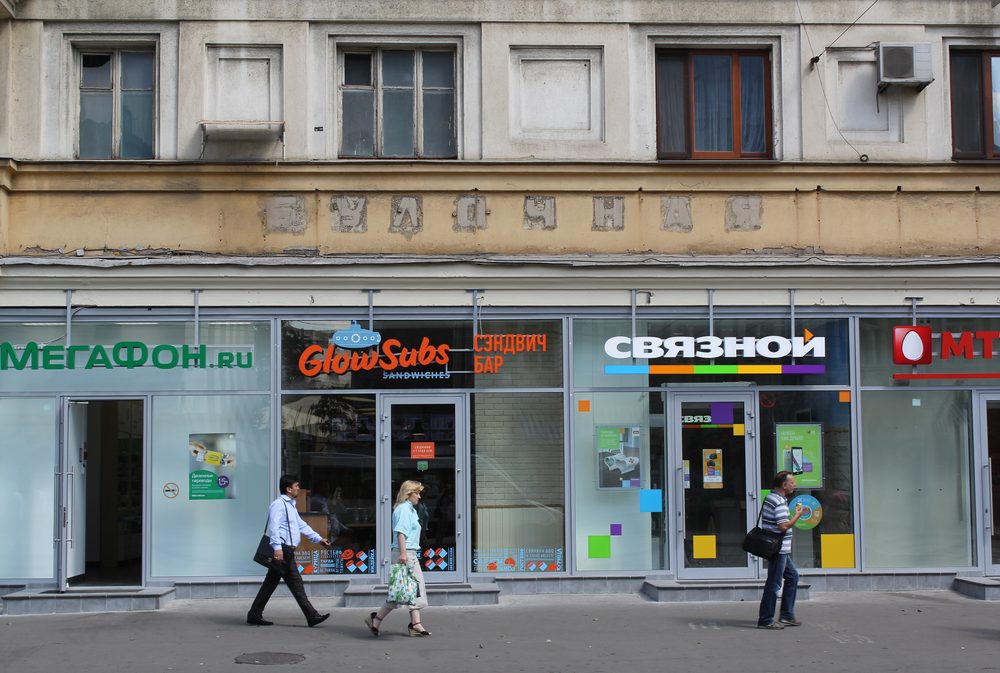
Photo: Stolbovsky / Wikimedia Commons (CC BY-SA 3.0)
A Duolingo alternative for Russian is any tool that covers what Duolingo tends to underexplain in Russian specifically: the six-case grammar system, verb aspect pairs, and the Cyrillic alphabet's less obvious pronunciation rules. For most learners that means Noun Town for vocabulary immersion with native audio, italki for real speaking correction, and Clozemaster for high-volume sentence practice once a base vocabulary exists. Duolingo is a fine habit builder for the first few weeks, but Russian's grammar tends to expose the limits of a translation-only app faster than languages that skip a case system entirely.
Short answer: For vocabulary immersion with native Russian audio, Noun Town is the strongest pick at $19.99 one time, no subscription. For real speaking practice, italki tutors run $5 to $20 an hour. Clozemaster covers Russian sentence practice at roughly $8 to $13 a month once you have some vocabulary in place. Babbel and Pimsleur both offer paid, more structured routes, at $7 to $15 a month and around $20 a month respectively. Most serious Russian learners combine at least two of these rather than sticking with Duolingo alone.
Why Russian Learners Look Beyond Duolingo
Duolingo is genuinely effective at getting people to open an app every day. The streaks, the reminders, the short lessons, all of it is built around habit formation, and for the first month or two of Russian that works fine. The trouble tends to start once the alphabet is familiar and the basic vocabulary has been covered, because that's exactly when Russian's grammar starts doing most of the heavy lifting.
Russian nouns, adjectives and pronouns change their endings depending on their grammatical role in a sentence, a six-case system that has no real equivalent in English. Duolingo teaches mostly through translation and pattern repetition, which is a reasonable way to build vocabulary but a weak way to internalise why "kniga" becomes "knigu" in one sentence and "knigi" in another. Learners often work through a large chunk of the course still guessing at case endings, because the app drilled the sentences without laying out the underlying system.
There's also the format itself. Duolingo's free tier runs ads and caps mistakes with a "hearts" system that locks a lesson once you've used them up, which is enough on its own to send some learners looking elsewhere regardless of how well the Russian course covers grammar. It's part of why Noun Town shipped as a single $19.99 purchase with nothing held back afterward. The team behind it had used the big mobile apps themselves, got frustrated by the same ad breaks and paywalled lesson tiers, and heard the identical complaint from thousands of other learners before deciding to build it differently.
The Best Duolingo Alternatives for Russian, Ranked
Here's how the main options actually compare, ranked by what each one does best for Russian specifically.
-
Noun Town
$19.99 one time
Best for vocabulary immersion with native Russian audio and built-in speaking practice. Objects in a 3D open world are labelled and voiced by native speakers, so pronunciation and word recognition build together rather than as separate skills bolted onto a translation exercise.
-
italki
$5 to $20 / hour
Best for real speaking practice and grammar correction. Connects learners with native Russian tutors for one-to-one video sessions, priced by the hour, which is often the fastest way to get direct feedback on case usage and verb aspect in actual conversation.
-
Clozemaster
~$8 to $13 / month
Best once you already have a working vocabulary. A fill-in-the-blank sentence app with a large Russian sentence bank, useful for drilling case endings and word order at speed once the basics are in place.
-
Pimsleur
~$20 / month
Best for pronunciation and spoken recall. An audio-only method that prompts you to produce Russian phrases from memory at increasing intervals, useful for getting comfortable with stress-shifted vowel sounds without looking at text.
-
Babbel
~$7 to $15 / month
Best for guided, paid grammar lessons. Babbel has offered Russian since 2014 and organises lessons around practical conversation topics, with clearer explanation of case usage than Duolingo tends to provide.
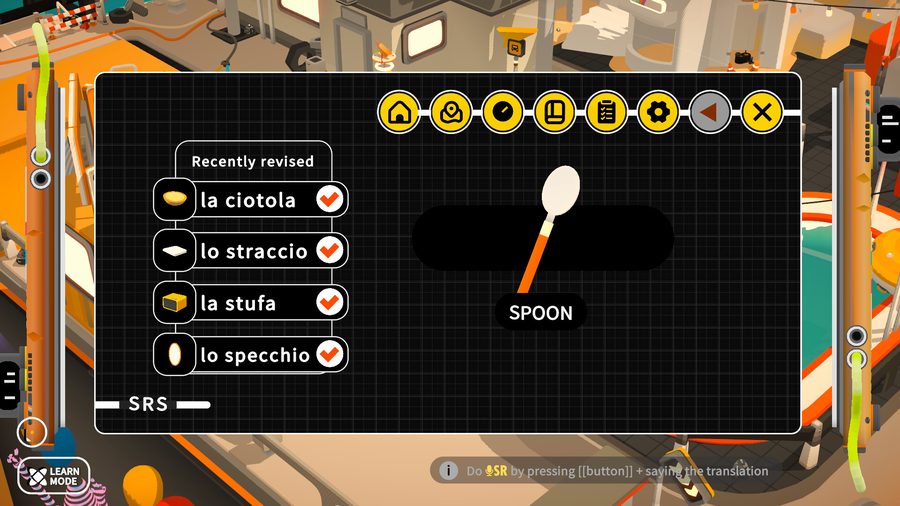
Noun Town teaches Russian through a 3D open world rather than a lesson screen, with native speaker audio at natural pace and speech recognition for practising words back. A spaced repetition system tracks which words are sticking and schedules reviews automatically. Russian is one of 12 supported languages, and the game has 590+ reviews on Steam with an 87% positive rating across the series and 200,000+ players. There's a free demo available on Steam before you buy.
What Russian Grammar Actually Demands
Three things trip up Russian learners more than anything else, and none of them are solved by vocabulary drilling alone.
- Six grammatical cases. Nominative, genitive, dative, accusative, instrumental and prepositional each change the ending of a noun, its adjective, and often its pronoun, depending on the noun's role in the sentence. English lost most of this system centuries ago, so there's little existing intuition to lean on.
- Verb aspect pairs. Nearly every Russian verb comes in two versions, perfective and imperfective, that mark whether an action is completed or ongoing. Choosing the wrong one doesn't just sound odd, it changes the meaning of the sentence.
- Cyrillic and shifting stress. The alphabet itself is usually learnable within a couple of weeks, but stress in Russian moves unpredictably between forms of the same word, and unstressed vowels get pronounced differently than their spelling suggests, which needs real listening practice to catch.
None of this is covered well by an app built mainly around matching a Russian sentence to its English translation. You can get the translation right without understanding why "ya vizhu knigu" uses the accusative case, and that gap tends to surface the moment a learner tries to build their own sentences rather than just tap through pre-written ones.
How to Choose Based on How You Learn
If you've started and abandoned Duolingo's Russian tree more than once, or you'd rather pay once than take on another monthly subscription, Noun Town is probably the better starting point. It attaches vocabulary to objects in context with native pronunciation built in, and it turns review into something closer to a game than a chore.
If you'd rather have someone actively correct your case endings and verb choices in real time, italki fits better, since a tutor can catch a mistake the moment it happens rather than waiting for an app to flag a pattern. Babbel sits in between, offering more structured grammar explanation than Duolingo without the live correction of a tutor.
Most learners end up needing more than one of these. Vocabulary exposure alone won't teach you when to reach for the instrumental case, and grammar explanations alone won't build the instinct to produce a correct sentence quickly in conversation. The two work better paired than either does alone.
What It Costs Over a Year
A $10 or $15 monthly subscription barely registers over a single month. Stretched across the year or two it typically takes to get comfortable with Russian's case system, the gap between paying once and paying monthly becomes a lot more obvious.
| Tool |
Approx. cost |
Over 1 year |
| Noun Town |
$19.99 once |
$19.99 total |
| Clozemaster Pro |
$8–$13/month |
~$60–$80 |
| Babbel |
$7–$15/month |
~$84–$180 |
| Pimsleur |
~$20/month |
~$240 |
| italki tutoring |
$5–$20/hour |
Depends on sessions booked |
None of this means the subscription tools are a bad deal. italki's live tutors and Babbel's structured lessons both do something Noun Town doesn't, correcting a mistake in real time or walking through a grammar point step by step. The point is that a one-time cost and a recurring one add up very differently once you're a year or two into a language with a grammar system as involved as Russian's.
The Combination That Works for Russian
The most efficient setup for most learners pairs Noun Town for vocabulary, since it bundles native audio, spatial context and spaced repetition into one place, with italki sessions every couple of weeks once there's enough vocabulary to attempt real conversation. Clozemaster or Babbel can slot in afterward for extra sentence volume or a more explicit grammar walkthrough, depending on which gap shows up first.
That combination costs less over two years than a single mid-tier subscription used on its own, and it covers the two things Russian specifically punishes learners for skipping: case endings and verb aspect. Duolingo isn't a bad place to start, but Russian tends to make the ceiling on a translation-only app obvious earlier than most other languages do.
Written by Jack Ratcliffe
Want to try Noun Town for Russian? There is a free demo on Steam.
Try Noun Town on Steam
Common questions
What is the best Duolingo alternative for learning Russian?
It depends on what Duolingo isn't giving you. For vocabulary immersion with native Russian audio and built-in speaking practice, Noun Town is the strongest option at $19.99 one time. For real conversation practice, italki connects learners with native Russian tutors from around $5 an hour. For high sentence volume once you have a vocabulary base, Clozemaster covers Russian at roughly $8 to $13 a month. Most learners end up combining two or three of these rather than relying on one app alone.
Does Noun Town teach Russian?
Yes. Russian is one of the 12 languages supported in Noun Town. The game teaches vocabulary through a 3D open world using native Russian speaker audio, speech recognition for speaking practice, and a built-in spaced repetition system. It is available on PC and Mac via Steam for $19.99 as a one-time purchase, with a free demo available.
Is Russian hard to learn for English speakers?
Russian sits in the Foreign Service Institute's second-hardest category for English speakers, with an estimated 1,100 class hours, around 44 weeks of full-time study, to reach professional working proficiency. The six-case grammar system and the unfamiliar Cyrillic alphabet are the main reasons it takes longer than languages like Spanish or French, though the alphabet itself is usually learnable within a couple of weeks.
Why do people quit Duolingo for Russian specifically?
The most common complaints are that Duolingo drills case endings through repeated sentence patterns without explaining the underlying six-case system, that verb aspect, the perfective and imperfective pairs Russian uses to mark whether an action is completed, gets barely addressed, and that the app's text to speech audio doesn't always prepare learners for the way stress shifts vowel sounds in real native speech.
What is the fastest way to learn Russian vocabulary?
Contextual learning paired with native audio and spaced repetition tends to produce the fastest long-term retention, especially for Russian, where a noun's case ending changes depending on how it's used in a sentence. Tools like Noun Town attach vocabulary to objects and scenes with native pronunciation, so the word is encoded alongside its sound and context rather than as an isolated translation pair.
Is Babbel good for Russian?
Babbel added Russian to its course library in 2014 and still offers it. It generally spends more time walking through grammar explanations, including the case system, than Duolingo does. It's a paid subscription running roughly $7 to $15 a month depending on plan length, so the choice comes down to whether that structured grammar depth is worth paying for compared to a free, more gamified format.
Do I need a paid app to learn Russian well?
No, though it helps. Duolingo's free tier still teaches useful vocabulary and basic patterns, and plenty of free native audio and reading material exists online for self-directed study. A paid tool tends to help most with faster grammar depth, real speaking correction, or immersive vocabulary exposure, but a determined learner can build a real foundation in Russian without spending anything.
How long does it take to get conversational in Russian?
The Foreign Service Institute estimates around 1,100 hours of study for professional working proficiency in Russian. Conversational ability tends to arrive well before that, often somewhere in the 300 to 450 hour range with consistent practice that covers vocabulary, the case system and real speaking, roughly a year at an hour a day.
Does Noun Town have ads or paywalled content?
No. Noun Town has no adverts and no content locked behind an additional paywall once you own the game. The team built it this way after using major mobile language apps themselves and getting frustrated by ad breaks and paywalled lesson tiers, then hearing the same complaint from thousands of other learners. It is a single $19.99 purchase with everything included.
Further reading: the Russian grammar Wikipedia page covers the case system and verb aspect in more detail. Background on the alphabet is on the Cyrillic script page. How language difficulty categories are assessed is explained on the Foreign Service Institute page, and the Common European Framework of Reference for Languages from the Council of Europe outlines the CEFR proficiency levels referenced above. The review technique used by Noun Town and several apps above is explained on the spaced repetition Wikipedia page.
← Back to blog