
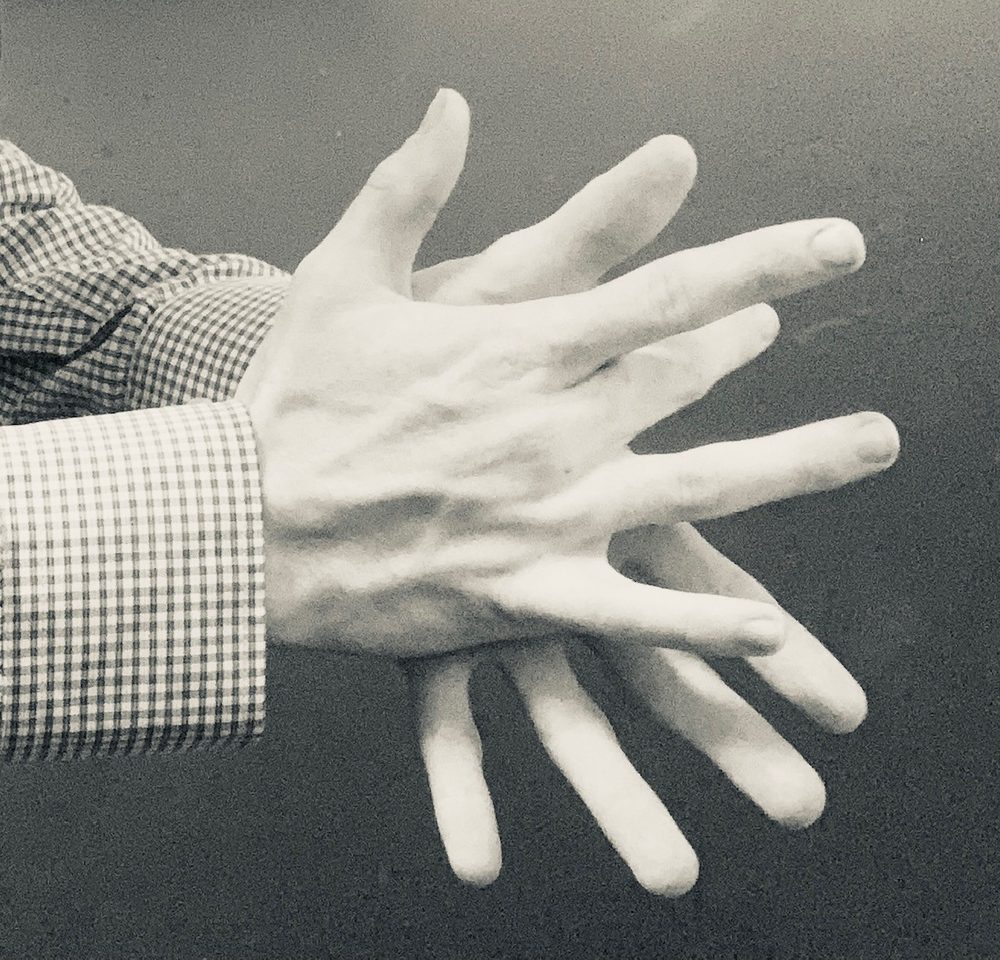
Photo: TheEaterofCorn / Wikimedia Commons (CC BY-SA 4.0)
Body parts in Spanish are the words for the parts of the human body, such as cabeza (head), ojos (eyes), mano (hand) and pie (foot), and most learners need somewhere between 30 and 40 of them to describe pain, appearance and everyday routines like washing up or getting dressed. Spanish treats these words a little differently from English: every body part carries a grammatical gender, el or la, and sentences about pain or injury almost always use the definite article instead of a possessive, so a Spanish speaker says "me duele la cabeza," literally "the head hurts me," rather than "mi cabeza duele." Here is the full list, with pronunciation and the grammar that actually trips learners up.
Short answer: cabeza (head), cara (face), ojos (eyes), nariz (nose), boca (mouth), orejas (ears), brazo (arm), mano (hand), dedos (fingers), pierna (leg), pie (foot) and tobillo (ankle) are the words you will reach for most. Spanish pairs almost every body part with el or la and the definite article rather than a possessive, as in "me duele la cabeza," not "mi cabeza duele."
The table below lists the body parts most learners need first, in head-to-toe order rather than alphabetically, since that is usually how a Spanish course introduces them too. An adult human skeleton has 206 bones, according to Wikipedia's overview of the human skeleton, but you will never need a separate word for each one. A working vocabulary of around 30 terms covers almost everything you are likely to say about your own body in everyday conversation, from a stubbed toe to a sore shoulder.
| Spanish | Pronunciation | English |
|---|---|---|
| la cabeza | lah kah-BEH-sah | head |
| el pelo / el cabello | ehl PEH-loh / kah-BEH-yoh | hair |
| la cara | lah KAH-rah | face |
| la frente | lah FREHN-teh | forehead |
| los ojos | lohs OH-hohs | eyes |
| las cejas | lahs SEH-hahs | eyebrows |
| la nariz | lah nah-REES | nose |
| la boca | lah BOH-kah | mouth |
| los labios | lohs LAH-byohs | lips |
| los dientes | lohs DYEHN-tehs | teeth |
| la lengua | lah LEHN-gwah | tongue |
| las orejas | lahs oh-REH-hahs | ears |
| la barbilla | lah bar-BEE-yah | chin |
| el cuello | ehl KWEH-yoh | neck |
| el hombro | ehl OHM-broh | shoulder |
| el brazo | ehl BRAH-soh | arm |
| el codo | ehl KOH-doh | elbow |
| la muñeca | lah moo-NYEH-kah | wrist |
| la mano | lah MAH-noh | hand |
| los dedos | lohs DEH-dohs | fingers |
| el pecho | ehl PEH-choh | chest |
| la espalda | lah ehs-PAHL-dah | back |
| el estómago | ehl ehs-TOH-mah-goh | stomach |
| la cintura | lah seen-TOO-rah | waist |
| la cadera | lah kah-DEH-rah | hip |
| la pierna | lah PYEHR-nah | leg |
| la rodilla | lah roh-DEE-yah | knee |
| el tobillo | ehl toh-BEE-yoh | ankle |
| el pie | ehl PYEH | foot |
| los dedos del pie | lohs DEH-dohs dehl PYEH | toes |
| la piel | lah PYEHL | skin |
| el corazón | ehl koh-rah-SOHN | heart |
| el cerebro | ehl seh-REH-broh | brain |
Pronunciation follows regular Spanish rules once you know a few patterns: ll sounds like a y (cuello, rodilla, tobillo), the Spanish r is a light tap rather than the English r (nariz, brazo), and z before a vowel sounds like a soft th in Spain or a plain s across most of Latin America (nariz, corazón). None of these sounds require anything exotic, just repeated listening and speaking practice until your mouth gets used to them.
One exception is worth memorizing on its own: la mano. Spanish nouns ending in -o are almost always masculine, but mano is a rare holdover from Latin that kept its original feminine gender, so it stays la mano, never el mano, no matter how tempting the -o ending makes it feel.
English almost always pairs a body part with a possessive: my head, your hands, his back. Spanish usually does the opposite. When the owner is already clear from context, especially with reflexive verbs, Spanish drops the possessive and uses the definite article instead. "Me lavo las manos" means "I wash my hands," not literally "I wash the hands," even though manos follows las rather than mis. The reflexive pronoun me already tells you whose hands are being washed, so adding mis as well would be redundant, and a native speaker would notice the extra word immediately. This pattern is a well documented feature of Spanish grammar rather than an informal shortcut.
The same pattern shows up with pain and injury, one of the most common reasons to reach for body-part vocabulary in the first place. Spanish uses the verb doler (to hurt) with an indirect object pronoun rather than a possessive: "me duele la cabeza" translates literally as "the head hurts to me," which is why English speakers often say it backwards the first few times. "Le duelen los pies" means "his or her feet hurt," with the plural duelen because pies is plural. Making the verb agree with the body part, not with the person feeling the pain, is the single most common grammar mistake beginners make with this structure, and it is a rule the Real Academia Española, Spain's official language regulator, documents clearly in its grammar guidance.
There are a few exceptions where a possessive is required rather than optional, mainly when whose body part you mean is not obvious from context, such as comparing two people: "Sus manos son más grandes que las mías" (his hands are bigger than mine). Outside comparisons like that, defaulting to the definite article is the safer, more natural choice.

Screenshot from the Noun Town Steam store page, showing a review-scheduling scene
Body-part vocabulary shows up constantly in Spanish idioms, often with a meaning that has nothing literal to do with the body part itself. Learning a handful of these early makes native speech sound far less puzzling the first time you hear one.
Notice that several of these idioms reuse the exact vocabulary from the table above in a completely different sense. That is one more reason learning the literal words first pays off twice: once for everyday description, and again when the same word turns up buried inside an idiom.
Being able to say where something hurts is one of the most practically useful things a traveler or new resident can learn in any language, and it comes up at pharmacies, doctor's offices and casual conversations about how someone is feeling far more often than most vocabulary lists expect.
Use dolor de plus a body part as an alternative to doler when you want to describe pain as a noun rather than a verb, which some learners find easier to build sentences with at first: "tengo dolor de cabeza" works just as well as "me duele la cabeza," and both sound completely natural to a native speaker.
Games built around spatial, context-based vocabulary learning tend to help here too, since attaching la mano or el tobillo to an actual scene in a 3D world gives the word somewhere real to live in memory, rather than just another line on a flashcard deck.
Want to see Spanish vocabulary like this learned in context instead of on a flashcard?
Try Noun Town on SteamThe basic body parts in Spanish are la cabeza (head), la cara (face), los ojos (eyes), la nariz (nose), la boca (mouth), las orejas (ears), el brazo (arm), la mano (hand), los dedos (fingers), la pierna (leg), el pie (foot) and el tobillo (ankle). Each noun carries a grammatical gender, el or la, which you need to learn alongside the word itself.
I have a headache is me duele la cabeza, which translates literally as the head hurts me. You can also say tengo dolor de cabeza, meaning I have a pain of head, and both are equally natural.
Spanish uses the verb doler (to hurt) with an indirect object pronoun rather than a possessive, so the body part becomes the subject that hurts someone rather than something a person owns in the sentence. The verb also agrees with the body part: me duele la cabeza (singular) but me duelen los pies (plural, feet).
Mano (hand) is feminine, so it is always la mano, never el mano. It is one of the few Spanish nouns ending in -o that breaks the usual rule that -o nouns are masculine, a holdover from Latin that learners simply have to memorize as an exception.
Costar un ojo de la cara translates literally as to cost an eye of the face, and it means something is extremely expensive, the direct equivalent of the English idiom to cost an arm and a leg.
Ankle is el tobillo in Spanish. A common related phrase is me torcí el tobillo, meaning I twisted my ankle.
An adult human skeleton has 206 bones, though babies are born with around 300 that gradually fuse together during childhood. You do not need a Spanish word for every bone, just the roughly 30 everyday body-part words covered in this guide.
Most learners can comfortably recall the 30 to 35 most common Spanish body-part words within one to two weeks of short, regular practice, especially with spaced repetition. Using the grammar correctly in full sentences, such as the doler construction, usually takes a little longer to become automatic according to CEFR-aligned course estimates.
It depends on the gender and number of the noun. Masculine plural body parts use los, such as los ojos (eyes) or los dedos (fingers), while feminine plural body parts use las, such as las manos (hands) or las piernas (legs).
Yes. Noun Town teaches vocabulary like body parts inside a 3D world with native speaker audio and spaced repetition, attaching new words to a real scene rather than a flat list, which tends to help them stick. The Steam page has a free demo if you want to try it before buying.