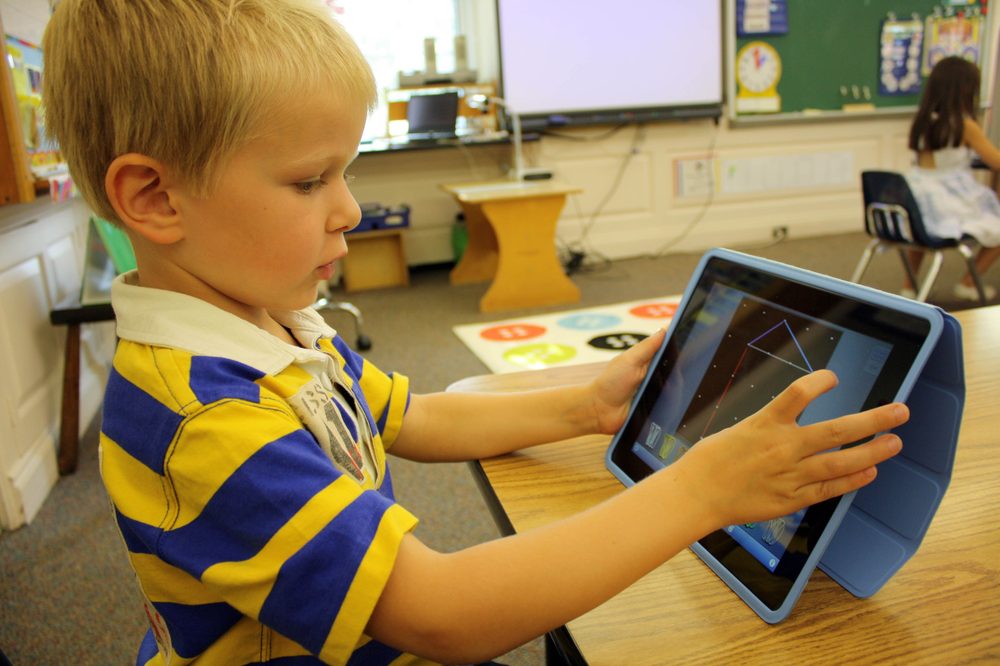
Photo: Oakknollschool / Wikimedia Commons (CC BY-SA 3.0)
Short answer: Educational apps tend to win on short, structured drills, things like times tables or spelling, that a child can complete in a few minutes. Educational games tend to win on attention span and retention over longer sessions, because the learning is folded into a world the child wants to be in rather than a task they are told to finish. Neither format is automatically better for every child, and the strongest results usually come from picking based on the specific product, not the category label.
Parents ask us some version of this question constantly, usually while comparing Noun Town against a subscription app their child already has installed. Both formats can teach a child real things. The difference is in how they hold a kid's attention, and what happens after the app is closed or the game is switched off.
There is no single correct answer here, so this is written to help you judge a specific product rather than just pick a side.
Educational apps are structured around lessons and levels. A child opens the app, is shown a short exercise, maybe a multiple choice question or a matching game, completes it, and gets a score or a badge. The unit of design is the exercise, and most apps are built to be finished in five to ten minutes.
Educational games are structured around a world or an activity. There is rarely a "lesson 3 of 10" screen. Instead a child might be building something, exploring a map, or talking to characters, and the educational content, whether that is vocabulary, numbers or spatial reasoning, is woven into what they are doing rather than delivered as a discrete task.
This shapes the whole experience. Apps feel more like schoolwork, even a well-designed one. Games feel more like play, even an educational one, and that distinction matters more than most people expect once you look at how long kids actually stay engaged.
The evidence on game-based learning consistently points to one pattern: material learned through an interactive, contextual activity tends to be remembered longer than the same material presented as an isolated fact or flashcard. This is not unique to language learning or maths, it shows up across subjects, because more of a child's attention and senses are involved when the fact is attached to something they are doing rather than something they are simply told.
Apps are not without their own strengths here. Repetition-based apps that use spaced repetition, resurfacing a fact just before a child is likely to forget it, are genuinely effective for memorisation tasks like vocabulary lists or number facts. The technique works whether it is delivered through a flashcard app or built into a game's review system, so it is worth checking whether a product uses it at all, regardless of which format you end up choosing.
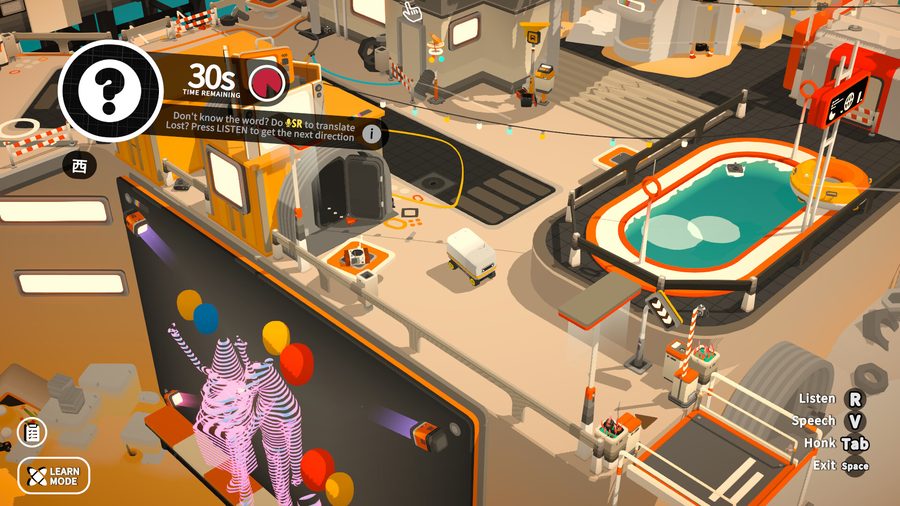
Screenshot from the Noun Town Steam store page
| Category | Educational Apps | Educational Games |
|---|---|---|
| Session length | Better for short bursts | Better for longer, deeper sessions |
| Retention over time | Solid for memorised facts | Stronger for contextual learning |
| Subject breadth | Wider range of subjects available | Usually focused on one skill area |
| Typical cost model | Free to start, subscription for full access | Often a single upfront purchase |
| Ads and interruptions | Common in free tiers | Rare in paid, purpose-built games |
The category matters less than the specific product. Before buying an app or a game for a child, it is worth checking a few things regardless of which format you are leaning toward: does it have ads aimed at a child audience, does progress require repeated in-app purchases to continue, and is the actual content something a subject expert would recognise as accurate, not just entertaining.
We built Noun Town as a language learning game partly because we kept running into the same complaints from parents about apps: ad breaks mid-lesson, or a child hitting a wall after the free content ran out and being asked to pay again to continue. That was frustrating enough as adults using the big mobile apps ourselves, and it was one of the clearest, most consistent pieces of feedback we heard from other learners and parents, so we built the game as one purchase with everything included and nothing else to buy afterward.
Short app sessions or simple games both work well. Attention spans are still developing, so brevity often matters more than depth.
Many children start preferring the autonomy of a game world and can sustain much longer sessions independently.
Both formats work, though older kids are more likely to notice and resent ad-heavy or paywalled apps.
If your child has a short attention span or you only have small pockets of time to fill, a well-made app is a reasonable choice. If your child tends to lose interest in apps quickly, or you want deeper, more independent sessions, a game is usually the better fit, and the research on contextual learning backs that instinct up. Plenty of families end up using both, an app for quick review and a game for the sessions where a child genuinely wants to keep going.
A note on safety: Noun Town has no multiplayer and no in-game chat with other players. That said, parents should still use their own judgment about when a child is ready to spend time in any open game world on their own, multiplayer or not, and make sure kids don't enter these worlds unsupervised until they are at a suitable age.
Curious what an ad-free educational game actually looks like? There is a free demo on Steam.
Try Noun Town on SteamAn app is usually a set of short structured exercises, quizzes or flashcards worked through in a fixed order. A game is a world or activity a child chooses to spend time in, where learning happens as part of exploring, building or solving rather than as the explicit point of every screen.
Well-designed educational games do teach real content, not just entertain. Studies on game-based learning have repeatedly found that children retain material better when it is tied to an interactive, meaningful context rather than presented as an isolated fact to memorise.
No, plenty of educational apps are well made and useful, particularly for drilling specific skills like times tables or spelling in short bursts. The concern parents raise most often is less about the learning content and more about ad-heavy or paywalled apps that interrupt a child mid-task to ask for money.
Games generally hold attention longer, since children choose to keep playing rather than being prompted through a fixed lesson sequence. Apps are designed around short, completable sessions, which suits some children well but tends to produce shorter total engagement per sitting.
Not inherently. The content and design matter far more than the label. A well-made educational game with clear learning goals can be more valuable screen time than a shallow app, and vice versa. Parents are generally better off judging the specific product than the category it falls into.
Younger children, roughly ages 4 to 8, often respond well to both formats, though shorter app sessions can suit limited attention spans. From around age 8 upward, many children prefer the depth and autonomy of a game world, and can sustain longer, more independent sessions.
Many educational apps use a freemium model, free to download with a subscription for full access, which can add up to $50 to $100 a year per child. Educational games are more often a single upfront purchase, sometimes as little as $15 to $25, with no ongoing cost.
For vocabulary and listening, yes, and in many cases games have an edge because words are tied to a visual object and a spoken sentence in context. Apps tend to keep an edge on structured grammar teaching, so many families use a game for immersion and an app or class for the grammar side.
No. Noun Town is a one-time purchase with no adverts and nothing locked behind a further paywall once you own it. The team built it this way deliberately after finding the ad breaks and paywalled tiers in mobile learning apps frustrating, both for themselves and for the thousands of learners who said the same thing.
Not necessarily. Many families find a mix works best, a game for longer, engaged sessions on weekends or after school, and a lighter app for a quick five-minute review during the week. The two formats tend to cover different gaps rather than compete directly.