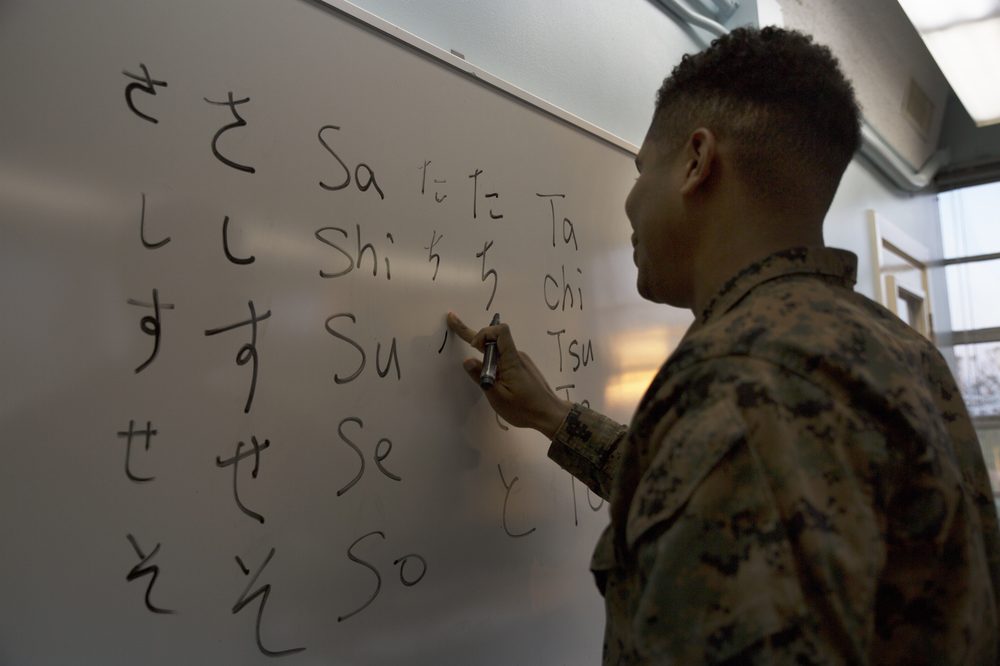
U.S. Marine Corps photo by Cpl. Janessa Pon / DVIDS (public domain)
Short answer: No, not on its own, past a beginner level. Duolingo can realistically get you to around JLPT N5, roughly 800 words and basic sentence patterns. It teaches only a few hundred kanji, against the 2,136 joyo kanji used in daily Japanese, and its listening exercises rarely reach natural native speed. Most learners who want to hold a conversation need to add a kanji tool, real audio, and speaking practice alongside it.
The streak counter tells you that you showed up. It does not tell you whether what you learned yesterday would actually help you order food in Osaka or read a text message from a Japanese friend. Those are two very different measures of progress, and for Japanese specifically, the gap between them is wider than for most languages Duolingo covers.
To be fair to it, Duolingo does some things properly. It teaches hiragana and katakana, the two phonetic scripts, in a structured way that most beginners find manageable within a couple of weeks. It builds an early vocabulary base through repetition, and the exercise format is genuinely good at getting people to open the app daily, which matters more than people give it credit for.
Basic sentence structure, common greetings, numbers, family words and everyday objects all come through reasonably well in the first several units. If your goal is a light introduction before a trip, or curiosity about whether you enjoy the language at all, Duolingo does that job adequately.
The Japanese-Language Proficiency Test, or JLPT, is the most widely used benchmark for Japanese ability, and it gives a useful way to measure what "enough" actually means at each stage.
| JLPT level | Approx. vocabulary | Approx. kanji | Commonly cited study hours from zero |
|---|---|---|---|
| N5 (beginner) | ~800 words | ~100 | 150-200 hours |
| N4 (upper beginner) | ~1,500 words | ~300 | 300-350 hours |
| N3 (intermediate) | ~3,750 words | ~650 | 450-550 hours |
| N2 (upper intermediate) | ~6,000 words | ~1,000 | 600-800 hours |
| N1 (advanced) | ~10,000+ words | ~2,000 | 900-2,000 hours |
Duolingo's own course, worked through in full, covers vocabulary somewhere in the N5 to weak N4 range for most learners. It rarely gets anyone to N3 or above without significant outside study, largely because of the kanji and listening gaps above. For comparison, the Foreign Service Institute places Japanese in its hardest category for English speakers, requiring around 2,200 class hours to reach professional working proficiency, so no single free app was ever likely to close that gap alone.
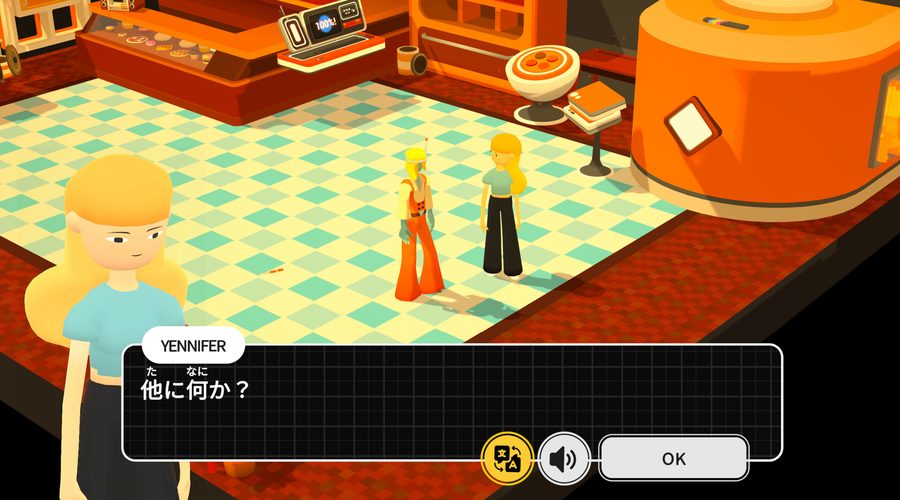
Screenshot from the Noun Town Steam store page, showing furigana displayed above kanji in an in-game conversation
Duolingo's exercise format, built originally around European languages, translates less cleanly onto Japanese. Three writing systems instead of one alphabet, grammar particles with no direct English equivalent, and layered levels of politeness all make Japanese structurally different from the languages the app's format was designed around first. None of this is a knock on the team, it is just a harder problem to solve inside a one-size-fits-all lesson format.
This is also why comprehensible input, exposure to real language you can mostly understand, matters more for Japanese than it might for closely related languages. English speakers get a head start with Spanish or French through shared vocabulary. With Japanese, there is almost no such shortcut, so volume of genuine exposure ends up mattering more.
The most efficient fix is not to abandon Duolingo, since the daily habit it builds is genuinely valuable, but to add tools that cover its specific blind spots. A dedicated kanji app handles the character gap. Native audio at real speed, through podcasts, shows or a game environment built around native speaker recordings, closes the listening gap. Regular conversation practice, even ten minutes a week with an italki tutor or a language exchange partner, closes the speaking gap.
Vocabulary retention specifically benefits from contextual, spaced repetition-based learning, the kind the Noun Town Japanese vocabulary game is built around, where words are learned alongside native audio and visual context rather than as isolated translation pairs. The spaced repetition method behind it schedules review right before you would naturally forget a word, which stacks well on top of whatever Duolingo has already given you.
If you eventually want a formal marker of progress, the CEFR framework, more commonly used for European languages, is sometimes referenced alongside JLPT for cross-comparison, though JLPT remains the standard benchmark employers and universities in Japan actually ask for.
We've been on a bit of a journey with how Noun Town teaches Japanese specifically, and it's worth being upfront about it. Early on we displayed romaji everywhere, the romanised spelling next to every word, on the theory that it would make the game easier to pick up. Some players genuinely appreciated the safety net. Others told us it was actually holding them back from learning to read hiragana and katakana properly, since it's easy to lean on the romaji and never look at the actual script.
So we added furigana as well, the small kana readings printed above kanji, the same system Japanese children's books and beginner materials use, alongside the romaji rather than instead of it. That change landed well with pretty much everyone. Having both options means you can lean on romaji early on if you need to, while furigana keeps the actual script in front of you the whole time, so you are never fully disconnected from real Japanese.
To be clear, Noun Town does not set out to teach kanji directly. There are dedicated tools built specifically for that job, and we think trying to be everything at once usually means doing nothing particularly well. That said, players do pick up a meaningful number of kanji along the way just through repeated exposure in context, since the furigana lets you connect the sound to the character naturally rather than by rote memorisation. Where Noun Town is genuinely useful is making vocabulary practice and revision fun, which sits nicely alongside whatever is handling your grammar, kanji and speaking practice, Duolingo included.
Duolingo is a reasonable starting point for Japanese and a fine way to build the daily habit that most learners struggle with. It is not, by itself, enough to reach conversational fluency or pass JLPT N3 or higher. The streak tells you that you studied. It does not tell you that you can read a menu, follow a conversation at normal speed, or hold your own in a real exchange. Those require kanji study, real audio, and speaking practice that Duolingo's current format was not built to deliver on its own.
Want to build Japanese vocabulary through native audio and context? There is a free demo on Steam.
Try Noun Town on SteamYou can learn a meaningful amount of beginner vocabulary and basic sentence patterns with Duolingo alone, roughly equivalent to JLPT N5 level. Beyond that, most learners find the kanji coverage, listening speed and speaking practice too thin to reach conversational ability without adding other resources.
Duolingo's Japanese course introduces a few hundred kanji across its tree, well short of the 2,136 joyo kanji used in everyday Japanese and far short of the 1,000 to 2,000 kanji needed for JLPT N2 or higher.
JLPT N5, the entry level, requires roughly 800 words. This is realistically within reach using Duolingo alone, combined with consistent daily practice over a few months.
Japanese uses three writing systems, hiragana, katakana and kanji, plus grammar patterns and levels of politeness with no direct English equivalent. Duolingo's exercise format was originally built around European languages, so it handles these Japanese-specific challenges less efficiently than a course designed around them from the start.
A dedicated kanji tool, native audio at natural speed, and real speaking practice are the three biggest gaps. Combining Duolingo with a vocabulary-in-context game, a kanji app like WaniKani, and italki conversation lessons covers most of what Duolingo alone leaves out.
Not directly. Noun Town does not set out to teach kanji as a dedicated system, since tools built specifically for that job, like WaniKani, do it better. Players do pick up a meaningful number of kanji incidentally through repeated exposure and furigana readings during regular vocabulary play.
Noun Town uses furigana, the small kana readings printed above kanji, alongside romaji rather than one replacing the other. The game originally showed romaji only, and while some players liked the safety net, others found it discouraged them from learning to read the actual script. Adding furigana on top was well received by nearly everyone, since you can still lean on romaji when you need it while furigana keeps the real script in view.
Not entirely. Noun Town is best used as a supplement for vocabulary practice and revision rather than a full replacement for a structured course. Duolingo, a grammar resource, or lessons with a tutor still cover ground Noun Town is not designed to teach.
Yes. Noun Town makes vocabulary drilling and revision genuinely fun through a 3D game world with native audio, which pairs well with the daily habit and grammar structure Duolingo already provides. Many learners use both together rather than choosing one over the other.