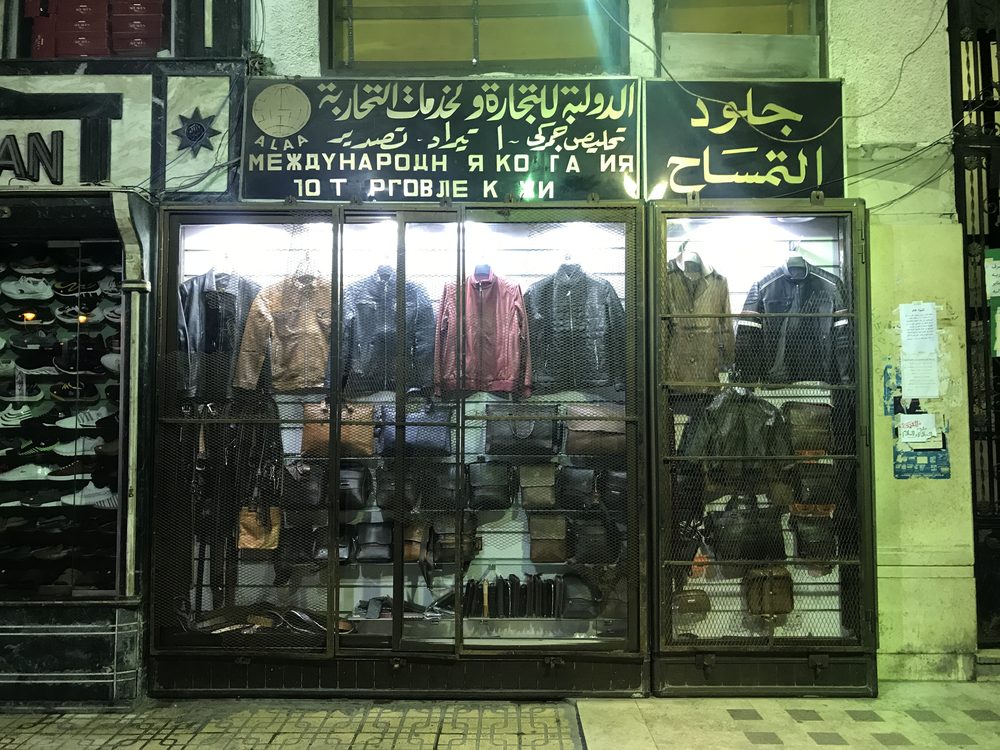
Photo: Marsupium / Wikimedia Commons (CC BY-SA 4.0)
Short answer: A small but genuine set of Steam games teach Arabic. Noun Town teaches Egyptian Arabic vocabulary through a 3D open world with native audio and speech recognition for a one-time $19.99. Earthlingo is a free explore-a-planet game covering basic Arabic among 27 other languages, and An Adventure in Arabic is a free, newly released game built specifically around the alphabet. Arabic sits in the US Foreign Service Institute's hardest language category, needing around 2,200 class hours for professional fluency, so pick a tool for the long haul rather than a quick fix.
Search for a game to learn French or Spanish on Steam and you get a decent spread of results. Search for Arabic and the list gets a lot shorter, fast. That is not because Arabic learners are rare, it is one of the most studied languages in the world, it is because building Arabic content is genuinely harder: the script runs right to left, pronunciation involves sounds English does not have, and there are real questions about which dialect to teach.
This guide covers what is actually available on Steam right now, built specifically to teach Arabic rather than games that merely support Arabic as a menu language.
Part of the gap is technical. A right-to-left script, connected letterforms that change shape depending on position in a word, and diacritical marks for vowels all add real development overhead that a Latin-alphabet language does not require. Part of it is also a dialect question that most European languages simply do not face in the same way.
Modern Standard Arabic is the formal written form used in news broadcasts, books and official documents across the Arab world. But almost nobody grows up speaking it at home. Regional dialects, Egyptian, Levantine, Gulf and Maghrebi among others, are what people actually use day to day, and they differ from each other more than, say, Spanish differs from Portuguese. A game has to pick a lane, and that decision alone puts off some developers before they start.
Noun Town picked Egyptian Arabic specifically, partly because decades of Egyptian film, television and music have made it the dialect most widely understood across the Arab world, even by people who grew up speaking something else at home.
Here is what is genuinely available on Steam today, in order of how complete the teaching experience is.
A 3D open world where you pick up Egyptian Arabic vocabulary through NPC conversations and environmental objects, with native speaker audio, speech recognition for pronunciation practice, and a spaced repetition system that schedules review at the right intervals. Covers Arabic alongside 11 other languages under one purchase, with a free demo available.
A planet-exploration game teaching over 1,000 words and 50 sentences across 28 languages, including Arabic, by attaching vocabulary to locations you visit. Lighter in depth than a dedicated single-language game, but a reasonable no-cost starting point.
A newly released adventure RPG built entirely around the Arabic alphabet. Chapter One focuses on letter shapes and pronunciation as you play through the story. Worth trying first if the script itself is your biggest hesitation about starting Arabic at all.
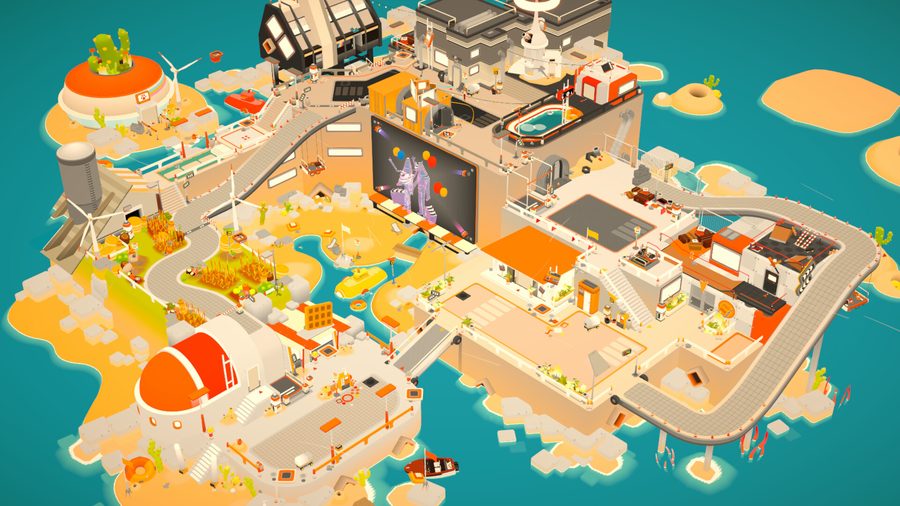
Screenshot from the Noun Town Steam store page
Vocabulary in Noun Town is tied to the world rather than delivered as a list. A word for bread comes from a bakery stall, a greeting comes from a shopkeeper you talk to, a direction comes from asking an NPC how to get somewhere. That context is doing real work, because vocabulary tied to a place, a sound and an action tends to stick harder than the same word memorised from a flashcard.
Every word is voiced by a native Egyptian Arabic speaker, so pronunciation is modelled correctly from the start rather than approximated. The game also has speech recognition, letting you practise saying words back and get feedback, which very few Arabic-teaching games on Steam currently offer. You can see the full breakdown of how the game works, and which of its 12 languages are available, on the Noun Town language learning game page.
There are no ads and nothing paywalled once you own the game. That was intentional. The team used the major mobile language apps before building Noun Town and ran into the same frustration a lot of learners describe, hitting a wall a few lessons in and being asked to pay again or sit through an ad. Noun Town is a single $19.99 purchase instead, everything included from the first session.
The Arabic script is written right to left, and most letters change shape depending on whether they appear at the start, middle or end of a word, or stand alone. That sounds intimidating, but it is a consistent, learnable system, not a random one, and most learners can recognise the isolated letter forms within a few weeks of regular exposure.
The US Foreign Service Institute places Arabic in its hardest category for native English speakers, alongside Chinese, Japanese and Korean, estimating around 2,200 class hours to reach professional working proficiency according to the FSI difficulty rankings. That number reflects full professional fluency across reading, writing and formal speech. Conversational vocabulary for everyday situations is considerably more reachable, and that gap between the headline number and realistic early goals is worth keeping in mind so it does not put you off before you start.
Arabic letters, most with 2 to 4 positional forms
FSI estimated class hours for professional proficiency
Weeks to recognise 250-400 common words with regular play
Games are genuinely strong at the parts of Arabic learning that trip people up early: hearing correct pronunciation repeatedly, associating words with meaning without translating in your head, and staying consistent because the format is enjoyable rather than a chore. None of the three games above teach Arabic grammar in any structured way, and Arabic grammar, verb conjugation patterns, the root and pattern system, formal versus spoken register, is genuinely complex.
If your goal is reading news in Modern Standard Arabic, writing formally, or passing a language proficiency exam, a structured course or tutor covering grammar explicitly is going to get you there faster than any game alone. If your goal is speaking, understanding, and building a working vocabulary for travel or conversation with Egyptian Arabic speakers, a vocabulary-first game like Noun Town does most of the heavy lifting on its own, especially in the early months.
The two are not in competition. A lot of learners get the best results treating a game as their main daily habit and adding grammar study on top once vocabulary and listening feel comfortable enough to build on.
With consistent play of 20 to 30 minutes a day, most learners recognise 250 to 400 common Arabic words and everyday phrases within five to seven weeks, once spaced repetition has cycled through the core vocabulary a few times. That covers greetings, food, directions, numbers and enough everyday nouns to follow simple conversation.
Reading fluently and following fast native speech both take considerably longer, closer to the hundreds of hours the FSI estimate describes. The encouraging part is that vocabulary and listening, the two areas games are strongest at, are also what make the biggest difference to how confident you feel using Arabic in real situations early on.
Curious what learning Egyptian Arabic this way feels like? There is a free demo on Steam.
Try Noun Town on SteamNoun Town is the most complete option, teaching Egyptian Arabic vocabulary through a 3D open world with native speaker audio, speech recognition and spaced repetition, for a one-time $19.99. Earthlingo is a free option covering basic Arabic vocabulary alongside 27 other languages, and An Adventure in Arabic is a free, newly released game focused specifically on teaching the Arabic alphabet.
Yes. Noun Town teaches Egyptian Arabic vocabulary in context inside a 3D world, with every word paired to native speaker audio and reviewed through spaced repetition. It also includes speech recognition, so you can practise pronunciation out loud rather than only recognising words on screen.
Noun Town teaches Egyptian Arabic, the dialect most widely understood across the Arab world thanks to Egyptian film, television and music. Modern Standard Arabic is the formal written variety used in news and official documents, but it is rarely the version spoken day to day on the street.
Arabic is classed by the US Foreign Service Institute as one of the hardest language groups for native English speakers, needing an estimated 2,200 class hours to reach professional working proficiency. The main early hurdles are a new script written right to left and sounds that do not exist in English, though everyday conversational vocabulary is more approachable than that headline figure suggests.
Yes. Earthlingo and An Adventure in Arabic are both free on Steam. Noun Town also has a free demo so you can try the Egyptian Arabic content and mechanics before deciding whether to buy the full game.
An Adventure in Arabic is built specifically around the alphabet, teaching letter shapes and pronunciation directly. Noun Town and Earthlingo show words written in Arabic script alongside native audio as you play, which builds familiarity with the script gradually rather than through dedicated alphabet drills.
With consistent play of 20 to 30 minutes a day, most learners recognise 250 to 400 common Arabic words and everyday phrases within five to seven weeks, once spaced repetition has cycled through the core vocabulary a few times. Reading the script fluently and following native speech at full speed both take considerably longer.
Not entirely, particularly given how much Arabic grammar and formal register differs from English. Games are strong for vocabulary, listening and pronunciation practice, but a structured course or tutor is still worth adding if your goal includes reading news, writing formally, or understanding Modern Standard Arabic specifically.
Earthlingo is free and covers Arabic alongside 27 other languages with a lighter vocabulary set of around 1,000 words. Noun Town is a paid, more in-depth game focused on 12 languages including Egyptian Arabic, with a fuller spaced repetition system, speech recognition and a larger open world to explore.
No. All three games are designed for complete beginners and introduce Arabic script and vocabulary from the first session. You do not need any prior knowledge of Arabic or its alphabet before you start playing.