
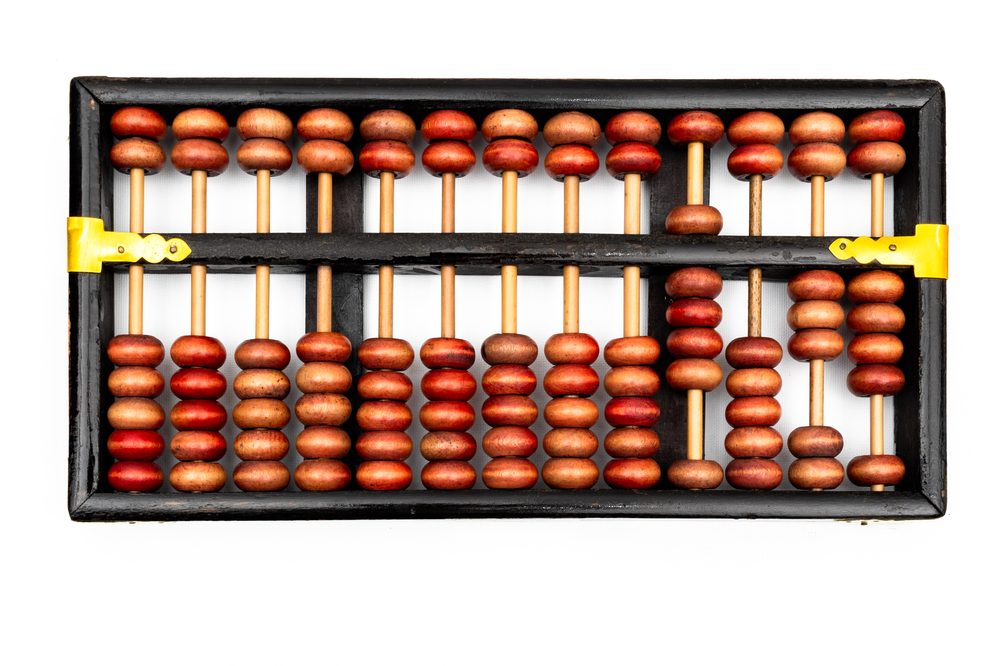
Photo: Felix Winkelnkemper / Wikimedia Commons (CC BY-SA 4.0)
Numbers in Chinese are built from just eleven words: yī through shí (1 to 10), plus bǎi for hundred. Every number from 11 to 99 is created by combining these in a strict, fully predictable order, shíyī for 11 (ten-one), èrshí for 20 (two-ten), èrshíyī for 21 (two-ten-one), with zero irregular forms anywhere in the entire system. There is no equivalent of English's eleven, twelve or a dozen, no hidden exception like French's quatre-vingts for 80, and no gendered agreement to track. This guide covers the full pattern from 0 to 100, the one real exception worth knowing, and how Chinese counts past 10,000.
Short answer: 0 to 10 are líng, yī, èr, sān, sì, wǔ, liù, qī, bā, jiǔ, shí. 11 to 19 are shí plus the digit (shíyī, shí'èr...). 20 to 99 are the tens digit plus shí plus the units digit (èrshí for 20, sānshíyī for 31). 100 is yìbǎi. The whole system has one common exception: èr often becomes liǎng when counting objects.
| Number | Chinese | Pinyin | Pronunciation |
|---|---|---|---|
| 0 | 零 | líng | ling |
| 1 | 一 | yī | ee |
| 2 | 二 | èr | arr |
| 3 | 三 | sān | sahn |
| 4 | 四 | sì | suh |
| 5 | 五 | wǔ | woo |
| 6 | 六 | liù | lyoh |
| 7 | 七 | qī | chee |
| 8 | 八 | bā | bah |
| 9 | 九 | jiǔ | jyoh |
| 10 | 十 | shí | shr |
Every number above ten in Chinese is built from these same eleven syllables. There is no separate word to learn for eleven, twelve, or anything else, which already makes Chinese numbers unusually light on raw vocabulary compared with European languages. The Wikipedia entry on Chinese numerals covers the full historical number system this pattern comes from.
The tone marks above each vowel are not decorative, they change the meaning of the syllable. Sì (4, falling tone) and sǐ (dead, a dipping tone) sound close enough that mixing them up is a commonly cited superstition in Chinese-speaking regions, part of why some buildings skip a floor numbered 4 the way some Western buildings skip 13. The Wikipedia article on Standard Chinese phonology explains the tone system behind distinctions like this one in more depth.
Yī keeps its first, level tone when counting numbers in sequence, yī, èr, sān, but shifts tone in other grammatical contexts, such as right before a measure word in an ordinary sentence. That shift does not affect the numbers covered in this guide, it only applies once yī is doing a different grammatical job outside of pure counting.
| Number | Pinyin | Literal meaning |
|---|---|---|
| 11 | shíyī | ten-one |
| 12 | shí'èr | ten-two |
| 15 | shíwǔ | ten-five |
| 20 | èrshí | two-ten |
| 21 | èrshíyī | two-ten-one |
| 30 | sānshí | three-ten |
| 45 | sìshíwǔ | four-ten-five |
| 50 | wǔshí | five-ten |
| 99 | jiǔshíjiǔ | nine-ten-nine |
| 100 | yìbǎi | one-hundred |
Eleven through nineteen are simply shí (ten) followed by the units digit: shíyī is literally ten-one, shíwǔ is ten-five. There is nothing new to memorise beyond the two words you already know.
Twenty is èrshí, two-ten, and every other multiple of ten follows the identical shape: sānshí (30, three-ten), sìshí (40, four-ten), all the way to jiǔshí (90, nine-ten). Add a units digit on the end for anything in between, and èrshíyī (21, two-ten-one) or sìshíwǔ (45, four-ten-five) follow exactly the same logic as the teens did, just one level up.
Compare this to French, where 80 is quatre-vingts, literally four-twenties, or English, where eleven and twelve are entirely separate words unrelated to one and two. Chinese has no equivalent irregularity anywhere in this range. Once you know yī through shí, every two-digit number is just assembling the same pieces in the same order.
100 is yìbǎi, literally one-hundred, and unlike English, the yī is required. You cannot say bǎi on its own to mean 100 the way English can drop to a hundred, though bǎi alone appears freely inside larger compound numbers, such as sānbǎi for 300.
Èr is the number two used when counting in sequence, yī, èr, sān, or inside a larger number, such as èrshí (20) or shí'èr (12). Liǎng is a separate word that also means two, used specifically when counting actual objects with a measure word, such as liǎng gè rén for two people rather than èr gè rén.
This is the single most common correction a beginner needs. Saying èr gè rén is understandable but noticeably unnatural, roughly the way doubling up an article in English would sound odd to a native speaker. Liǎng is also used for telling time with o'clock, liǎng diǎn for two o'clock, while èr stays standard for addresses, phone numbers, page numbers, and any number that is simply being counted rather than describing a quantity of something.
There is a further spoken-only convenience worth knowing: in rapid speech, particularly when reading out a string of digits like a phone number or an ID, yī is sometimes replaced with yāo to keep it from blurring into qī (seven), the same practical reason English speakers occasionally say niner instead of nine over a radio.
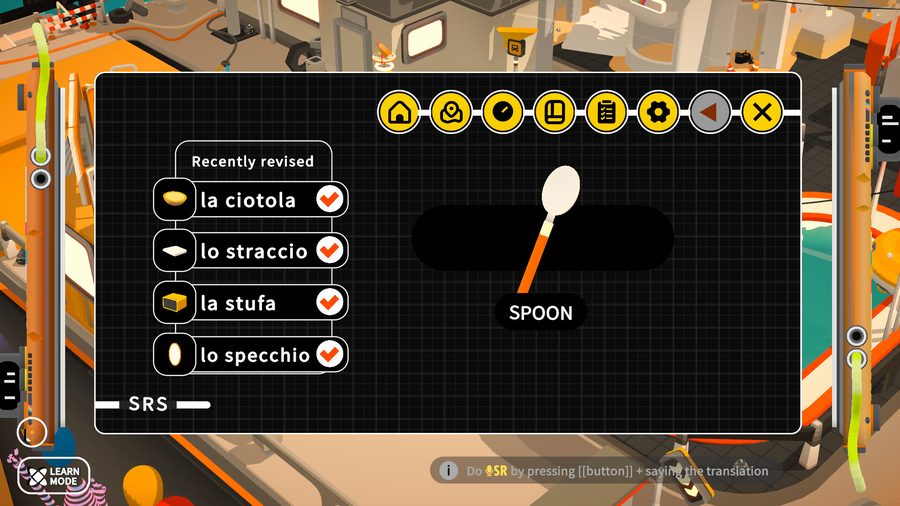
Screenshot from the Noun Town Steam store page, showing a spaced repetition review in progress
Even a genuinely simple number system like this one fades without review. The screen above shows Noun Town's spaced repetition queue bringing a word back for a quick check shortly before you would naturally start to forget it, the same scheduling that keeps a number like shíwǔ or bǎi from slipping away once the initial novelty of how predictable Chinese counting is wears off.
English, and most European languages, group large numbers in thousands: one thousand, ten thousand, one hundred thousand, one million. Chinese groups them in units of ten thousand instead, a unit called wàn.
10,000 is yí wàn, the yī shifts to yí here due to a standard tone-sandhi rule before a falling-tone syllable, not a new or irregular word, rather than shí qiān, the English-style ten thousand. 100,000 is shí wàn, literally ten ten-thousands, and 1,000,000 is yìbǎiwàn, literally one hundred ten-thousands. This is not a different number system, just a different grouping point, the same figure is being described either way, the comma simply falls in a different place mentally.
This single difference is why translating large figures between English and Chinese on the fly, in news reports or financial documents especially, is a genuinely common source of small errors even for fluent bilingual speakers, since it requires converting between a base-1,000 mental grouping and a base-10,000 one rather than just translating word for word.
Age uses the measure word suì rather than nián (year): Wǒ èrshí suì, I am twenty years old, with no verb equivalent to the English to be needed in the sentence at all, since suì itself carries the meaning of years of age.
Prices put the number directly before the currency, Zhè shì shí kuài qián, this is ten yuan, with liǎng replacing èr if the quantity is exactly two of something being bought, such as liǎng gè píngguǒ, two apples.
One detail that regularly surprises learners: counting on your fingers in China, and much of East Asia, uses a different system from the two-handed method common in English-speaking countries. Numbers one through nine can each be shown with a single hand using distinct finger shapes, a practical shortcut worth knowing if you ever need to haggle at a market stall where it is noisy or the vendor does not share a language with you.
Because the pattern itself is so regular, most of the real work in learning Chinese numbers is tonal accuracy and listening speed, not memorising exceptions.
This is the kind of real-context, spoken repetition the Noun Town language learning game is built around, hearing liǎng gè píngguǒ said by a native speaker next to an actual scene of two apples, with spaced repetition bringing the word and its tone back for review automatically rather than leaving a flat list of pinyin to memorise alone.
Want to learn these numbers and hundreds of other Chinese words in context? Try the free demo on Steam.
Try Noun Town on Steam0 to 10 in Mandarin Chinese is líng, yī, èr, sān, sì, wǔ, liù, qī, bā, jiǔ, shí. These eleven syllables, including líng for zero, are the entire foundation of the whole number system, since every larger number is built from combining them.
11 to 19 are shí (ten) followed by the units digit, so shíyī is literally ten-one and shíjiǔ is ten-nine. 20 is èrshí, two-ten. There are no irregular words anywhere in this range, unlike English eleven and twelve.
Because the entire system from 11 to 99 is built from just eleven syllables with one fully consistent pattern: tens digit, then shí, then units digit. There are no irregular words like English's eleven or French's quatre-vingts, and numbers never change for gender or grammatical case.
Èr is used for counting in sequence or inside larger numbers, such as shí'èr (12). Liǎng is a separate word for two used specifically with a measure word when counting actual objects, such as liǎng gè rén for two people, and also for telling time at two o'clock.
Chinese groups large numbers in units of ten thousand, called wàn, rather than thousands. 10,000 is yí wàn, 100,000 is shí wàn, ten ten-thousands, and 1,000,000 is yìbǎiwàn, one hundred ten-thousands, a different grouping point from English rather than a different number.
Wǒ èrshí suì, I am twenty years old, uses the measure word suì for years of age, with no separate verb needed to mean am the way English requires to be.
Sì (four) sounds close to sǐ (dead, a different tone), and the superstition around that similarity is common enough across Chinese-speaking regions that some buildings and hotels skip a floor or room number containing 4, similar to how some Western buildings skip the number 13.
Most learners can count confidently from 0 to 100 within a single focused session, since the pattern has no exceptions to memorise beyond èr versus liǎng. Getting the tones consistently accurate at natural speaking speed, especially sì and qī, usually takes longer than learning the pattern itself.
No. Chinese numbers do not inflect for gender, case, or plurality at all, which is part of what makes the system lighter to learn than number systems in languages like Spanish or German that require gender agreement.
Yes, particularly for tone accuracy and the èr versus liǎng distinction, since hearing liǎng gè píngguǒ spoken by a native speaker next to an actual scene of two apples makes both the word and its tone click faster than reading pinyin off a page. Repeated, spaced exposure reinforces the sound, not just the spelling.
Further reading: the Wikipedia entry on Chinese numerals covers the full historical number system in more depth, including the formal characters used on banknotes. The Wikipedia article on Standard Chinese phonology explains the tone system behind distinctions like sì and sǐ. Chinese measure words are the grammatical category that decides when liǎng replaces èr. The Mandarin Training Center at National Taiwan Normal University is one of the longest-running academic Mandarin teaching institutes outside mainland China.
← Back to blog