
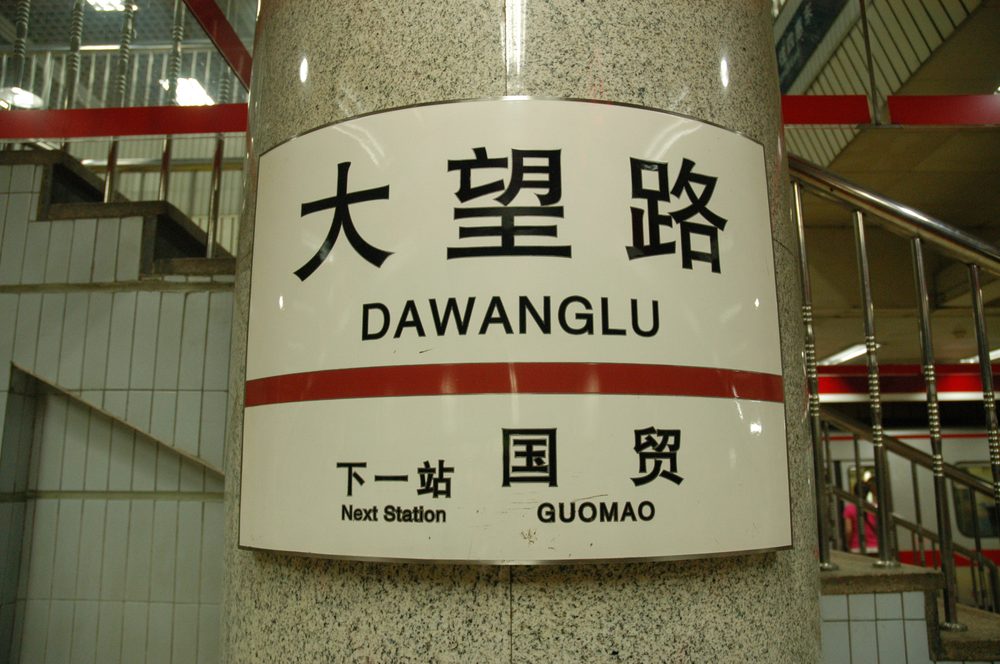
Photo: Scott Meltzer / Wikimedia Commons (public domain)
Mandarin Chinese takes around 2,200 class hours, roughly 88 weeks of full-time study, for an English speaker to reach professional working proficiency, according to the US Foreign Service Institute. That's nearly three times the 600 to 750 hours French or Spanish require, and it puts Mandarin in the FSI's hardest category alongside Japanese, Cantonese, Korean and Arabic. The good news buried inside that headline number is that Chinese grammar is actually simple by world language standards. Almost all of those 2,200 hours go toward two specific skills, tones and characters, rather than being spread evenly across the whole language.
Short answer: Mandarin needs about 2,200 class hours, roughly 88 weeks full-time, to reach professional proficiency by FSI estimates. A conversational level (HSK 3 to 4) is reachable in 500 to 700 hours. Studying 30 to 45 minutes a day, expect two to three years to reach comfortable everyday conversation.
FSI hours describe the road to professional fluency, but most learners think in terms of the HSK, China's standardised proficiency test and the benchmark most Mandarin courses are built around. Combining the two gives a much more usable picture than either number alone.
| HSK level | Vocabulary | Approx. hours from zero |
|---|---|---|
| HSK 1 | 150 words | 100 to 150 hours |
| HSK 2 | 300 words | 150 to 250 hours |
| HSK 3 | 600 words | 300 to 450 hours |
| HSK 4 | 1,200 words | 500 to 700 hours |
| HSK 5 | 2,500 words | 900 to 1,200 hours |
| HSK 6 | 5,000+ words | 1,800 to 2,200 hours |
Roughly speaking, HSK 3 to 4 lines up with CEFR A2 to B1, comfortable everyday conversation, while HSK 6 sits close to the FSI's own 2,200 hour professional proficiency estimate. These figures vary by source and by how intensively someone studies, but they're consistent enough across language schools to plan around.
Two features do almost all the work in making Mandarin's timeline so much longer than a Category I language's, and neither one is grammar. Standard Mandarin uses four main tones, plus a neutral tone, and pitch is part of a word's identity in the same way a consonant is. English uses pitch for emotion and emphasis, never to change a word's meaning, so tone perception is a genuinely new skill rather than a refinement of something English speakers already do.
The second is the writing system. Chinese characters don't spell out sounds the way an alphabet does, so each one has to be learned individually alongside its pronunciation and meaning. There's no "sound it out" shortcut available to a beginner staring at an unfamiliar character, the way there is for a beginner staring at an unfamiliar French or German word. We go into this in more depth in our companion piece on whether Chinese is hard to learn, but the short version is that grammar, ironically, is one of Mandarin's easiest parts. There's no verb conjugation, no plurals and no grammatical gender to track, which is a genuine relief once tones and characters stop dominating your attention.
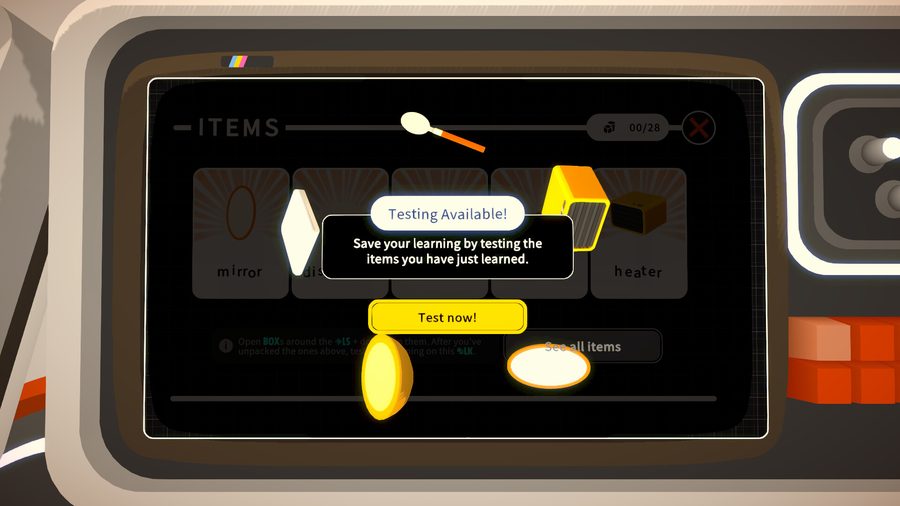
Screenshot from the Noun Town Steam store page, showing the vocabulary testing prompt that reinforces tone recognition
Numbers on a table are one thing, but here's what that progress actually feels like month to month for a learner putting in around five hours a week.
The first three to four months are almost entirely about training your ear and your hand. Tone drills, pinyin, and your first 150 or so characters, and progress can feel frustratingly invisible during this stretch because so much of the work is perceptual rather than something you can point to. By around six to seven months in, roughly 150 to 250 hours, most learners can handle basic greetings, numbers and simple transactional exchanges, HSK 1 to 2 territory, and tones start to feel less like guesswork.
Around the one-year mark, somewhere near 400 to 450 hours, sentence patterns start clicking into place faster than new vocabulary can be added, mostly because Mandarin grammar genuinely is simple once the basic patterns are internalised. By eighteen months to two years, 500 to 700 hours, HSK 3 to 4 level conversation on familiar topics becomes realistic, and reading starts to catch up with speaking as character recognition builds. Beyond two and a half years, past 900 hours, HSK 5 and genuinely comfortable conversation come into reach, with professional proficiency, HSK 6 and the FSI's 2,200 hour benchmark, sitting another year or more beyond that for most self-paced learners.
A handful of specific factors account for almost all of the gap between Mandarin and an easier language like Spanish. Knowing where the time actually goes helps you plan for it rather than being discouraged by it.
Full immersion, living somewhere Mandarin is spoken daily, remains the fastest route by total calendar time, since constant listening exposure is exactly what tone perception needs most. It isn't realistic for most learners, though, and it isn't strictly necessary either. Consistent daily practice with native speaker audio, spaced repetition for both characters and tones, and regular speaking practice can build genuine conversational ability without ever leaving home, just on a longer calendar timeline than immersion would offer.
The single highest-leverage habit for a self-paced learner is attaching tone to every new word from the very first exposure, rather than learning the meaning first and adding the tone as an afterthought later. This is the same principle behind how vocabulary gets introduced in the Noun Town language learning game, where every word is paired with native speaker audio inside a 3D scene from the first time you encounter it, so correct tone becomes a habit rather than a correction applied after the fact.
How long Chinese "takes" depends enormously on what you're actually trying to do. Ordering food and getting around comfortably on a trip is an HSK 2 to 3 goal, realistically reachable within six months to a year of steady part-time study. Holding a real conversation with family, friends or colleagues sits at HSK 3 to 4, roughly the one to two year mark. Professional working fluency, the FSI's own 2,200 hour benchmark, is a multi-year project for almost everyone outside a full-time immersive program.
None of those goals are the wrong one to pick. Committing to a specific, honest target, rather than a vague sense of wanting to "be fluent," makes it far easier to recognise real progress along the way instead of feeling like the language is an endless climb with no visible waypoints.
Ready to start building Mandarin vocabulary with tone built in from day one?
Try Noun Town on SteamReaching a basic beginner stage, roughly HSK 1 to 2, greetings and simple exchanges, generally takes 150 to 250 guided study hours. That's noticeably more than a beginner stage in Spanish or French, mostly because of the character system.
By FSI hour estimates, Mandarin sits in the joint-hardest category alongside Japanese, Cantonese, Korean and Arabic, all around 2,200 class hours. Whether it's the single hardest depends on the learner, since Chinese grammar is actually simpler than most European languages.
With consistent daily study, around 500 to 700 hours in total, a learner can typically reach HSK 3 to 4, enough for everyday conversation on familiar topics, within a year. Reading fluency usually lags behind speaking at this stage.
Thirty to forty-five minutes of daily practice, split between tone and listening drills and character or vocabulary review, tends to build more durable progress than infrequent longer sessions.
Around 2,000 to 3,000 characters cover roughly 97 to 99 percent of everyday written Chinese. HSK 6, the top level of the standard test, requires about 5,000 words, though many of those are combinations of already-known characters.
No, Chinese grammar is one of the simpler parts of the language. There's no verb conjugation, no plurals and no grammatical gender to memorise, which is a genuine relief compared to German or French.
Pairing each new word with its tone and native speaker audio from the very first exposure, rather than learning the meaning first and the tone later, tends to produce far more reliable pronunciation than adding tones on as an afterthought.
No. Immersion speeds things up considerably, but self-study with native speaker audio, spaced repetition and regular speaking practice can build genuine conversational ability without ever leaving home.
Most estimates put HSK 4, roughly a B1 to B2 conversational level with about 1,200 words, at somewhere between 500 and 700 cumulative study hours from zero.
For an English speaker starting from zero, Mandarin is generally considered somewhat more approachable, mainly because it has four tones compared to Cantonese's six to nine depending on how they're counted, and far more learning material is available for Mandarin.