Photo: MIKI Yoshihito / Wikimedia Commons (CC BY 2.0)
The JLPT N2 vocabulary list runs to roughly 6,000 words, plus around 1,000 to 1,250 kanji you're expected to recognise on sight. That's before you even get to grammar patterns or listening comprehension. N2 sits at the halfway point of the five level Japanese Language Proficiency Test, one step below the top level N1, and it has become a much more common target since April 2026, when Japan tightened the language requirements attached to one of its most widely used work visas. If you're planning to sit N2, the vocabulary size is the first number worth understanding properly.
Short answer: JLPT N2 requires roughly 6,000 vocabulary words and around 1,000 to 1,250 kanji, more than double the kanji count needed for N3. Since 15 April 2026, N2 level Japanese, or an equivalent CEFR B2 certificate, has also been required for many applicants to Japan's Engineer/Specialist in Humanities/International Services visa, the country's most common professional work visa route.
Vocabulary words on the N2 list
Kanji expected at N2 level
Date the linked visa rule took effect
N2 vocabulary isn't just "more words." The jump from N3 reflects what the test is actually trying to measure: whether you can read a newspaper article, follow a work meeting, or understand a conversation at natural speed on a topic you haven't specifically studied. That means the word list pulls from a wider range of registers than the everyday vocabulary tested at N4 and N3.
Broadly, the N2 list is made up of:
Most of this is recognition vocabulary rather than words you need to produce fluently in speech. The test is built around reading and listening sections, so understanding a word in context matters more than being able to recall and use it unprompted in conversation.
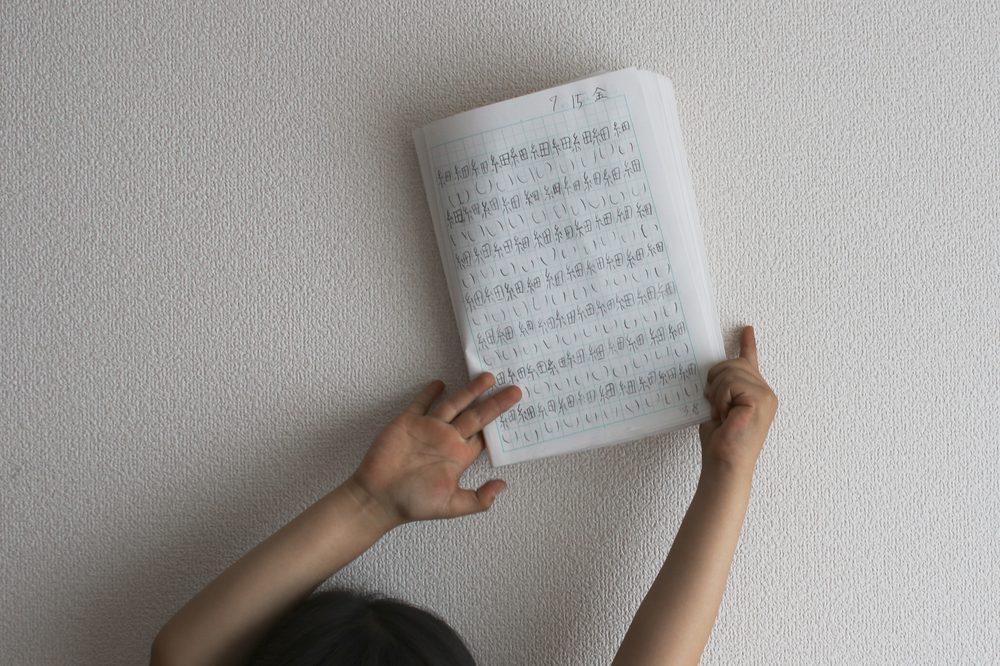
Kanji is where N2 tends to intimidate people most. You're looking at roughly 1,000 to 1,250 characters, compared with around 600 to 650 at N3. That's a real step up, not a gentle one, and it's usually the number that makes learners pause before committing to the level.
There are a few common approaches: rote stroke order memorisation, dedicated kanji-only study tools, and picking characters up incidentally through repeated exposure while reading or playing. We've watched this debate play out in Noun Town's own Japanese content. The game used to show romaji throughout, and feedback on that was genuinely mixed, some players liked the extra support, others felt it discouraged them from actually learning the real script. It now shows furigana above kanji instead, which keeps the correct script visible while still giving you a way to read it, and that change was received well pretty much across the board.
Worth being honest about here: Noun Town doesn't teach kanji as a dedicated system, and tools built specifically for that, like WaniKani, exist for a reason and do it better. What a game like ours is good for is incidental exposure, seeing the same kanji again and again in context until it starts to feel familiar, which complements dedicated kanji study rather than replacing it.
As of 15 April 2026, Japan revised the language requirements attached to its Engineer/Specialist in Humanities/International Services visa, the most common professional work visa category in the country. Applicants now generally need Japanese ability at N2 level, or an equivalent CEFR B2 certificate, for roles where Japanese is actually used on the job.
The rule doesn't apply evenly. It's aimed at categories 3 and 4, which cover small and medium sized employers and startups, a group that makes up the large majority of companies hiring under this visa. Larger, more established employers in categories 1 and 2 are generally exempt from the new language requirement.
There are exemptions worth knowing about too. Applicants already in Japan on a student visa who transition directly into this work visa category can be exempt in some cases, and the requirement is only meant to apply where the role genuinely involves using Japanese day to day. Still, for a huge number of prospective applicants, this is the first time N2 has moved from "nice to have" to something closer to a checklist item.
Almost nobody sitting N2 is starting from zero. Most candidates have already cleared N4 and N3, which means a meaningful chunk of that 6,000 word target is already familiar. The realistic gap for most learners is closer to 2,000 to 2,500 new words, not the full list.
Using spaced repetition, a well studied method that resurfaces words right before you're likely to forget them, learning and properly retaining 20 to 30 new words a day is a sustainable pace for most people without burning out. At that rate, closing a 2,500 word gap takes roughly three to five months of consistent daily study. In practice most learners spread N2 preparation over six months to a year, since vocabulary is only one part of the test alongside grammar, reading speed, and listening comprehension.
Consistency matters more here than intensity. Cramming 100 words in a single sitting is far less effective than 20 words reviewed properly every day, because the spacing between reviews is doing most of the work of moving words into long term memory.
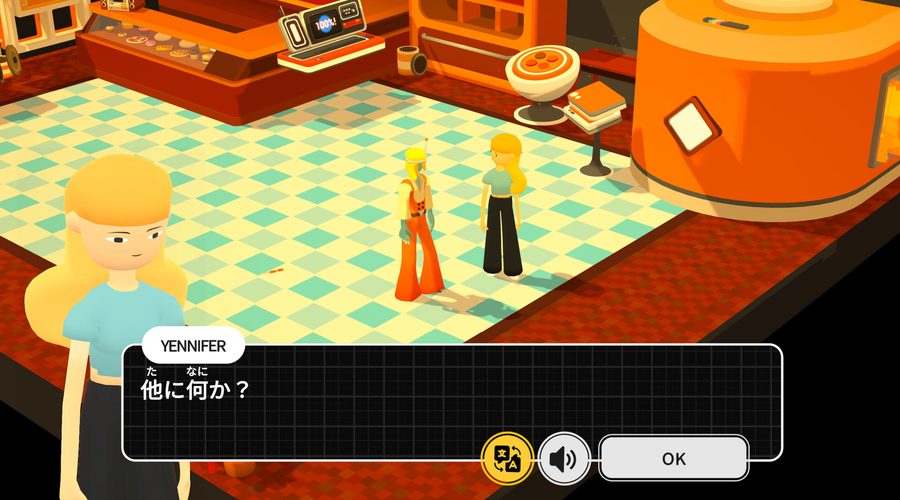
Screenshot from the Noun Town Steam store page, showing furigana-assisted Japanese dialogue
We'll be upfront about this: Noun Town isn't a JLPT test-prep tool, and it doesn't drill you on JLPT specific word lists. What it's built to do is help foundational vocabulary and kanji familiarity stick, through a 3D world where words are tied to objects, native speaker audio, and a spaced repetition system running quietly in the background. That's the same kind of exposure that tends to help words stay in long term memory, even if the exam itself isn't the focus.
You can see how the Japanese content actually works, furigana and all, on the Noun Town language learning game page. If you're specifically working toward N2, we'd suggest treating it as a way to build a strong vocabulary base and stay engaged day to day, paired with dedicated JLPT word lists and timed past papers closer to your exam date, rather than relying on any one tool alone.
Curious how Noun Town handles Japanese vocabulary and kanji? There's a free demo on Steam.
Try Noun Town on SteamThe JLPT N2 vocabulary list covers roughly 6,000 words, including nouns, verbs, adjectives, and common set expressions. You don't need perfect recall of every single one to pass, since the test relies partly on context and grammar knowledge to fill gaps, but 6,000 is the realistic target most textbooks and prep courses study toward.
Around 1,000 to 1,250 kanji, more than double the roughly 600 to 650 kanji needed for N3. This is usually the biggest jump learners notice between the two levels.
For many applicants, yes. Since 15 April 2026, Japan's Engineer/Specialist in Humanities/International Services visa, the country's most common professional work visa, requires Japanese ability at N2 level or an equivalent CEFR B2 certificate for roles at small and medium sized companies (categories 3 and 4). Larger established employers and roles that don't actually use Japanese are generally exempt.
It depends heavily on your starting point. Most N2 candidates already hold N3 or N4 level Japanese, so the practical gap is often closer to 2,000 to 2,500 new words rather than the full 6,000. At a sustainable pace of 20 to 30 new words a day with spaced repetition, that gap typically closes in three to five months, though most learners spread N2 prep over six months to a year alongside grammar and reading practice.
N2 vocabulary is roughly double the size of N3's, and it draws more heavily on workplace language, newspaper writing, and idiomatic expressions rather than everyday conversation alone. The kanji count also jumps sharply, from around 600 to 650 at N3 to around 1,000 to 1,250 at N2.
Mostly recognition. JLPT N2 is a reading and listening test, so you need to understand words when you see or hear them rather than produce every one in speech or writing. That said, active use tends to reinforce recognition, so speaking and writing practice still helps overall retention.
A mix works best: JLPT-specific word lists so you study words the test actually uses, a spaced repetition system so words resurface right before you'd forget them, and regular exposure to native material like graded news articles or subtitled Japanese media, so vocabulary stays tied to real context rather than isolated flashcards.
Feedback on this is mixed depending on the learner, which is why Noun Town moved away from showing romaji throughout its Japanese content and switched to furigana above kanji instead. Furigana keeps the real script in front of you while still giving you a way to read it, and it was received well across the board after the switch.
It can help build the foundational vocabulary and kanji familiarity that supports N2 study, through spatial, contextual play with native speaker audio and spaced repetition. It isn't built as a dedicated JLPT test-prep tool though, so if you're sitting the exam, pair it with JLPT-specific word lists and past papers rather than relying on it alone.
No. N2 roughly corresponds to CEFR B2, meaning you can follow most everyday and some professional Japanese, read newspapers and general non-specialised material, and hold conversations on familiar topics. Full fluency, including nuanced or highly specialised language, generally sits closer to N1 and beyond.