
Verbs I: Groups and the ます Form
Verbs are where Japanese really gets moving. In this chapter you'll meet the three verb groups and learn to turn any dictionary form into the polite ます form — the key that unlocks 食べます, 飲みます and almost everything else you'll say at N5.
Verbs come last
A Japanese sentence saves its verb for the very end: 「パンを食べます」 is literally "bread-(object)-eat". And just like です, verbs never change for person or number — 食べます can mean I eat, you eat, she eats or we eat, depending on context. No am/is/are headaches, ever.
Every verb has a plain dictionary form — the one dictionaries list, like 食べる, 飲む, する — and a polite ます form used in everyday polite speech. This chapter shows you how to get from one to the other. The route depends on which of the three verb groups a verb belongs to, so we start there.
Listen: going out and coming home
出かけます and 帰ります — group 1 verbs in their natural habitat at the farm. Tap ► to hear each line.
 PX296
PX296ヤヤさんは朝、何時に出かけますか?
Yaya san wa asa, nanji ni dekakemasu ka?
Yaya, what time do you go out in the morning?
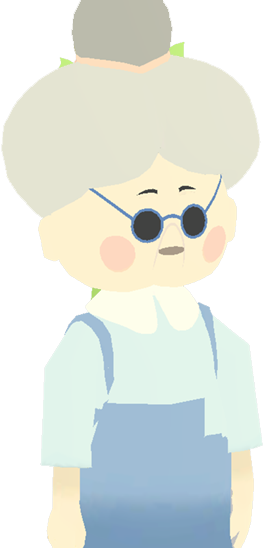 Yaya
Yaya朝、7時半に出かけます
asa, shichi ji han ni dekakemasu
I go out at 7:30 in the morning
PX296夜は何時に帰りますか?
yoru wa nanji ni kaerimasuka?
What time do you come back in the evening?
Yaya大抵、5時半に帰ります
taitē, goji han ni kaerimasu
I mostly come back at 5:30
Listen: waking up and going to bed
起きます and 寝ます — two essential group 2 verbs in a daily-routine conversation.
 Shelladonna
ロキーさんは朝、何時に起きますか?
Rokī san wa asa, nanji ni okimasuka?
Rocky, what time do you wake up in the morning?
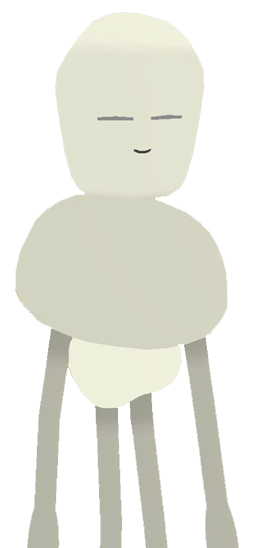 Rocky
Rocky7時に起きます
shichi ji ni okimasu
I wake up at 7:00
Shelladonna夜は何時に寝ますか?
yoru wa nanji ni nemasu ka?
What time do you go to bed?
Rocky11時に寝ます
jūichi ji ni nemasu
I go to bed at 11:00
The three verb groups
Every dictionary form ends in an u-sound: う, く, ぐ, す, つ, ぬ, ぶ, む or る. Japanese sorts its verbs into just three groups:
- Group 1 (u-verbs, godan) — the big group: 書く, 飲む, 会う, 行く, 待つ…
- Group 2 (ru-verbs, ichidan) — always end in る with an e or i sound before it: 食べる, 見る, 起きる, 寝る.
- Irregular — exactly two: する (do) and 来る (come).
To identify a verb's group, work through these checks:
- Doesn't end in る → Group 1 (飲む, 買う, 話す).
- Ends in る with an a, u or o sound before it → Group 1 (分かる, 作る, 乗る).
- Ends in る with an e or i sound before it → usually Group 2 (食べる, 見る) — but watch out for a handful of famous Group 1 impostors: 帰る (return home), 入る (enter), 走る (run), 切る (cut), 知る (know).
Memorise those impostors as you meet them — 帰る turns up in this chapter's farm lesson, so you'll drill the correct form straight away.
Group 2: drop る, add ます
Group 2 verbs are wonderfully lazy: chop off the final る and attach ます. Done.
| Dictionary form | ます form | Meaning |
|---|---|---|
| 食べる | 食べます | eat |
| 見る | 見ます | see, watch |
| 寝る | 寝ます | sleep, go to bed |
| 起きる | 起きます | wake up, get up |
| 開ける | 開けます | open |
One important point about meaning: ます is a non-past form. It covers both the present (habits, general truths) and the future. 食べます can mean "I eat" or "I will eat" — a time word like 明日 (tomorrow) or 毎日 (every day) usually settles it.
パンを食べます。
pan o tabemasu.
I eat bread.
を marks the object of the verb — particles get their own chapter soon.
テレビを見ます。
terebi o mimasu.
I watch TV.
毎朝、七時に起きます。
maiasa, shichi-ji ni okimasu.
I wake up at seven every morning.
おきる (wake up) is one of the verbs you'll drill in the sports-centre lesson below.
Group 1: slide the u-sound to i, add ます
Group 1 verbs need one extra step: the final u-sound slides along the kana chart to the matching i-sound, and then ます attaches. く becomes き, む becomes み, う becomes い, and so on — same move every time.
| Dictionary form | Change | ます form | Meaning |
|---|---|---|---|
| 書く | く → き | 書きます | write |
| 泳ぐ | ぐ → ぎ | 泳ぎます | swim |
| 話す | す → し | 話します | speak |
| 待つ | つ → ち | 待ちます | wait |
| 飛ぶ | ぶ → び | 飛びます | fly |
| 飲む | む → み | 飲みます | drink |
| 買う | う → い | 買います | buy |
| 帰る | る → り | 帰ります | return home |
Spot 帰る in the last row: it ends in る, but because it's a Group 1 impostor, る slides to り — 帰ります, never 帰ます.
手紙を書きます。
tegami o kakimasu.
I write a letter.
毎日、コーヒーを飲みます。
mainichi, kōhī o nomimasu.
I drink coffee every day.
A word like まいにち (every day) signals a habit.
明日、友達に会います。
ashita, tomodachi ni aimasu.
I'll meet a friend tomorrow.
Exactly the same ます form — あした (tomorrow) is what makes it future.
六時に帰ります。
roku-ji ni kaerimasu.
I go home at six.
The two irregulars: する and 来る
Japanese has only two irregular verbs — a kindness almost no other language offers. する (do) becomes します, and 来る (come) becomes 来ます — note that the kanji 来 changes its reading from く to き.
| Dictionary form | ます form | Meaning |
|---|---|---|
| する | します | do |
| 来る | 来ます | come |
| 運動する | 運動します | exercise |
する punches far above its weight: hundreds of noun + する combinations — 勉強する (study), 運動する (exercise) — all conjugate exactly like plain する. Learn it once, use it everywhere.
毎日、運動します。
mainichi, undō shimasu.
I exercise every day.
田中さんが来ます。
tanaka-san ga kimasu.
Mr/Ms Tanaka is coming.
The kanji's reading shifts with the conjugation: kuru in the dictionary form, kimasu in the polite form.
日本語を勉強します。
nihongo o benkyō shimasu.
I study Japanese.
ません — the polite negative
Here's the payoff for learning the ます form: every other polite form is built on the same stem. To say you don't (or won't) do something, simply swap ます for ません — no exceptions, not even for the irregulars.
| Affirmative | Negative | Meaning |
|---|---|---|
| 食べます | 食べません | don't eat |
| 書きます | 書きません | don't write |
| します | しません | don't do |
| 来ます | 来ません | don't come |
Like ます, ません covers both present and future: 行きません can mean "I don't go" or "I won't go".
お酒を飲みません。
osake o nomimasen.
I don't drink alcohol.
肉を食べません。
niku o tabemasen.
I don't eat meat.
明日は働きません。
ashita wa hatarakimasen.
I'm not working tomorrow.
A future negative — same ません, with あした (tomorrow) setting the time.
Chapter vocabulary
Twenty everyday verbs from the game, tagged by group. Try converting each dictionary form to ます and ません before you peek at the notes.
Tap ► to hear the native audio from the game, or tap a word to open its dictionary entry.
Why classrooms start with ます
Open any dictionary and you'll find verbs in their plain form — 食べる, not 食べます. That plain 辞書形 (dictionary form) is the citation form, and it's what Japanese children absorb first at home. Classrooms abroad do the opposite, and for good reason: as an adult learner, your first real conversations are with strangers — shopkeepers, teachers, colleagues — where plain form can sound abrupt, while ます is always safe. It's also reassuringly regular: once you have the ます stem, the negative and (in the next chapter) the past all snap on the same way. You still need the dictionary form for looking words up — which is exactly why this chapter teaches you to move between the two.
Test yourself
Eight questions on verb groups, ます and ません.
8 quick questions on this chapter.
Your score
Common questions
Quick answers about this chapter's grammar.
How do I know if a verb ending in る is Group 1 or Group 2?
Check the sound before る. An a, u or o sound (分かる, 作る) means Group 1, always. An e or i sound (食べる, 見る) usually means Group 2 — but a small set of common verbs break the rule: 帰る, 入る, 走る, 切る and 知る are all Group 1. Learn those few exceptions and the heuristic covers everything else at N5.
Does 食べます mean "I eat" or "I will eat"?
Both. ます is a non-past form, so it covers present habits ("I eat bread every morning") and future plans ("I'll eat at six"). Japanese has no separate future tense — time words like 明日 (tomorrow) or 毎日 (every day), or simply context, tell you which is meant.
What do "godan" and "ichidan" actually mean?
They describe how the stem behaves on the kana chart. Godan (五段, "five steps") verbs are Group 1: across all their conjugations the final sound of the stem moves through all five vowel rows — か, き, く, け, こ for 書く. Ichidan (一段, "one step") verbs are Group 2: the stem never changes, and endings simply attach after the る is dropped. You'll see both sets of names in textbooks, so it pays to recognise them.
Do I need the dictionary form for the JLPT N5?
Yes. The N5 reading and grammar sections use plain forms, several grammar patterns attach to the dictionary form, and you can't look a verb up without it. The practical approach — and the one this guide takes — is to learn each verb's dictionary form and ます form together as a pair, along with its group.
Want more practice? Browse all free Japanese lessons or look words up in the Japanese dictionary.