
Photo: stevepb / Wikimedia Commons (CC0)
A one-time-purchase language app is exactly what it sounds like: you pay once and keep the content for good, with no recurring monthly or annual fee. In 2026, most of the well known names, Duolingo, Babbel, Pimsleur among them, still run on subscriptions, but a handful of solid options let you skip that entirely. The strongest one-time-purchase picks right now are Rosetta Stone's lifetime plan, Mondly's occasional lifetime deal, uTalk, AnkiMobile for flashcard review, and Noun Town, a $19.99 language learning game covering 12 languages with everything included from the first purchase.
Short answer: The best one-time-purchase language learning options in 2026 are Rosetta Stone (lifetime access to 25 languages, list price around $399 though regularly discounted), Mondly (periodic lifetime deals around $90), uTalk (lifetime bundles from roughly $70 to $300 depending on how many languages), AnkiMobile ($24.99, flashcard review only), and Noun Town ($19.99, 12 languages, PC and Mac via Steam). None of them charge a recurring fee after purchase.
The language learning app market is a big business now, projected to be worth around $13.1 billion in 2026, and most of that revenue comes from subscriptions renewing quietly in the background month after month. That model works fine for a lot of people, but it also means costs can creep up over time, features you liked can move behind a higher tier at renewal, and cancelling isn't always as simple as the sign-up was.
For some learners it comes down to something simpler than money: they just want to own what they paid for. A one-time purchase behaves more like buying a book than renting a service, you pay once, and it's yours, whether you use it every day for a year or pick it up again after a long break.
This is part of a broader shift away from the subscription business model that a lot of software has leaned on. It's not a universal trend, plenty of people are perfectly happy paying monthly for a service they use constantly, but for anyone who has felt a bit of subscription fatigue, a one-time-purchase language app is a genuine, growing alternative rather than a niche workaround.
| App | One-time price | What you get | Platforms |
|---|---|---|---|
| Rosetta Stone | ~$399 list, often discounted to $150-200 | Lifetime access to all 25 languages, structured immersion lessons | Desktop, iOS, Android |
| Mondly | ~€90 during periodic lifetime sales | Lifetime access to all languages when the deal is running | Web, iOS, Android |
| uTalk | ~$70-300 depending on bundle size | Lifetime access to one language or up to 150+, phrase and vocabulary based | iOS, Android, Web |
| AnkiMobile | $24.99 | Lifetime flashcard app with spaced repetition, build or import decks | iOS (desktop Anki is free) |
| Noun Town | $19.99 | All 12 supported languages, full 3D game, no ads or extra paywalled tiers | PC and Mac via Steam |
A bit more on each, since "one-time purchase" covers some very different products.
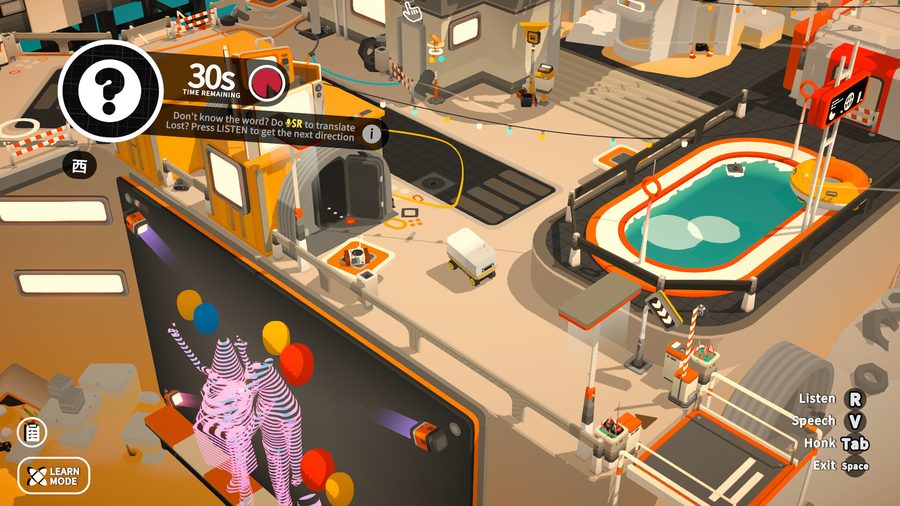
Screenshot from the Noun Town Steam store page, showing a timed recall challenge
It isn't a free win in every direction, so it's worth being honest about the trade-offs. Subscription apps often push more frequent content updates, since ongoing revenue funds ongoing development. A one-time-purchase product can sometimes go longer between meaningful updates once you've already paid, though this varies a lot by developer.
Some subscription apps also build in social and community features, leaderboards, clubs, live classes, that rely on an active, ongoing paying user base to stay lively. One-time-purchase products tend to be lighter on that side, since there's less recurring revenue funding a community team.
There's also the upfront cost itself. Paying $20 to $400 in one go is a bigger ask up front than downloading something free with optional in-app purchases, even when the one-time option is cheaper across a year or two. If budget is tight right now rather than over time, that difference matters.
| Model | Cost after 1 year | Cost after 3 years |
|---|---|---|
| Free app with ads | $0 (plus ads and feature limits) | $0 (plus ads and feature limits) |
| Mid-tier subscription (~$8-13/month) | ~$96-156 | ~$288-468 |
| One-time purchase (e.g. Noun Town or AnkiMobile) | $19.99-24.99 | $19.99-24.99, no further charge |
| Rosetta Stone lifetime (discounted) | ~$150-200 | ~$150-200, no further charge |
In year one, a subscription and a one-time purchase can land in a similar range. By year three, the gap between a $20 game and $288 to $468 of stacked subscription payments is hard to ignore.
We built Noun Town as a one-time purchase on purpose, not by default. Before starting the project, the team used the major mobile language apps ourselves and ran into the same frustration a lot of learners describe: ads interrupting a lesson, or hitting a wall a few sessions in and being asked to pay again for the next tier. We heard the same complaint from thousands of other learners too. So the game was built the other way round, one purchase, all 12 languages included, nothing held back behind a further paywall.
That doesn't make it the right fit for everyone on this list. If you specifically need explicit grammar instruction or a language we don't cover, one of the other options here will likely serve you better. But if you want vocabulary and listening practice across a long, playable world with no recurring charge, it's exactly what it was built for.
Want to see the one-time-purchase option we built? There's a free demo on Steam.
Try Noun Town on SteamAn app or program where you pay once and keep access permanently, with no recurring monthly or annual charge. Some still sell access per language rather than as a single bundle, but each purchase is still a one-off payment rather than a subscription that renews automatically.
Both are offered. Rosetta Stone sells subscription plans, but it also offers a lifetime, all-language plan as a one-time purchase, list priced around $399 though it is frequently discounted well below that.
A few options come close. Desktop Anki, for example, is free and open source. Most apps marketed as free rely on ads or a limited feature set to make money, rather than being a complete product with no catch at all.
Noun Town is a single $19.99 purchase on Steam covering all 12 supported languages, with no subscription, no ads, and nothing locked behind a further paywall once you own it.
Noun Town at $19.99 is the cheapest full one-time-purchase product covered here, with AnkiMobile at $24.99 close behind, though Anki is a flashcard tool rather than a structured course.
It varies by product. Some continue receiving content updates after purchase, others stay close to the version you originally bought. It's worth checking an app's recent update history or store reviews before buying if ongoing new content matters to you.
Usually, if you stick with a language for more than a year. A mid-tier subscription running $8 to $13 a month adds up to roughly $96 to $156 annually, while most one-time-purchase options here cost less than a single year of that and never charge again.
Most offer some way to test the product first. Noun Town has a free demo on Steam, and several other one-time products offer a trial period or money-back guarantee, worth checking before committing to a larger purchase like a lifetime plan.
Neither is universally better. Subscriptions can offer more frequent content updates and a lower upfront cost, while one-time purchases avoid renewal charges and give you something you fully own. The right choice depends on how long you plan to study and how much new content you expect to need.
Just vocabulary and whatever else you choose to put into flashcards. Anki is a spaced repetition flashcard engine, not a structured course, so most learners pair it with a course, game, or textbook for grammar and structure rather than using it alone.