
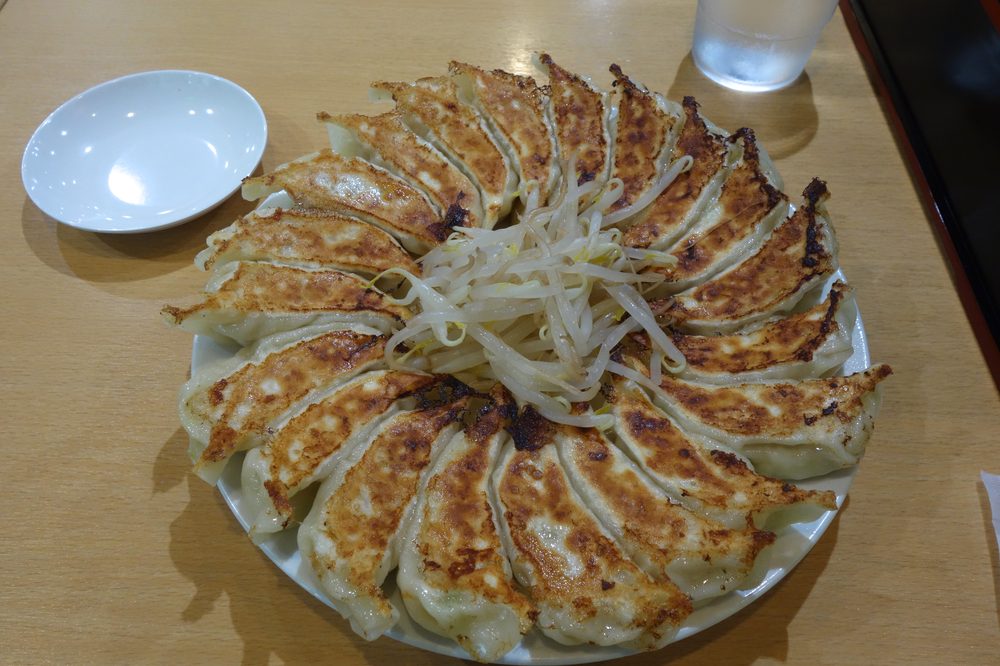
Photo: pelican / Wikimedia Commons (CC BY-SA 2.0)
Gyoza is pronounced GYOH-zah, not guh-YO-za, and ramen is RAH-men, not ray-MEN, said with two short, even syllables rather than a stretched first vowel. Japanese food words trip up English speakers for three reasons: Japanese has only five vowel sounds, no real word stress, and a rhythm built around units called morae rather than syllables. Once you know those three rules, most Japanese food vocabulary becomes far easier to say correctly, whether you are ordering gyoza at a restaurant, reading a menu, or working through a beginner vocabulary list. Here is how to say 22 of the most common Japanese food words, and the mistakes almost every English speaker makes with them.
Short answer: Gyoza is GYOH-zah and ramen is RAH-men, both said with flat, even stress instead of the emphasis English speakers instinctively add. Japanese has just five vowel sounds, each always pronounced the same short way, and no dynamic stress accent, which is why the 22 food words below sound clipped and even rather than drawn out.
Most people meet their first Japanese words on a restaurant menu, which is part of the problem. Menu words get filtered through English spelling habits before they ever reach an English speaker's ear, and English spelling is a poor guide to Japanese sound. Nearly every Japanese food word in English comes through Hepburn romanization, a system built to help Japanese be written in the Latin alphabet, not to help English speakers guess the pronunciation from familiar spelling patterns. We see "ramen" and our brain reaches for the nearest English pattern, which is something closer to "ray-men," the way we would say "raisin" or "raisin bread." Japanese does not work that way at all. The dish itself, incidentally, has a longer and more contested history than its short name suggests, tracing back to Chinese wheat noodle dishes adapted in Japan over the twentieth century.
The deeper issue is that English and Japanese handle rhythm and emphasis completely differently. English is a stress-timed language: we lean hard on one syllable in a word and rush through the others, which is why "banana" comes out buh-NAN-uh rather than three equal beats. Japanese has nothing like this. Every beat gets roughly the same amount of time and weight, so a word like sushi is not SOO-shi or soo-SHI, it is just su-shi, two level beats with neither one raised above the other.
This mismatch is invisible until you actually try to say the word, which is exactly why so many food words get mangled even by people who eat at Japanese restaurants regularly. It is not a knowledge problem. It is a habit problem, and habits are fixable once you know what to replace them with.
You do not need a linguistics degree to pronounce Japanese food words correctly. Three rules cover the vast majority of mistakes English speakers make, and none of them are complicated once you see them written down.
Japanese vowels are always short and pure, unlike English vowels which shift depending on spelling and neighbouring letters. Learn these five and you can read almost any romanized Japanese word correctly:
Rule 2: there is no dynamic stress accent. Japanese uses pitch, small rises and falls in tone, rather than English-style stress, where one syllable is said louder and longer than the rest. This is why forcing English stress patterns onto Japanese words, like putting the emphasis on the first syllable of "sake," instantly makes them sound wrong to a native speaker, even if every individual sound is technically correct.
Rule 3: Japanese rhythm is built on morae, not syllables. A mora is a short, even beat, roughly the length of one of those five vowel sounds. A long vowel or a doubled consonant counts as an extra beat rather than making the existing syllable longer, which is documented in detail on Wikipedia's overview of Japanese phonology. That is why "ramen" has a slightly longer first vowel than "sake," even though English spelling makes them look like they should follow the same pattern.
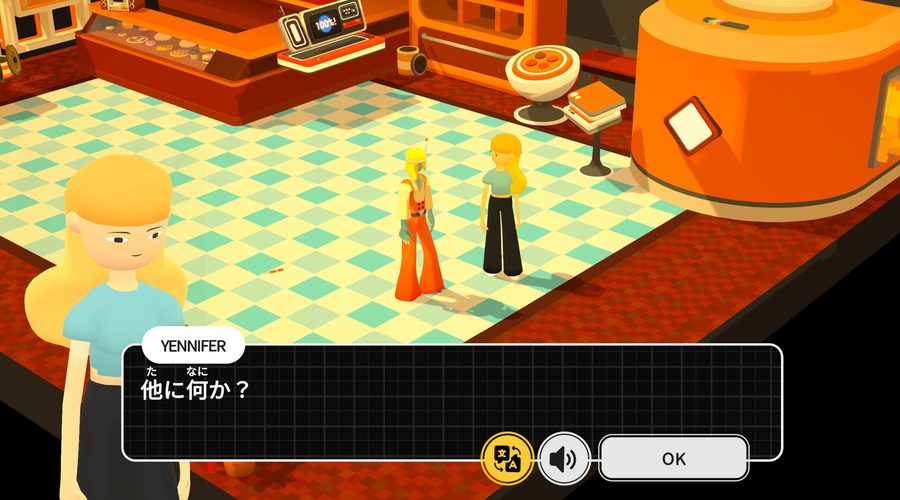
Screenshot from the Noun Town Steam store page, showing furigana-assisted dialogue
Here are 22 common Japanese food words with a simple phonetic guide for each. These are approximations meant for English speakers, not formal linguistic transcriptions, but they will get you far closer than reading the romaji cold. If you want to go deeper on the sound system behind these guides, the Japan Foundation's Japanese learning materials cover pronunciation in more depth than a single blog post can.
Pan-fried dumplings. Two even beats, hard g, not "jee-oh-za."
Noodle soup. Short flat "a," equal weight on both syllables.
Vinegared rice with toppings. Not "soo-shee," both vowels are short.
Sliced raw fish. Three even beats, no stress on any one.
Battered, fried food. The "u" is short, closer to "poo" than "pyoo."
Thick wheat noodles. Starts closer to "oo" than "uh."
Buckwheat noodles. Flat "o," not the long "oh" of English "so."
Fermented soybean paste. First syllable rhymes with "see," not "my."
Pungent green condiment. Three level beats, no stress spike.
Steamed soybeans. Four beats, final "e" is short like "bed," not "may."
Pounded rice cake. Not "MO-chi" with an English short o.
Savoury cooking stock. Flat "a," even weight on both syllables.
Soybean curd. Both vowels short and pure, not drawn out.
Rice wine. Final vowel is a short "e" like "bed," never "-kee."
Powdered green tea. Not "match-uh," both vowels are the flat Japanese "a."
Glazed grilling style. Four even beats, "a" stays flat throughout.
Grilled skewered chicken. Even rhythm across all four beats.
Rice ball, often wrapped in seaweed. Hard g in the third syllable.
Breaded, fried cutlet. Short "u" at the end, not "-soo" drawn out.
Fermented soybeans. Doubled "t" holds slightly longer, a mora on its own.
The savoury fifth taste. Starts with "oo," not "yoo."
Boxed meal. Flat "o" at the end, not the long "oh" of English "toe."
The same handful of habits show up again and again, and knowing them in advance makes them much easier to catch in yourself.
Reading a phonetic guide gets you most of the way there, but pronunciation is a physical skill, not just a knowledge one, so the fastest way to fix it is repetition against real audio rather than memorising spelling rules. Listen to a native speaker say the word, say it back immediately, and repeat that cycle several times in a row rather than once and moving on.
This is one of the areas where a tool with built-in speech recognition genuinely helps, because it tells you when your version does not match rather than leaving you to guess. It is also part of why Noun Town's language learning game pairs every word with native speaker audio and a speak-back exercise instead of just showing text, since seeing a word and hearing it said correctly are two different skills that need separate practice. For Japanese specifically, the game shows furigana above kanji rather than romaji, so you are reading the actual script alongside the sound rather than reinforcing an English-spelling habit that eventually has to be unlearned.
None of this needs to be expensive or complicated. A handful of minutes a day spent listening and repeating out loud, ideally with some form of spaced repetition so words resurface before you forget them, will fix most of these mistakes within a few weeks.
Want to practice Japanese food words and hundreds more with native speaker audio?
Try Noun Town on SteamGyoza is pronounced GYOH-zah, two even syllables with no stress on either one. The first sound is closer to the "gyo" in "yo-yo" with a hard g in front, not "gee-oh."
Ramen is pronounced RAH-men, with a short, flat first vowel like the a in "father," not a stretched "ray" sound. Both syllables get roughly equal weight rather than the stress English speakers usually put on the first one.
It is closer to SAH-keh, with a short, clipped final vowel like the e in "bed," not "sah-kee." The "sakey" pronunciation common in English is a spelling-based mistake, since Japanese e is never pronounced like the English long e.
Most Japanese food words reach English through romaji, a romanized spelling system, and English speakers read that spelling using English pronunciation rules instead of Japanese ones. Japanese vowels are always pronounced the same short, pure way regardless of the letters around them, which is very different from English.
Not in the way English does. Japanese uses a pitch accent system, where syllables are said with a relatively even rhythm and small shifts in pitch, rather than English-style stress where one syllable is louder and longer. This is the single biggest reason food words sound clipped and flat to English ears.
Five: a, i, u, e and o. Each one is always pronounced the same short, pure way no matter what word it appears in, unlike English vowels, which change sound depending on spelling and context.
A mora is a short, even beat of sound, and Japanese rhythm is built on morae rather than syllables. A long vowel or a doubled consonant counts as an extra beat, which is why words like ramen have a slightly longer first vowel sound than a word like sake, even though both look like they have a similar number of syllables in English spelling.
Listen to native speaker audio for each word rather than relying on the English spelling, repeat it out loud several times, and use a tool with speech recognition so you get feedback on whether your version matches. Repetition against real audio corrects far more mistakes than reading a phonetic guide alone.
Yes. Food words are usually the first Japanese vocabulary English speakers encounter, and the vowel and rhythm rules that apply to them apply to every other Japanese word too. Getting comfortable with gyoza and ramen builds the same muscle you will use for the rest of your vocabulary.