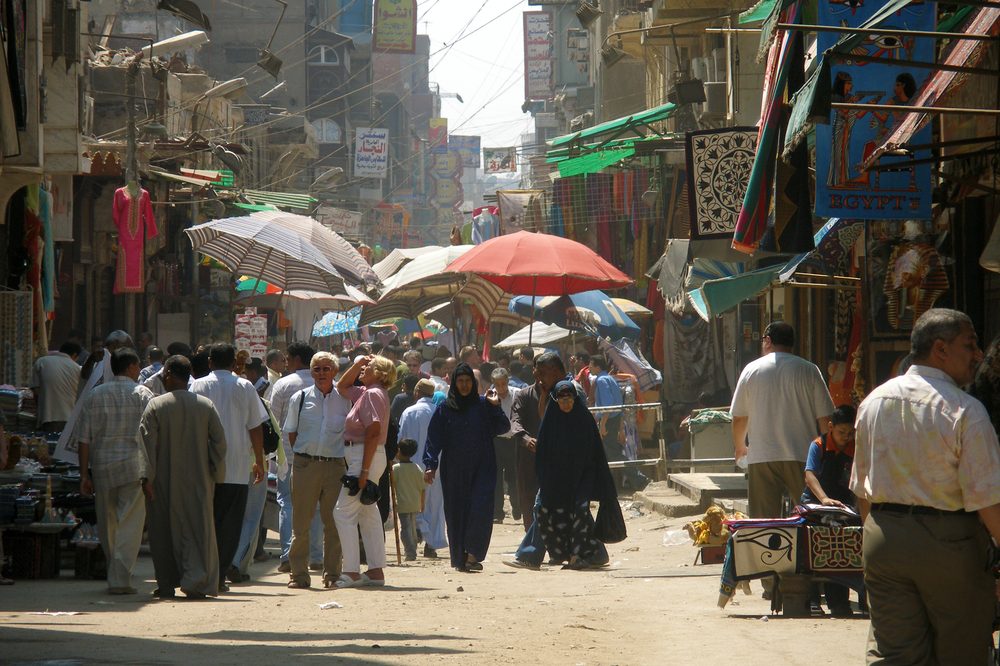
Photo: Vyacheslav Argenberg / Wikimedia Commons (CC BY 4.0)
Egyptian Arabic is the dialect spoken in everyday life across Egypt, distinct from the Modern Standard Arabic used in news and formal writing. It is arguably the most widely understood Arabic dialect in the region, thanks to decades of Egyptian film and television. For beginners, the fastest route into it is 300 to 500 high frequency words, learned through the actual script rather than transliteration, built up over roughly ten to fourteen weeks of steady practice.
Short answer: Focus on 300 to 500 of the most common Egyptian Arabic words first, covering greetings, shopping and simple conversation. Learn the Arabic script alongside these rather than relying on romanised spellings. Most learners doing 15 to 20 minutes a day get there in 10 to 14 weeks, with a comfortable conversational base of 1,200 to 1,800 words following within 6 to 9 months.
A lot of confusion for beginners starts here. Modern Standard Arabic, often shortened to MSA, is what you will find in newspapers, textbooks and news broadcasts across the entire Arab world. It is understood everywhere but spoken naturally almost nowhere. Egyptian Arabic is what people actually say to each other in Cairo, Alexandria and beyond, and it diverges from MSA in vocabulary, pronunciation and everyday grammar far more than most learners expect going in.
The table below shows a handful of common words where the difference is immediately obvious. If your goal is speaking with real people rather than reading formal text, this is the vocabulary set worth prioritising.
| English | Modern Standard Arabic | Egyptian Arabic |
|---|---|---|
| What | maadha | eh |
| Now | al-aan | delwa'ti |
| I want | ureed | 'ayez / 'ayza |
| Good | jayyid | kwayyes |
| How are you | kayfa haaluka | izzayyak |
Neither version is more correct than the other, they simply serve different purposes. If your only goal is holding a conversation, this table alone explains why studying a general Arabic course built around MSA can leave you understood but sounding formal, almost stiff, in an ordinary Cairo café.
This is roughly the order that tends to work, based on which words show up most often in daily situations rather than the order a textbook chapter usually presents them.
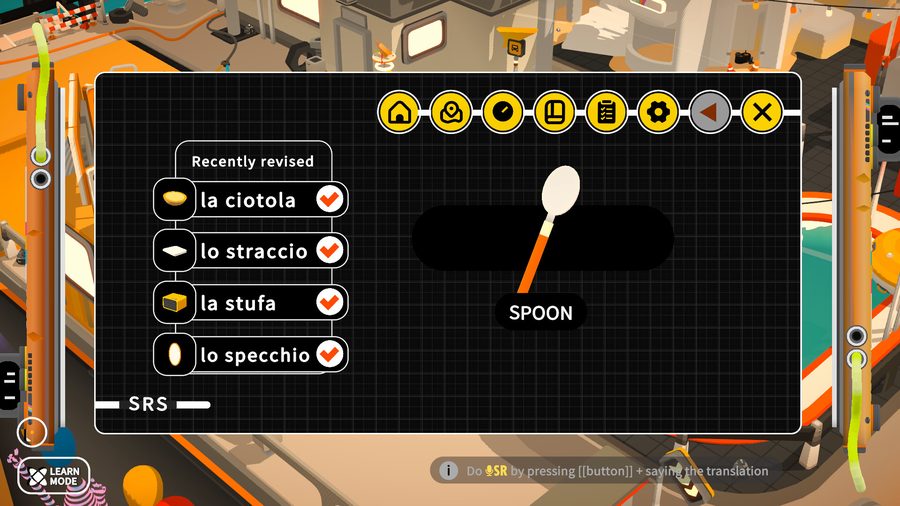
Screenshot from the Noun Town Steam store page, showing the spaced repetition review screen
English shares a huge number of roots with Spanish, French and Italian, which gives beginners a head start even before they open a book. Egyptian Arabic offers almost none of that overlap, so a word encountered only as an isolated flashcard tends to fade faster than the same word tied to a sound, an object, or a spoken sentence.
This is one of the reasons we built a full Egyptian Arabic module into Noun Town rather than bolting a flashcard list onto a menu screen. Vocabulary is attached to objects inside a 3D world and spoken aloud by native speakers, so the same word gets reinforced through sound, sight and repeated exposure rather than through memorisation alone. You do not need a game to apply the underlying idea though. Labelling household objects, watching Egyptian films with subtitles, and reading very short graded texts all add context a bare word list is missing.
Egypt has historically produced the majority of Arabic language film and television consumed across the wider region, which is a genuine advantage for learners. Unlike some dialects with limited media presence, Egyptian Arabic content is easy to find, subtitled versions exist for popular films, and the accent you hear on screen is close to what you will hear on the street.
Assuming 15 to 20 minutes of consistent daily practice, here is a reasonable expectation. The Foreign Service Institute classifies Arabic among the most time intensive languages for native English speakers to reach professional fluency in, so patience with the early stages matters more than it would for an easier language.
None of this happens instantly, but it is a realistic pace with ordinary daily effort, not an optimistic best case scenario.
Want to hear Egyptian Arabic vocabulary spoken in context? There's a free demo on Steam.
Try Noun Town on SteamEgyptian Arabic is the dialect spoken day to day across Egypt, in homes, markets and on the street. Modern Standard Arabic is the formal version used in news broadcasts, books and official writing. The two share a written script and a lot of underlying grammar, but everyday vocabulary and pronunciation differ enough that a phrase learned in one does not always work in the other.
Around 300 to 500 of the highest frequency words will cover most everyday situations: greetings, shopping, directions and simple small talk. Most beginners studying 15 to 20 minutes a day reach that point in roughly 10 to 14 weeks.
For spoken fluency, most learners find it more approachable, since Egyptian Arabic drops some of the grammatical complexity found in formal Modern Standard Arabic, and Egyptian media has made it widely understood across the region. It still uses the same script, so reading is a similar challenge either way.
It helps a great deal, even though many beginner resources lean on transliteration to get people speaking faster. Transliteration systems are inconsistent between sources, and several Egyptian Arabic sounds do not map cleanly onto English letters, so leaning on the script early avoids picking up mispronunciations that are harder to fix later.
High frequency words that show up constantly: izzayyak for how are you, kwayyes for good, mish for not, 'ayez or 'ayza for want, and delwa'ti for now. These appear across shopping, greetings and casual conversation far more often than textbook vocabulary lists usually suggest.
With 15 to 20 minutes of consistent daily practice, most learners reach 300 to 500 words in about 10 to 14 weeks, a comfortable conversational base of 1,200 to 1,800 words within 6 to 9 months, and continue expanding from there based on their own interests and needs.
Yes. Egyptian film, music and television are widely available online and are a genuinely useful source of natural vocabulary, since Egyptian media has historically dominated Arabic language entertainment across the wider region. Combined with a structured vocabulary routine, regular exposure through media closes a lot of the gap that living abroad would otherwise provide.
Yes, and it tends to matter more here than for a language closer to English, since there are few cognates to fall back on for casual recall. Spaced repetition systems that resurface words shortly before you are likely to forget them are one of the more consistently supported techniques in memory research.
Games are particularly good at the early stage of vocabulary building, where repeated exposure to words tied to objects, sounds and context matters more than grammar explanation. Noun Town includes a full Egyptian Arabic module built around exactly that kind of contextual, spoken repetition, alongside a spaced repetition review system.
No. There are no adverts and nothing locked behind an additional paywall once you own the game. This was a deliberate decision after the team experienced the frustration of ad supported and freemium mobile apps firsthand, and heard the same complaint from thousands of other learners.