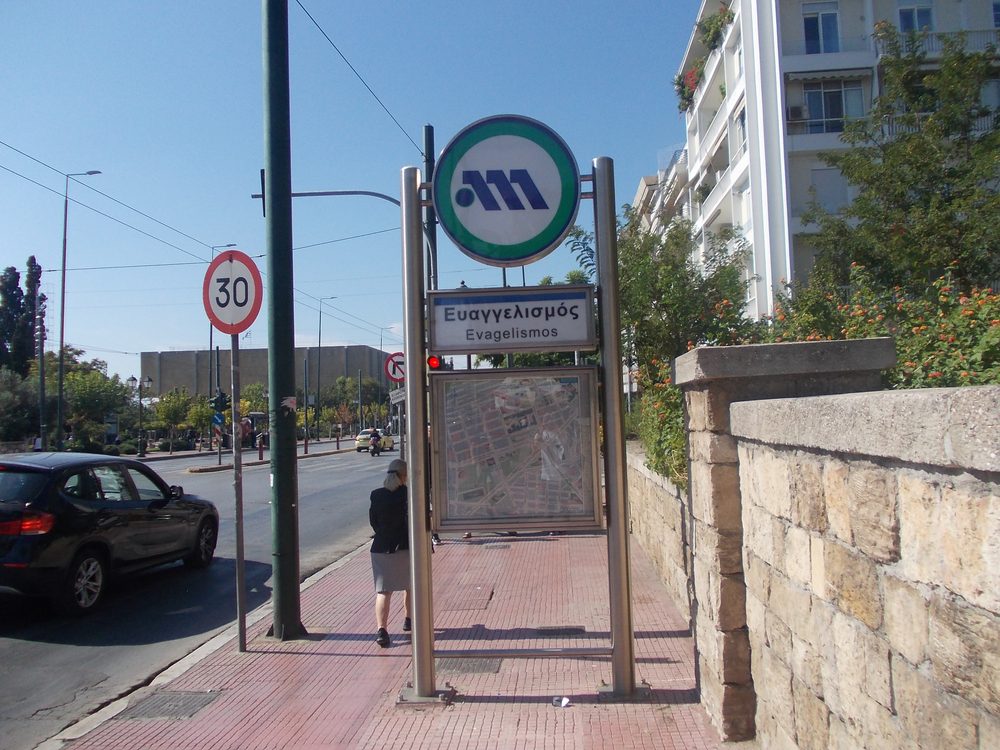
Photo: Argybz / Wikimedia Commons (CC BY-SA 4.0)
Does having its own alphabet automatically make a language harder to learn? For Greek, the honest answer is less than most people assume. Modern Greek does sit in the US Foreign Service Institute's "hard languages" category, alongside Russian, Polish and Finnish, at around 1,100 class hours for an English speaker to reach professional proficiency. But most of that time goes toward three grammatical genders and a four case system, not the alphabet itself, which the majority of learners pick up within a couple of weeks. Here is what the real timeline looks like, broken down by what you are actually trying to achieve.
Short answer: Greek is an FSI Category III language, in the "hard" group for English speakers alongside Russian and Polish. Reaching professional working proficiency takes about 1,100 class hours, roughly 44 weeks of full-time study. At thirty minutes a day, expect two to three years to reach a comfortable conversational level (CEFR B1 to B2).
The Common European Framework of Reference for Languages (CEFR) provides a general scale for describing progress that applies across languages. Cambridge English publishes guided learning hour estimates for each level based on classroom instruction, and these apply reasonably well as a starting point for Greek too:
| CEFR level | Hours needed (from zero) | What you can do |
|---|---|---|
| A1 | 60 to 80 hours | Basic greetings, numbers, simple introductions |
| A2 | 180 to 200 hours | Everyday exchanges, ordering food, asking directions |
| B1 | 350 to 400 hours | Comfortable conversation on familiar topics |
| B2 | 500 to 600 hours | Follow native-speed speech, discuss opinions |
| C1 | 700 to 800 hours | Near-fluent, close to professional working proficiency |
| C2 | 1,000 to 1,200 hours | Native-like mastery |
The generic CEFR hours above are not Greek-specific, and the gap is worth noting. The FSI's own Greek figure, 1,100 hours for professional proficiency, sits past the generic C1 range in the table. That extra distance is the grammar tax, and expecting it up front beats being surprised by it a few months in.

Screenshot from the Noun Town Steam store page, showing the game's built-in review scheduling
Three grammatical genders, masculine, feminine and neuter, apply to every Greek noun, and they are not always predictable from meaning the way they sometimes are in other gendered languages. Adjectives and articles change form to agree with the noun's gender, number and case all at once, which means a single word can appear in a dozen different forms depending on context.
Verb aspect adds a second layer. Greek verbs distinguish between actions viewed as completed versus ongoing, similar in spirit to the aspect system in Russian, expressed through different verb stems rather than a simple tense change. Getting this wrong does not usually make a sentence incomprehensible, but it does mark a learner as clearly still learning, which is exactly the kind of detail that separates B1 from B2.
Stress accent is a smaller but genuinely persistent trip-up. Every Greek word of more than one syllable carries a written stress mark, and misplacing it in speech can shift which word a listener hears entirely. It is a minor mechanical habit to build, but it takes deliberate listening practice rather than something that resolves itself through reading alone.
We cover the specific hard parts of Greek grammar in more depth in our companion piece on whether Greek is hard to learn, and a fuller set of starting steps in our guide on learning Greek fast. Building vocabulary before grammar is also the core idea behind our language learning game, which teaches Greek nouns in context with native speaker audio before layering the case and gender rules on top.
"Fluent" is a loose word, and for Greek, defining your actual target changes the timeline a great deal. Conversational ability, holding an everyday conversation without constantly stopping to translate, is a B1 to B2 goal, realistically two to three years away at thirty minutes of daily study.
Greece's own Centre for the Greek Language runs the official Ellinomatheia certification exams across the same A1 to C2 scale, which is a useful, concrete way to benchmark progress if you want an external target rather than a self-assessed one. Professional working proficiency, the FSI's 1,100 hour benchmark, sits well past B2 and is mainly relevant if you need Greek for work rather than travel or heritage reasons.
Setting a defined level before you start, rather than an open-ended "fluent," makes progress far easier to see. Greek asks for more patience than an easier language, but the path is well mapped, and learners who track hours against real benchmarks tend to stay motivated longer than those chasing a vague finish line.
Ready to start building your Greek vocabulary the noun-first way?
Try Noun Town on SteamReaching a basic A2 level, enough for everyday exchanges, takes around 180 to 200 guided study hours. A comfortable conversational level (CEFR B1) takes roughly 350 to 400 hours.
Yes, by the US Foreign Service Institute's ranking. Greek sits in Category III, the "hard languages" group, at roughly 1,100 class hours, compared with 600 to 750 hours for Category I languages like Spanish and French.
With intensive study of 25 to 30 hours a week, six months can get you to a solid A2 or low B1 level. Full conversational fluency in that timeframe is unrealistic for most learners studying part time.
Thirty to sixty minutes of consistent daily practice tends to beat occasional longer sessions, since regular spacing helps vocabulary and grammar patterns stick far better than cramming does.
No. It has only 24 letters, several of which English speakers already recognise from maths and science (alpha, beta, pi, sigma). Most learners read Greek reasonably fluently within one to two weeks.
Three grammatical genders and a four case system that changes noun and adjective endings, combined with a verb aspect distinction between completed and ongoing actions, account for most of the extra study time.
Yes, substantially. Modern Greek has simplified considerably compared with Ancient Greek, dropping the dual grammatical number and several case forms, so it is more approachable than its ancient reputation suggests.
General CEFR benchmarks put C1 at around 700 to 800 guided hours from zero. Greek's FSI-specific estimate of 1,100 hours for professional proficiency runs somewhat beyond that, reflecting the extra grammar workload.
Living somewhere Greek is spoken daily remains the fastest route by calendar time. It isn't realistic for most learners, though, which makes consistent daily practice with a structured tool the more achievable path.
No. Most learners build a working vocabulary and basic sentence patterns first, then absorb the case system gradually through example sentences rather than memorising declension tables before saying a word out loud.