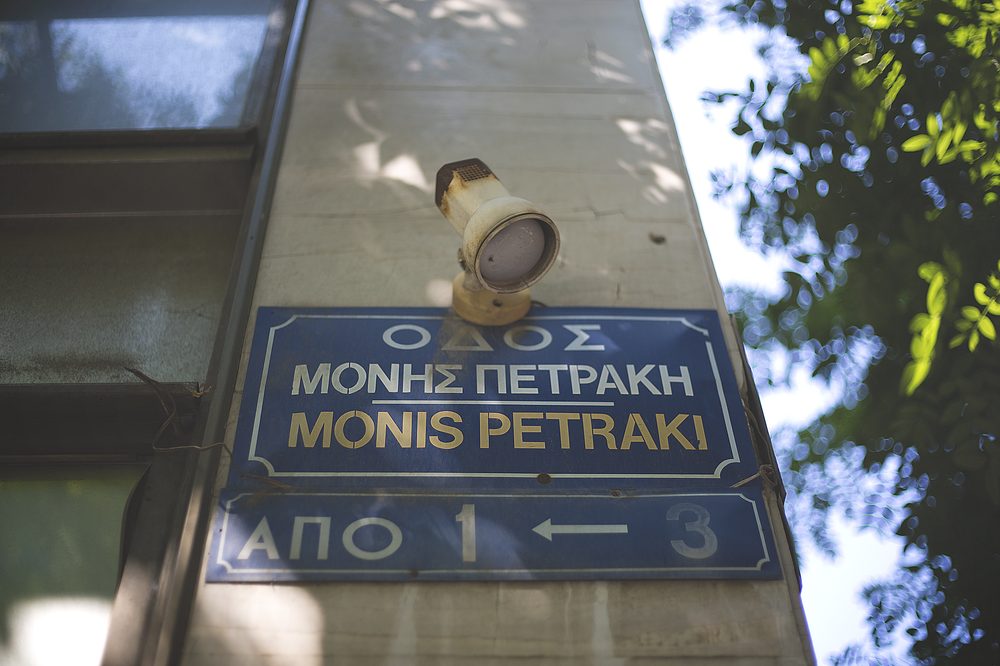
Photo: Dennis David Auger / Wikimedia Commons (CC BY-SA 4.0)
Short answer: Start with the Greek alphabet, since it unlocks everything else within a couple of weeks. Then build a base of 500 to 800 high frequency nouns and verbs using spaced repetition, ideally with words attached to real context rather than isolated flashcards. Most beginners can hold a basic conversation after two to three months of consistent short sessions, and reach a comfortable B1 level somewhere around 1,500 to 2,500 words.
Greek does not get anywhere near the learner traffic that Spanish or French get, and that shows in how few dedicated vocabulary guides exist for it. Most general "how to learn a language" advice technically applies, but Greek has enough quirks, the alphabet chief among them, that it is worth walking through what actually works rather than borrowing generic tips from a Spanish blog post.
I'll go through the order that tends to work best, what to prioritise early on, and where people usually waste time.
A lot of beginners try to skip the Greek alphabet and learn everything through romanised transliteration instead. It feels faster in week one. It slows you down badly by week four, once you're trying to use a real dictionary, read a menu, or make sense of a word you've heard but never seen written down.
The Greek alphabet has 24 letters. Several look like Latin letters but represent completely different sounds, which trips people up more than genuinely new symbols do. Setting aside two or three focused sessions to learn the shapes and sounds, before diving into vocabulary lists, pays for itself quickly. Most learners are reading basic Greek words within two to three weeks of starting.
Concrete nouns are the easiest entry point because you can attach them to an image, an object, or a real place. Abstract vocabulary and connecting words come later and are harder to learn without a concrete anchor.
By the time you've worked through the first two groups, you already have enough raw material to form simple sentences, which matters more for motivation than people expect.
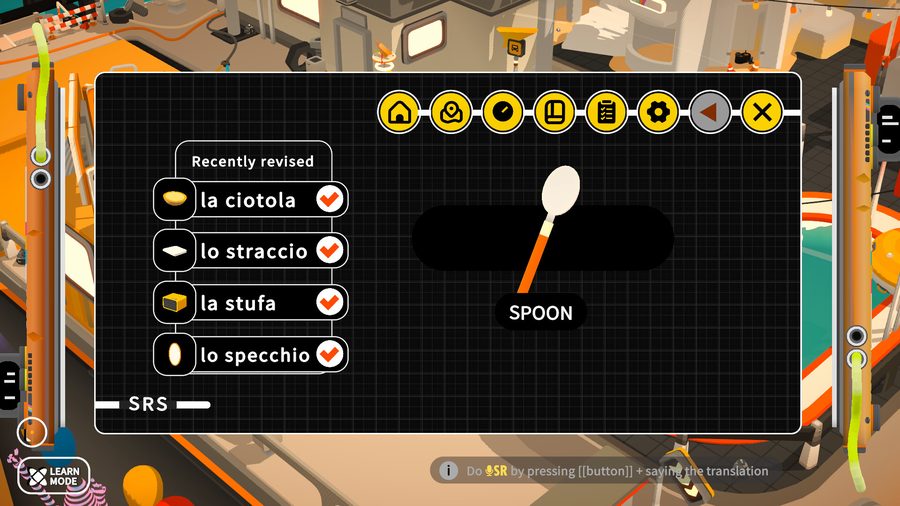
Screenshot from the Noun Town Steam store page
It's tempting to measure progress by how many words you've "covered," but covering a word once and never seeing it again is close to useless. Spaced repetition works by resurfacing a word right before you're likely to forget it, which is a much better use of review time than rereading a static list from the top every session.
In practice this means fewer new words per day than you might think feels productive, maybe 10 to 15, combined with consistent review of everything you've already learned. Cramming forty new Greek words in one sitting feels impressive and mostly evaporates within 48 hours without a review system behind it.
| Greek | Pronunciation (rough) | English |
|---|---|---|
| το νερό | to neró | water |
| το ψωμί | to psomí | bread |
| ο φίλος | o fílos | friend |
| το σπίτι | to spíti | house |
| καλημέρα | kaliméra | good morning |
Words like these are good starting points precisely because they're concrete, frequent, and easy to picture. That combination is what makes them stick.
Plain flashcards work, but words learned purely as a translation pair, no sentence, no image, no sound, tend to fade faster than words encountered with some kind of context attached. This lines up with what memory researchers call the encoding specificity principle: the more distinct, meaningful associations attached to a piece of information, the easier it is to retrieve later.
This is one reason we built Noun Town around a 3D world rather than a plain flashcard deck. Greek vocabulary in the game is attached to objects you interact with, spoken by native speakers, and reinforced through spaced repetition behind the scenes, so the "review" doesn't feel like a separate chore bolted onto playing.
That said, you don't need a game to apply the same principle. Labelling objects around your house in Greek, watching short native-speaker clips with subtitles, or reading simple graded texts all add the same kind of context that a bare word list lacks.
For English speakers, Greek sits in a more demanding category than Spanish, French, or Italian, mainly because of the alphabet and lower vocabulary overlap with English. The US Foreign Service Institute groups Greek among languages that typically take noticeably longer to reach professional working proficiency than the most familiar Romance languages, though it's not grouped with the hardest category either, which includes languages like Arabic, Mandarin, and Japanese.
In practice this means you should expect the first month to feel slower than it might have with Spanish, mostly because of alphabet acquisition, and then a more familiar pace of vocabulary building once that hurdle is behind you.
Assuming 15 to 30 minutes of consistent daily practice, here's roughly what to expect. These numbers vary with prior language learning experience, but they're a reasonable baseline.
Greek's relatively small international learner base, compared to something like Spanish, is actually a mild advantage here. There's less noisy, low quality content competing for attention, and a well-made resource stands out more clearly when the field is thinner.
Want to see Greek vocabulary taught this way in practice? There's a free demo on Steam.
Try Noun Town on SteamNot entirely, but it helps early on. You can start learning spoken words and phrases in romanised form, but reading Greek script speeds up everything else, including using a dictionary or reading street signs, so most learners pick it up within the first two or three weeks.
Around 500 to 800 high frequency words will cover most everyday conversation topics like ordering food, asking directions and small talk. Getting to a comfortable conversational level, roughly CEFR B1, usually requires somewhere between 1,500 and 2,500 words.
For English speakers, generally yes. Greek shares less common vocabulary with English than Romance languages do, and the alphabet adds an extra step. The Foreign Service Institute places Greek in a higher difficulty category than Spanish or French for English speakers, though it isn't considered one of the hardest language groups.
Spaced repetition, where you review a word right before you're likely to forget it, is the most consistently effective method backed by memory research. Pairing that with words encountered in context, such as a spoken sentence or a real object, tends to outperform reviewing isolated word lists.
Fewer than for languages like Spanish or French, since Greek has a smaller learner base globally. This makes it a good candidate for tools that cover it well, since there's less competition among mediocre options and a well-made resource stands out more clearly.
Yes. Games that place vocabulary in a visual, interactive context tend to help retention because more of your brain is involved in encoding the word, not just memory of a flashcard. Noun Town includes Greek as one of its supported languages, with native speaker audio attached to objects in a 3D world.
Nouns are a sensible starting point because they're concrete and easy to attach to an image or object, which makes them easier to remember. From there, common verbs and a small set of connecting words let you build simple sentences fairly quickly.
With consistent daily practice of 15 to 30 minutes, most learners reach a functional beginner vocabulary of 500 to 800 words within two to three months. This varies a lot depending on prior language learning experience and how often you're exposed to Greek outside of study sessions.
No. There are no adverts and nothing locked behind an additional paywall once you own the game. This was a deliberate decision after the team experienced the frustration of ad-supported and freemium mobile apps firsthand, and heard the same complaint from thousands of learners.