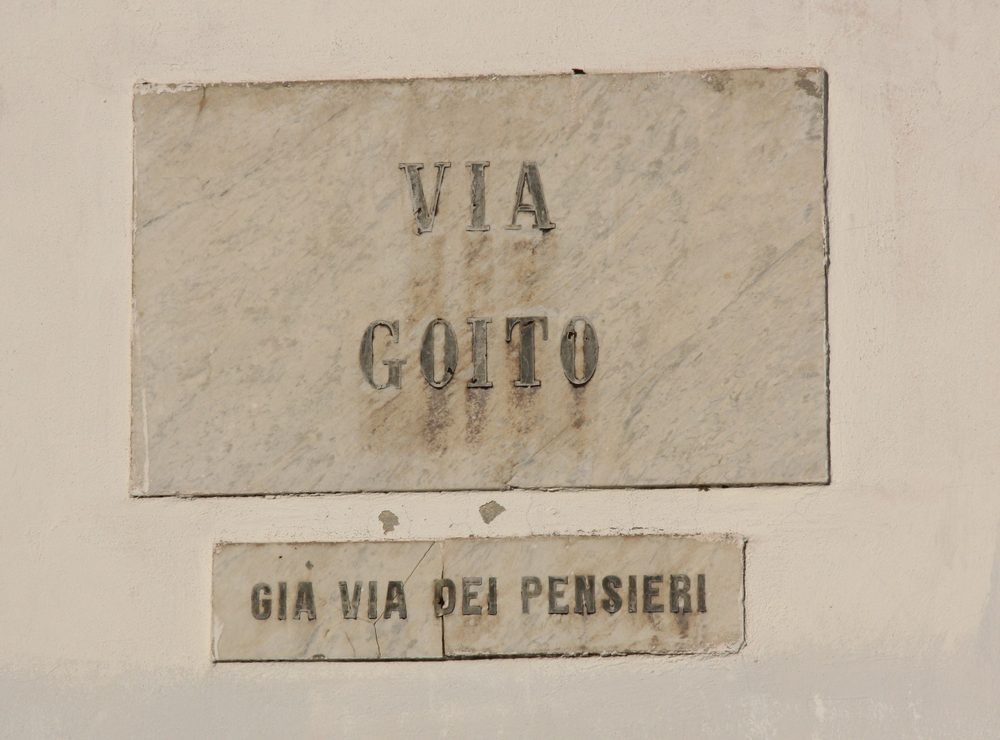
Photo: Piergiuliano Chesi / Wikimedia Commons (Public domain)
Italian is not hard to learn for English speakers. The US Foreign Service Institute places it in Category I at 24 weeks, roughly 552 class hours, to reach professional working proficiency, tying it with Portuguese, Dutch, Danish, Norwegian, Romanian and Swedish for the fastest group of languages FSI tracks. Its spelling is close to perfectly phonetic, its vocabulary shares deep Latin roots with English, and its grammar, while not without its tricky corners, follows patterns consistently rather than riddling them with exceptions. The parts that do slow learners down tend to show up a little later: verb tenses, the subjunctive mood, and knowing when standard Italian gives way to regional variation.
Short answer: No, Italian is genuinely one of the easier languages for English speakers, FSI Category I at 24 weeks or about 552 class hours, among the fastest of any language FSI tracks. Spelling matches pronunciation closely, vocabulary overlaps heavily with English through Latin, and the grammar is logical even where it gets complex. The real challenges are the subjunctive mood, past tense choice, and pronominal verbs, not the basics most learners worry about first.
The Foreign Service Institute trains US diplomats and has spent over seventy years tracking how long it actually takes an English speaking adult to reach professional working proficiency in different languages. Its category system is widely cited precisely because it reflects real classroom outcomes rather than opinion.
Italian sits in Category I, the group FSI describes as "closely related to English," alongside Danish, Dutch, French, Norwegian, Portuguese, Romanian, Spanish and Swedish. Within that group, FSI lists Italian at the fast end, 24 weeks, the same as Portuguese, Dutch, Danish, Norwegian, Romanian and Swedish, while French and Spanish sit slightly longer at 30 weeks. At roughly 23 hours a week in class, 24 weeks works out to about 552 class hours, noticeably less than the 690 hours French requires by the same measure.
Italian earning a place among the fastest Category I languages is not an accident. Its consistent spelling and heavily Latin derived vocabulary do more of the early work for an English speaker than almost any other language outside the immediate Germanic family.
Myth: Italian is basically Spanish with different words.
Reality: The two languages share a lot of Latin vocabulary and some grammar patterns, but pronunciation, verb conjugation details and plenty of everyday vocabulary differ enough that fluency in one does not transfer automatically to the other. A Spanish speaker will find Italian easier to pick up than someone starting from scratch, but not effortless.
Myth: Because the spelling is phonetic, the grammar must be simple too.
Reality: Pronunciation and grammar are separate problems, and Italian's grammar has real depth. Verb conjugation changes across a dozen or more tenses and moods, and choosing correctly between the passato prossimo and imperfetto past tenses trips up learners well past the beginner stage.
Myth: You need to learn every regional dialect to get by.
Reality: Standard Italian, the version taught in courses and used in national media, is understood and spoken everywhere in Italy. Regional dialects are real and culturally significant, but they exist alongside standard Italian, not as a replacement for it, much like regional accents and slang do in English.
Myth: Italian doesn't have anything genuinely hard about it.
Reality: A few features do take real, deliberate practice: the subjunctive mood, pronominal verbs like andarsene, and prepositions that rarely translate directly from English. Italian is easy relative to most languages, not free of challenge altogether.
The ranges below map FSI's 552 hour, professional working proficiency benchmark onto the CEFR framework published by the Council of Europe, giving a realistic picture for a self study or part time learner rather than someone in a full time intensive classroom.
| CEFR level | What it means | Approx. hours from zero |
|---|---|---|
| A1 | Basic phrases, introductions | 55 to 110 |
| A2 | Simple everyday conversation | 110 to 190 |
| B1 | Conversational, can get by unsupported | 220 to 320 |
| B2 | Comfortable in most situations | 320 to 440 |
| C1 | Professional working proficiency | 440 to 552 |
Intensive courses at four to five hours a day can take a learner from zero to B1 in around four months. Studying five hours a week part time stretches that same journey to roughly a year, since the total hours required stay about the same no matter how they are spread out.
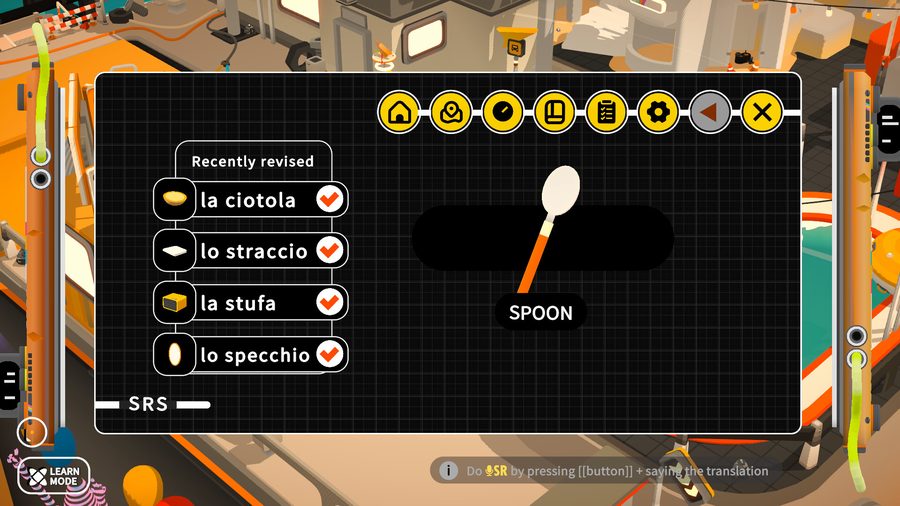
Screenshot from the Noun Town Steam store page, showing an Italian vocabulary review inside the spaced repetition system
Spanish is Italian's closest rival for the title of easiest Category I language, and the two trade places depending on which FSI edition or secondary source is cited. What tends to separate them for an English speaker is exposure. Spanish has a larger footprint in English language media and education in most English speaking countries, while Italian's phonetic consistency gives it an edge in pronunciation confidence once a learner does start.
French sits in the same Category I tier but at the slower end, 30 weeks against Italian's 24, largely because French pronunciation hides so much behind its spelling that Italian simply does not. Against German, the gap widens further. German's Category II ranking reflects three grammatical genders, four noun cases and a genuinely different sentence structure, none of which Italian asks a learner to deal with in anything like the same way.
Because Italian's spelling is so reliable, the biggest early win is simply trusting it. Reading new words aloud, rather than defaulting to silent reading, builds pronunciation confidence fast and rarely leads learners astray the way it would in French or English.
Learn nouns with their gender attached from the very first exposure, since retrofitting gender onto vocabulary already learned wastes time later. This is the exact principle built into the Noun Town language learning game: every Italian noun appears inside a 3D scene with its article and native speaker audio together, using spaced repetition so words come back for review right before they would otherwise be forgotten.
Once the basics feel comfortable, front load the subjunctive and the passato prossimo versus imperfetto distinction rather than saving them for later. Both show up constantly in ordinary conversation, and learning them early, even imperfectly, prevents the kind of confusion that builds up when a learner has been avoiding them for months.
For culture and immersion, Italian's huge back catalogue of film, opera and literature, along with organisations like the Società Dante Alighieri, which has promoted Italian language and culture worldwide since 1889, make it easy to surround yourself with native material at almost any level.
Start building Italian vocabulary the phonetic, gender-included way.
Try Noun Town on SteamBy FSI's specific numbers, Italian has a slight edge, listed at 24 weeks against Spanish's 30, though both belong to Category I and both are genuinely accessible for an English speaker. The gap is small enough that personal interest in the language matters more than the hour count.
Yes, by FSI's estimate, 24 weeks for Italian against 30 for French. Italian's spelling matches its pronunciation far more consistently than French's does, which removes a lot of the early frustration that French learners run into.
Mostly because its spelling is almost perfectly phonetic, its vocabulary overlaps heavily with English through shared Latin roots, and its grammar, while it has some real complexity, follows consistent patterns without the exceptions that make languages like English or French harder to predict.
Conversational ability, roughly CEFR B1, typically takes 220 to 320 hours of study for an English speaker, around four to six months of consistent daily practice, and often faster given how directly the pronunciation rules translate into confident speaking.
Simpler than its reputation suggests, but not trivial. Two noun genders and regular verb patterns are genuinely manageable, but the subjunctive mood, the difference between the passato prossimo and imperfetto past tenses, and pronominal verbs still take real practice to use naturally.
Not for a learner focused on standard Italian, which is what nearly all courses, media and the vast majority of everyday interactions actually use. Regional dialects are real and distinct, but they sit alongside standard Italian rather than replacing it, similar to regional accents in English.
Lean into the phonetic spelling early. Because Italian pronunciation is so consistent, reading aloud from the first lesson builds confidence fast, and pairing new vocabulary with native audio locks in correct pronunciation before bad habits have a chance to form.
Yes, particularly for building the vocabulary base that Italian's grammar sits on top of. Noun Town introduces Italian nouns with their gender and native speaker audio together inside a 3D world, using spaced repetition so words are reviewed right before they would otherwise be forgotten.
Noun Town focuses on vocabulary, listening and speaking practice through spaced repetition inside a 3D world, rather than replacing a structured grammar course. Most learners pair it with grammar-focused study, since a strong vocabulary base makes tenses and the subjunctive far easier to pick up.
For many learners, yes, and not only for practical reasons. Italian gives direct access to a huge body of art, opera, cinema and design history, a strong culinary and travel culture, and one of the fastest routes among Category I languages to feeling genuinely fluent.