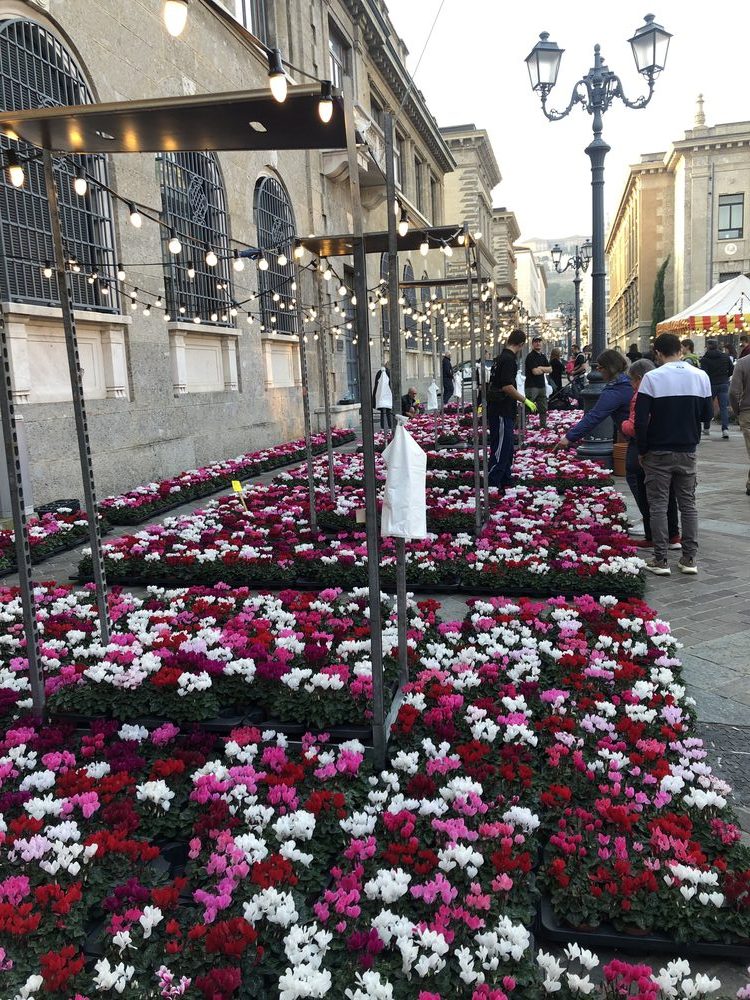
Photo: Annika of Nine / Wikimedia Commons (CC BY-SA 4.0)
Short answer: Beginners build usable Italian vocabulary fastest with a small core of high-frequency words, roughly 600 to 1,000 of them, learned in context and reviewed with spaced repetition rather than memorised as isolated lists. Italian's spelling is largely phonetic, so pronunciation rarely gets in the way once a word is learned. Watch for false friends like camera (room) and parenti (relatives). Most consistent learners reach a functional beginner vocabulary in two to three months.
Italian tends to get called an "easy" language, and vocabulary is a big part of why. Between the shared Latin roots with English and spelling that matches pronunciation almost every time, a lot of Italian words feel familiar before you've studied a single lesson. That head start is real, but it also creates a trap: familiarity is not the same as actually being able to recall a word when you need it.
This post skips grammar and pronunciation drills and focuses on the specific habits that make Italian vocabulary stick, particularly for people starting from nothing.
Two things work in a beginner's favour with Italian. The first is a largely transparent orthography, meaning the spelling of a word closely reflects how it's said. Once you learn the handful of pronunciation rules, like how "c" softens before "e" or "i," you can read a new word aloud correctly on first sight. Compare that to English or French, where spelling and pronunciation regularly disagree, and it's a real advantage for building vocabulary quickly.
The second is shared vocabulary with English through Latin. Words like nazione, animale, ristorante and museo are recognisable to English speakers almost immediately. This doesn't remove the need to actually learn the words, but it means the starting distance is shorter than it is for an unrelated language.
Most beginners over-complicate vocabulary building or under-structure it entirely. A simple repeatable routine beats either extreme.
Italian's closeness to English is mostly a gift, but it has a catch. A handful of Italian words look like English words and mean something else entirely, and these trip up beginners more than genuinely unfamiliar vocabulary, precisely because the guess feels so confident.
None of these are worth avoiding cognates over. The fix is simply pausing to check a suspiciously familiar word the first couple of times you meet it, then trusting your instinct once it's confirmed.
A flashcard reading "la stufa = the stove" works, but it's a thin memory with few hooks attached. A word met inside a sentence, tied to an image, or heard from a native speaker in a specific situation gets stored with far more surrounding detail, which is exactly what makes it easier to pull back out later under pressure.
This is part of why games and interactive tools have become a genuine complement to textbook study. In Noun Town, Italian words are attached to objects and characters inside an explorable 3D world instead of sitting in a list, each one paired with native speaker audio and a speech recognition check, so you're producing the word aloud rather than just recognising its spelling.
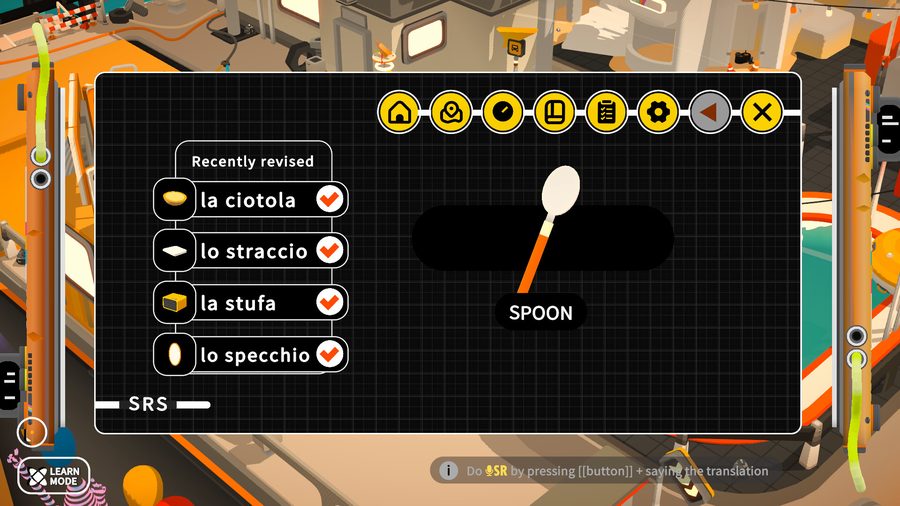
Screenshot from the Noun Town Steam store page, showing the spaced repetition review screen with Italian vocabulary
New vocabulary decays fast without review. Research into the forgetting curve shows most newly learned information fades within days unless it's revisited, and each successful review pushes the next necessary one further out. That's the underlying logic behind spaced repetition systems, which resurface a word right before you're statistically likely to forget it rather than on a fixed schedule.
A small set of words reviewed properly across two weeks will almost always beat a large batch seen once and never revisited. If nothing else from this post sticks, let it be that one habit.
With consistent short sessions, most beginners reach a functional vocabulary of around 600 to 800 words within two to three months, enough for everyday conversation about familiar topics, though not enough for nuance or fast native speech. Consistency matters more than raw hours. Fifteen minutes a day for two months tends to beat occasional three-hour weekend sessions, because spaced repetition needs regular touchpoints to actually work.
The U.S. Foreign Service Institute classes Italian among the more approachable languages for English speakers, largely thanks to the shared vocabulary and predictable spelling covered above. The Accademia della Crusca, Italy's oldest linguistic institution, is a good reference point if you want to go deeper on how the language itself is documented and standardised.
Want to see Italian vocabulary taught this way in practice? There's a free demo on Steam.
Try Noun Town on SteamThe fastest reliable route is a small core of high-frequency words learned in context, then reviewed with spaced repetition. Studying words inside a sentence, image or spoken example builds recall faster than memorising isolated word lists.
Roughly 600 to 1,000 of the most common Italian words cover the bulk of everyday conversation. A small set of core verbs, connectors and everyday nouns does most of the work in casual speech.
They catch out a lot of beginners. Words like camera, parenti and fattoria look like English words but mean room, relatives and farm rather than camera, parents and factory. Verifying new-looking words the first few times prevents this becoming a habit.
Yes, to a real degree. Italian has a largely transparent orthography, meaning words are spelled close to how they sound, so a beginner can usually pronounce a new word correctly on first sight. This removes a layer of difficulty that languages like English or French add on top of vocabulary itself.
Both have a place, but context tends to win for long-term retention. A word encountered in a scene, sentence or conversation is stored with more surrounding detail than a bare flashcard. Flashcards remain useful for quick review once a word already feels familiar.
With consistent short sessions, most learners reach a functional beginner vocabulary of around 600 to 800 words within two to three months. Regular short exposure matters far more than occasional long study sessions.
Yes. Games that attach words to objects, characters and native audio inside an explorable world give vocabulary more context than a typical drill screen, and research into digital game-based learning generally shows better retention for words learned this way.
Adding new words faster than old ones get reviewed. Vocabulary fades quickly without repetition, so a small set of words reviewed properly across two weeks usually outlasts a large batch seen once and forgotten.
Yes, Italian is one of the twelve languages included in Noun Town, taught through a 3D open world with native speaker audio, spaced repetition and speech recognition, playable on PC and Mac via Steam.