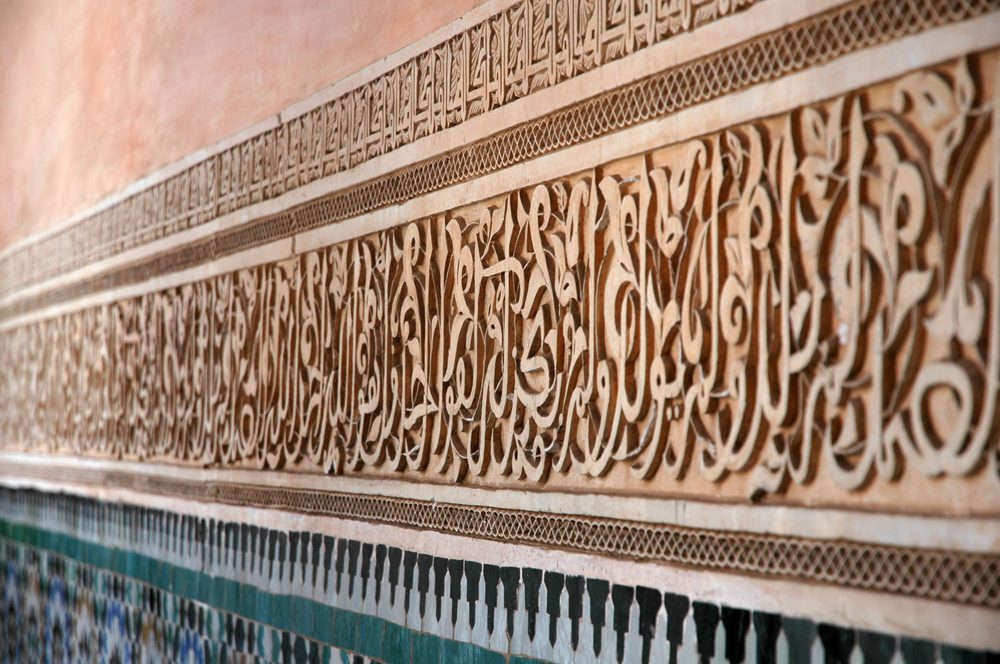
Photo: DimiTalen / Wikimedia Commons (CC0)
Arabic gets a reputation as one of the hardest languages for English speakers to pick up, and vocabulary is usually where that reputation is earned first. New script, no cognates to lean on, and a grammatical structure that doesn't map neatly onto English. None of that means it's not learnable. It means the usual vocabulary advice, memorise a list, drill flashcards, needs adjusting for Arabic specifically.
Short answer: Learn the Arabic script early rather than relying on transliteration, aim for 500 to 800 high frequency words in your first three to four months, and lean into the root and pattern system once you notice it, since it turns vocabulary into pattern recognition rather than pure memorisation. Spaced repetition matters more here than in easier languages, because there's less overlap with English to fall back on.
You can skip the script and just use transliteration until you're more advanced.
Transliteration systems are inconsistent between resources, and Arabic has several sounds English simply doesn't have letters for. Learning the script early, even slowly, avoids building bad pronunciation habits that are harder to unlearn later.
Modern Standard Arabic is the "correct" version and dialects are a shortcut for people who don't want to learn properly.
Modern Standard Arabic is used in news, books, and formal contexts, but almost nobody uses it to chat with friends or order food. Dialects like Egyptian Arabic are what people actually speak. Neither one is more legitimate, they just serve different goals.
Arabic vocabulary is basically impossible to memorise because nothing looks familiar.
It's true there are few cognates with English, but Arabic has its own internal shortcut: the root and pattern system, where related words share a three-letter root. Once that clicks, recognising new vocabulary gets noticeably faster.
Most Arabic words are built around a three-letter root that carries a core meaning. The root k-t-b, for instance, relates to writing. From that single root you get kitab (book), kātib (writer), maktaba (library), and maktab (office or desk). Different patterns are layered onto the same root to produce nouns, verbs, and adjectives.
This is genuinely different from how English vocabulary works, and it takes a while to start noticing it. But once it does click, it stops being a memorisation exercise and starts being pattern recognition, which is a much less exhausting way to expand a word bank. It's one of the more elegant parts of Arabic once you get past the initial unfamiliarity.
This decision trips up a lot of beginners before they've learned a single word. Modern Standard Arabic, often shortened to MSA, is the version used in news broadcasts, books, and formal writing across the Arab world. It's useful if your goal is reading, formal comprehension, or media.
Dialects, such as Egyptian Arabic, are what people actually speak in daily life, and they can differ from MSA and from each other more than people expect going in. If your goal is holding a conversation with real people, starting closer to a specific dialect usually gets you speaking sooner, even though it narrows where that vocabulary is directly useful.
There's no universally correct answer here. It depends entirely on what you're trying to do with the language, and it's worth deciding before you invest heavily in one vocabulary set over another.

Screenshot from the Noun Town Steam store page
Once the script feels reasonably comfortable, usually a few weeks in, this rough order tends to work well for beginners:
This mirrors how vocabulary gets prioritised in most languages, but the script and root system mean each stage takes a bit longer to consolidate for Arabic than it might for, say, Spanish.
Because there's less overlap with English to lean on, plain flashcard memorisation tends to fade faster with Arabic vocabulary than with a Romance language. Spaced repetition, where words resurface right before you're likely to forget them, is one of the more consistently supported techniques in memory research, and it becomes especially important when you don't have cognates doing half the work for you.
Context helps too. A word encountered as part of a spoken sentence, tied to an object or image, tends to stick better than the same word seen only as an isolated translation pair. This is part of why we built Egyptian Arabic into Noun Town as a full 3D language module rather than a flashcard list bolted onto a menu: vocabulary is attached to objects in the world and spoken aloud by native speakers, and the review scheduling happens quietly behind the scenes rather than as a separate task.
You don't need a game to apply the same idea, though. Labelling household objects, watching short native-speaker clips with subtitles, and reading very simple graded texts all add the kind of context a bare word list is missing.
With 15 to 30 minutes of consistent daily practice, here's a reasonable expectation, though the script adds a bit of extra time upfront compared to a Latin-alphabet language:
None of this is instant, and anyone promising fluent Arabic vocabulary in a few weeks is overselling it. But the timeline above is genuinely achievable with steady effort, and the root system means the difficulty curve flattens noticeably once the fundamentals are in place.
Curious how Egyptian Arabic vocabulary works inside a game world? There's a free demo on Steam.
Try Noun Town on SteamArabic uses a different script written right to left, has almost no shared vocabulary roots with English, and relies on a root and pattern system where words are built from three-letter roots rather than the prefix and suffix patterns English speakers are used to. All three combine to slow initial progress compared to a Romance language.
It depends on your goal. Modern Standard Arabic is used in news, formal writing, and across the Arab world, making it useful for reading and broad comprehension. Dialects like Egyptian Arabic are what people actually speak day to day, so if your goal is conversation with real people in a specific region, starting closer to that dialect often gets you speaking sooner.
With consistent daily study, most beginners reach a functional vocabulary of 500 to 800 words within three to four months, somewhat longer than for an easier language due to the script and root system. Reaching a comfortable conversational level typically takes 1,500 to 2,500 words.
It's strongly recommended early on, even though it takes more upfront effort than the Latin alphabet. Relying on transliteration long term makes pronunciation and spelling harder to fix later, since transliterations vary and don't reflect the actual sounds consistently.
Most Arabic words are built from a three-letter root that carries a core meaning, combined with patterns that shift it into nouns, verbs, or adjectives. Once you recognise a root like k-t-b, related to writing, you can often guess the rough meaning of unfamiliar words that share it, which becomes a genuine vocabulary shortcut once it clicks.
Yes, and arguably it matters more for Arabic than for easier languages, since there's less overlap with English to lean on for casual recall. Spaced repetition systems that resurface words right before you're likely to forget them are one of the most consistently supported methods in memory research.
Yes, particularly for building initial listening comfort and word recognition in context. Noun Town covers Egyptian Arabic, attaching vocabulary to objects and native speaker audio inside a 3D world, which gives beginners repeated, low-pressure exposure outside of a textbook.
For spoken fluency, most learners find Egyptian Arabic more approachable, since it drops some of the more complex grammatical features of Modern Standard Arabic and is widely understood across the region due to Egyptian media. It still uses the same script and root system, so the core vocabulary challenge remains similar.
No. There are no adverts and nothing locked behind an additional paywall once you own the game. This was a deliberate decision after the team experienced the frustration of ad-supported and freemium mobile apps firsthand, and heard the same complaint from thousands of learners.