Photo: bfishadow / Wikimedia Commons (CC BY 2.0)
Short answer: Spaced repetition wrapped in a format with real variety, such as audio, images, story or gameplay, is the most reliable way to learn vocabulary with ADHD. Plain flashcard lists reviewed manually tend to get abandoned within a few weeks, not because the technique is wrong but because the format has nothing to keep bringing you back.
There is a lot of vocabulary advice online, and most of it was written for people who do not struggle to sit down and start. If you have ADHD, the advice that matters most is not which memory technique is theoretically best, it is which format you will actually keep returning to next week and the week after that.
This is a practical rundown of what tends to work, what tends to fail quietly, and why the difference often has nothing to do with intelligence or effort. Five rules cover most of it.
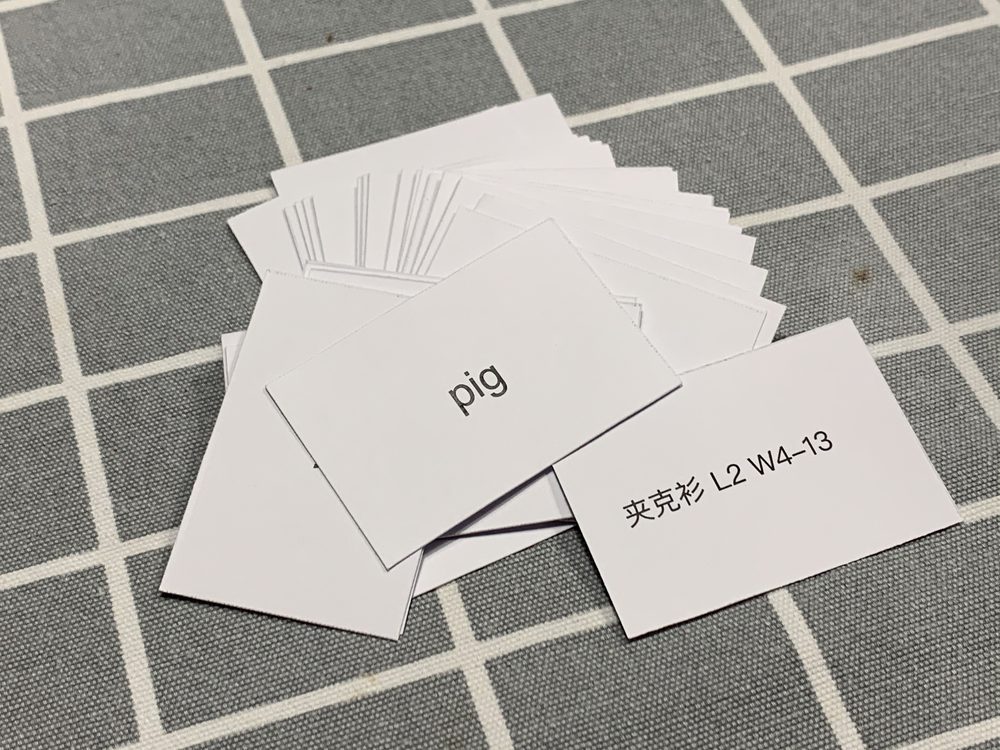
A basic flashcard deck is one of the most repetitive formats available for vocabulary study. Same layout, same interaction, word after word after word. For a lot of learners that repetition is tolerable. For ADHD learners it frequently is not, because attention regulation in ADHD is closely tied to novelty and reward, a relationship described in overviews from groups like the ADDitude community and clinical resources such as CHADD.
This does not mean flashcards are useless. It means a flat deck reviewed manually, with no variation and no external nudge to bring you back, is set up to be abandoned. The fix is rarely to force more discipline into the same format. It is to change the format, which is what the rest of this list is actually about.
Spaced repetition is not new. It is a scheduling system that shows you a word again right when you are about to forget it, rather than on an arbitrary fixed timetable. On its own it is powerful. Layered with variety, meaning audio, images, or a game world rather than a bare word list, it becomes far more sustainable specifically for ADHD learners, because the variety does the job of holding attention that willpower would otherwise have to do.
| Method | Retention | ADHD sustainability |
|---|---|---|
| Plain flashcard list, manual review | Good if used consistently | Low, high abandonment |
| Spaced repetition app, text only | Good | Moderate |
| Spaced repetition with audio and images | Strong | Good |
| Vocabulary embedded in a game world | Strong | Best for most ADHD users |
The bottom two rows share something important: the vocabulary is not the only thing happening on screen. There is sound, there is a visual, sometimes there is a small story or scene around the word. That extra layer is not decoration, it is what makes returning to the practice feel less like a chore.
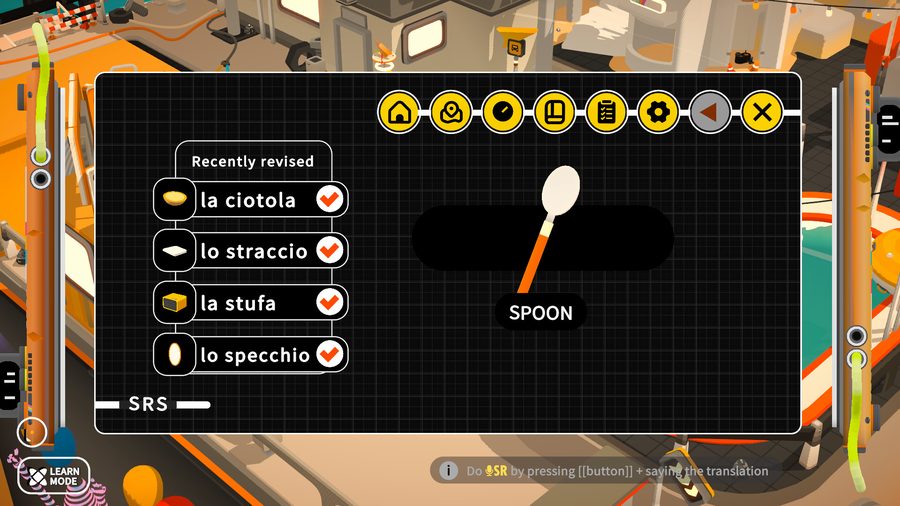
Screenshot from the Noun Town Steam store page, showing the spaced repetition review screen
One change that helps a lot of ADHD learners is simply shrinking the size of a single study session. Five to ten new words a day, rather than a weekly batch of fifty, keeps each individual sitting small enough that starting it does not feel like committing to something large and undefined.
This matters because task initiation, the ability to actually begin a task you already want to do, is one of the more consistently reported difficulties in ADHD. A large, vague task ("learn this week's vocabulary") is much easier to avoid than a small, specific one ("review the ten words from yesterday").
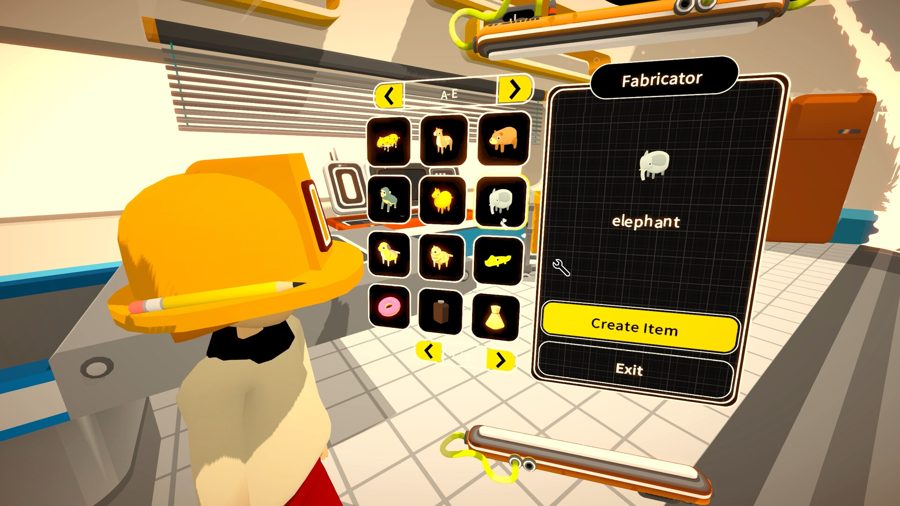
Screenshot from the Noun Town Steam store page, showing a single small vocabulary task rather than a long list
Vocabulary tied to a picture, a sound, or a situation is remembered better than the same word sitting alone on a card. This is not an ADHD-specific finding, it reflects general memory research on dual coding, the idea that combining verbal and visual information improves recall compared with either alone. But it happens to help ADHD learners twice over, because the extra sensory layer also supplies the novelty that keeps attention from drifting.
In Noun Town, words are attached to objects and characters in a 3D world rather than presented as an isolated list. You can see the approach directly on the language learning game page. A word for "market" is learned while standing in a market, spoken by a character in that market, rather than read off a card with no scene attached to it at all. That context is doing real memory work, not just making the app look nicer.
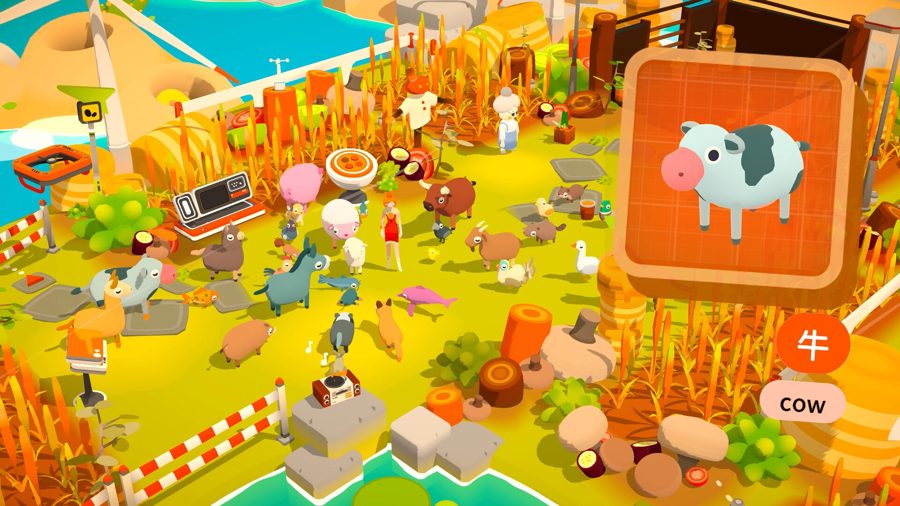
Screenshot from the Noun Town Steam store page, showing a word attached to a real scene rather than an isolated card
The single biggest predictor of whether a vocabulary habit survives past a month is not the technique, it is whether the format requires you to remember and decide to study each day, or whether it does some of that work for you.
That last point is one we take seriously in how Noun Town is built. There are no ads and nothing gets locked behind an extra paywall once you own the game, a decision made after the team found ad-supported and freemium mobile apps genuinely frustrating to use themselves, and after hearing the same frustration from thousands of learners during research.
A realistic week for a vocabulary-focused ADHD learner might involve short daily sessions of ten to fifteen minutes rather than one long weekend block. Some of that time might be gameplay, some might be passive listening to native audio, and the spaced repetition review happens automatically in the background rather than as a separate task to remember.
Across a month, this kind of scattered but consistent exposure tends to produce noticeably more total vocabulary contact than a stricter plan that looks better on paper but gets followed only half the time. One frequently cited figure from spaced repetition research suggests reviewing new material within about 24 hours can lift long-term retention dramatically compared with no review at all, which is the entire argument for frequent short contact over occasional long study blocks.
See what spaced repetition looks like when it is built into a game world. There is a free demo on Steam.
Try Noun Town on SteamThe most consistent approach is spaced repetition delivered through a format with built-in variety and short natural stopping points, rather than plain flashcard lists reviewed on a fixed schedule. The technique matters, but for ADHD learners the format it arrives in matters just as much, since a boring interface gets abandoned regardless of how good the underlying method is.
They can, but plain flashcard apps have a high abandonment rate among ADHD users specifically because the format offers little variation between reviews. Flashcards work better when paired with audio, images or a spaced repetition schedule than as a flat list reviewed manually.
Smaller daily batches, often five to ten new words, tend to be more sustainable than large weekly batches, because they reduce the size of each individual study task. A task that feels achievable in one sitting is far less likely to trigger avoidance than one that feels open-ended.
Novelty wears off, and once an app's format becomes predictable, ADHD brains lose the small dopamine hit that made opening it easy in the first place. This is less about the specific app and more about repetitive interfaces losing their pull over time for attention-regulation reasons.
Yes. Words learned attached to an image, a sentence, or a real situation tend to be retained better than the same words seen in isolation, because more of the brain is involved in encoding them. This applies broadly, but it is particularly useful for ADHD learners since context also adds the variety that keeps attention engaged.
Well designed language games teach real, transferable vocabulary, particularly when words are attached to native speaker audio and a spaced repetition system running underneath the gameplay. The entertainment is not a distraction from the learning, it is what gets someone to return often enough for the repetition to work.
Short, frequent bursts generally beat long infrequent sessions for ADHD learners, because long sessions are more likely to be skipped or abandoned partway through. Several ten to twenty minute sessions across a week tend to produce more actual review time than one planned hour that often does not happen.
Avoid tools that rely heavily on manual scheduling, guilt-based streak messaging, or paywalled tiers that interrupt a session partway through. Each of these adds friction at exactly the moment consistency is already fragile, which makes abandonment more likely rather than less.
Yes. Noun Town runs a spaced repetition system underneath the gameplay, resurfacing words shortly before you are likely to forget them, while the words themselves are learned in a 3D world with native speaker audio rather than as an isolated flashcard list.