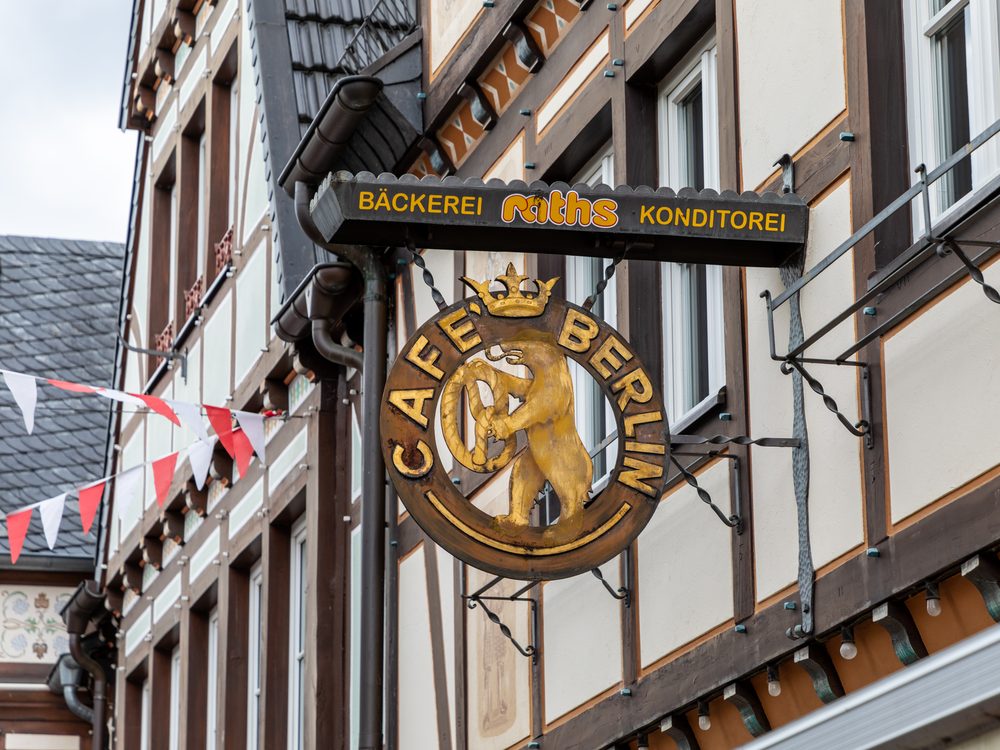
Photo: Tohma / Wikimedia Commons (CC BY-SA 4.0)
Short answer: Beginners build usable German vocabulary fastest with a core of roughly 500 to 1,000 high-frequency words, learned with the article attached (der, die or das) rather than as an afterthought, reviewed on a spaced repetition schedule and reinforced through real context. Long compound words are usually easier than they look once you learn to break them into their parts. Most beginners reach a functional vocabulary in two to three months of steady short sessions.
German has a reputation, not always deserved, for being intimidating. Long compound words and three grammatical genders scare people off before they've even started. But vocabulary is actually one of German's friendlier areas for English speakers, since both languages come from the same Germanic branch, and a lot of everyday words are closer to English than you'd expect.
This post covers the specific habits that make German vocabulary actually stick, not just the general "practice every day" advice you've probably already heard.
English is a Germanic language underneath its heavy French and Latin borrowing, and that shared ancestry shows up constantly in basic vocabulary. Haus and house. Wasser and water. Buch and book. Hand and hand. These aren't coincidences, they're cognates from a common linguistic root, and they give English speakers a genuine head start that learners of, say, Mandarin or Arabic simply don't have with German.
| German | English | Category |
|---|---|---|
| Haus | house | Everyday noun |
| Wasser | water | Everyday noun |
| Freund | friend | People |
| kommen | come | Verb |
| gut | good | Adjective |
The recognition isn't always perfect, spelling and pronunciation shift the words enough that you need to actually learn them, but the underlying familiarity makes the first few hundred words go faster than most beginners expect.
German is famous for compound nouns that look unmanageable at first glance, but almost all of them are built from smaller words you either already know or will learn early anyway. Once you get in the habit of breaking a long word apart instead of panicking at it, compounds actually become one of the easier parts of German vocabulary, because you're learning combinations of familiar pieces rather than entirely new words.
Practically, this means when you hit a long unfamiliar word, your first move should be scanning for smaller words inside it rather than reaching straight for a dictionary. It's a habit that gets faster with practice and turns German's most intimidating feature into a useful shortcut.
German nouns carry one of three genders, der (masculine), die (feminine) or das (neuter), and unlike French or Spanish, the assignment often has no obvious logical link to the word's meaning. Das Mädchen (the girl) is grammatically neuter, which trips up a lot of beginners looking for a pattern that isn't reliably there.
The fix isn't trying to reverse-engineer the logic, it's learning the article as glued to the noun from the very first time you meet it. Study "der Tisch," not "Tisch" with a gender rule applied afterward. This single habit shift, treating gender as spelling rather than grammar, is one of the highest-leverage changes a beginner can make.
A flashcard that just says "das Brot = bread" is a thin memory. A word met inside a sentence, tied to an image, or spoken aloud by a native speaker in a specific scene gets stored with more surrounding detail, and that extra detail is exactly what makes recall easier under pressure later.
This is a big part of why interactive tools have become a serious complement to textbook study. In Noun Town, German vocabulary is attached to objects and characters inside a 3D world you actually explore, with native speaker audio and speech recognition so you're producing the words, not just reading them. That kind of contextual repetition mirrors how vocabulary gets picked up naturally far more closely than a static list ever could.
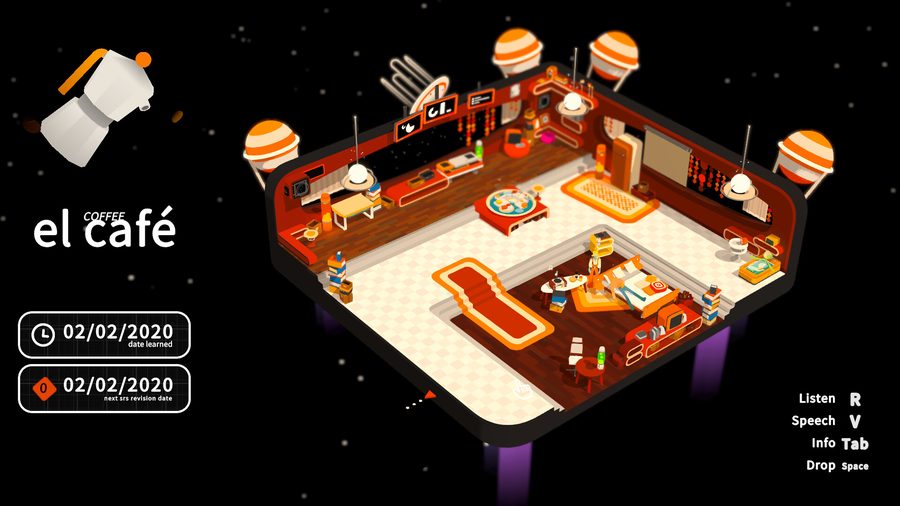
Screenshot from the Noun Town Steam store page
New vocabulary fades quickly without review. This is well documented by research into the forgetting curve, which shows most new information is lost within days unless it's revisited, with each successful recall pushing the next necessary review further into the future. Spaced repetition systems are built around exactly this pattern, resurfacing a word right before you're statistically likely to forget it.
Ten German words reviewed properly across two weeks beat fifty words seen once and abandoned. It's a less satisfying pace than blitzing through a vocabulary list, but it's what actually survives contact with a real conversation weeks later.
With consistent short daily sessions, most beginners reach a functional vocabulary of 500 to 800 German words within two to three months, enough for basic everyday conversation, though not enough yet for nuance or fast native speech. The U.S. Foreign Service Institute ranks German as somewhat more challenging than French for English speakers overall, mainly due to grammar rather than vocabulary, which is one more reason to get the vocabulary foundation solid early rather than rushing it.
The variable that actually predicts success isn't raw hours studied, it's consistency. Short daily sessions beat occasional long ones almost every time, because spaced repetition needs regular touchpoints to function properly.
Want to see German vocabulary taught this way in practice? There's a free demo on Steam.
Try Noun Town on SteamPair a core set of high-frequency words with spaced repetition and real context, rather than working through alphabetical lists. Learning nouns with their article attached, and reviewing words right before you would naturally forget them, builds retention much faster than rote memorisation.
Roughly 500 to 1,000 of the most frequent German words cover the bulk of everyday conversation. A relatively small set of core verbs, connectors and everyday nouns does most of the work in casual speech, which is why frequency-based learning outperforms random word lists.
German nouns are der (masculine), die (feminine) or das (neuter), and the assignment often has no logical connection to the object's meaning. It matters because getting the article wrong affects the rest of the sentence, so the most effective approach is learning the article as part of the word itself rather than as a separate fact to recall.
They look intimidating but are often easier than they appear, since most compound words are built from smaller words you likely already know. Handschuh (hand shoe) means glove, and Kühlschrank (cool cabinet) means fridge. Learning to break long words into their parts speeds up vocabulary building rather than slowing it down.
In some ways, yes. English and German are both Germanic languages, so many everyday words share obvious roots, such as Haus and house, or Wasser and water. This gives English speakers a real head start on core vocabulary compared to learning an unrelated language family.
Context generally produces stronger retention, since a word encountered in a sentence, image or spoken scene is stored with more surrounding detail than an isolated flashcard. Flashcards remain useful for quick review once a word is already somewhat familiar.
With consistent short daily sessions, most learners reach a functional vocabulary of 500 to 800 words within two to three months. Regular short exposure beats occasional long study sessions, because spaced repetition depends on frequent touchpoints.
Yes. Attaching vocabulary to objects, characters and native audio inside an explorable world gives words more context than a standard drill screen, and research into digital game-based learning generally shows better retention for vocabulary learned this way.
Yes, German is one of the twelve languages in Noun Town, taught through a 3D open world with native speaker audio, spaced repetition and speech recognition, available on PC and Mac via Steam.