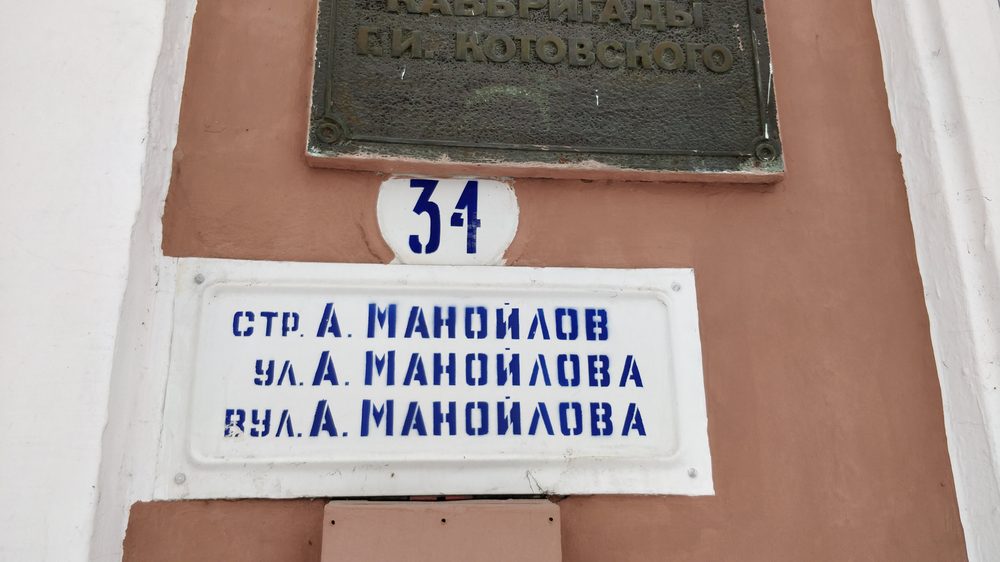
Photo: Jcornelius / Wikimedia Commons (CC BY-SA 4.0)
Short answer: Beginners build usable Russian vocabulary fastest by learning the 33-letter Cyrillic alphabet first, which typically takes only a few hours to a few days, then working through frequency-based word lists rather than random ones. Around 1,000 of the most common words cover roughly 90 percent of everyday spoken Russian, though comfortable daily conversation on varied topics usually needs 2,500 to 3,000. Learning each noun's grammatical case and each verb's aspect pair as part of the word itself, rather than as separate grammar to bolt on later, saves a lot of relearning down the line.
Russian has a reputation for being difficult, and vocabulary is part of where that reputation comes from, though not for the reason most people assume. The words themselves aren't unusually hard to pronounce. What trips beginners up is that Russian nouns change their ending depending on their role in a sentence, and verbs come in pairs depending on whether an action is finished or ongoing. That means learning a word in Russian often means learning several related forms, not just one static spelling.
This post covers what actually works for building that vocabulary as a beginner: how to approach the alphabet, which words to prioritise, how to handle case and verb aspect without it slowing you down, and how long it realistically takes.
Unlike French, German or Italian, Russian doesn't use the Latin alphabet, which can make it look far more intimidating than it actually is at the vocabulary stage. The Cyrillic script has 33 letters, and a good number of them map fairly directly onto sounds an English speaker already knows, with a smaller set of genuinely new shapes and sounds to learn.
Most learners who sit down and focus specifically on the alphabet, rather than picking it up incidentally while trying to learn words at the same time, can read basic Cyrillic within a few hours to a few days. Skipping this step and relying on romanised transliteration for too long tends to slow vocabulary building down later, since every word then has to be relearned in its actual script.
As with any language, a relatively small set of high-frequency words does most of the work in everyday Russian conversation. Frequency-based word list research puts the top 100 words at covering roughly half of everyday spoken Russian on their own, with the top 1,000 words covering around 90 percent.
| Word count | Rough coverage | What it gets you |
|---|---|---|
| 100 words | ~50% | Basic function words, greetings, core verbs |
| 1,000 words | ~90% | Following and joining most everyday conversation |
| 2,500 to 3,000 words | Comfortable daily use | Discussing a wider range of everyday topics with fewer gaps |
The jump from 1,000 to 3,000 words matters more than it looks on paper, since that range is usually where conversation stops feeling like translation and starts feeling closer to just talking. Prioritise common nouns, verbs and connectors well before specialised vocabulary.
Russian grammar uses six grammatical cases, nominative, genitive, dative, accusative, instrumental and prepositional, and a noun's ending changes depending on which one applies. This is genuinely one of the bigger adjustments for English speakers, since English barely marks case at all outside a few pronouns like "he" versus "him."
The practical takeaway for vocabulary building isn't to memorise all six case endings for every new word on day one, that's a recipe for burnout. It's to notice, early and often, that a word's dictionary form is only one of several shapes it will take, and to get comfortable seeing the same root word change its tail depending on context rather than being thrown by it.
| Case | Example (книга, "book") | Rough use |
|---|---|---|
| Nominative | книга | Subject of a sentence, the dictionary form |
| Genitive | книги | Possession, "of the book" |
| Accusative | книгу | Direct object, "I am reading a book" |
| Prepositional | книге | Location or topic, "about the book" |
Most Russian verbs exist in two related forms, one imperfective for an ongoing or repeated action, one perfective for a completed one, a distinction linguists call grammatical aspect. Читать means "to read" as an ongoing activity, while прочитать means "to finish reading" a specific thing.
Beginners don't need to internalise every subtlety of when to use which form immediately, that comes with exposure. What helps early is simply learning verbs as pairs from the start rather than encountering прочитать months later and wondering why it looks like a completely different word from читать. Treating them as a single vocabulary entry with two faces, rather than two separate words to memorise independently, saves real time later.
A flashcard reading "стол = table" works, but it's a thin memory, and it doesn't show you which case ending you'll actually need in conversation. A word encountered inside a sentence, attached to an image, or heard spoken by a native speaker in a specific situation, gets stored with far more surrounding detail, which is exactly the kind of detail that helps with a language where word endings shift depending on context.
This is part of why games and immersive tools have become a genuine complement to textbook study. In Noun Town, Russian words are attached to objects and characters inside an explorable 3D world rather than presented as an isolated list, with native speaker audio for every word and speech recognition so you're producing the sound, not just recognising the spelling. That contextual repetition mirrors how vocabulary tends to stick in the real world far more than a stack of index cards does.

Screenshot from the Noun Town Steam store page
New vocabulary decays quickly without review, and Russian's case and aspect system means there's often more surface area to forget per word than in a language with simpler noun and verb forms. Spaced repetition systems resurface a word right before you're statistically likely to forget it, rather than on a fixed daily schedule, and they remain one of the more reliably evidenced study techniques available.
Ten words reviewed properly across two weeks will almost always outperform fifty words seen once and never revisited. This matters even more in Russian, where "reviewing a word" ideally means reviewing it across a couple of its case forms too, not just its dictionary spelling.
The U.S. Foreign Service Institute classes Russian among its harder language categories, estimating roughly 1,100 class hours for a native English speaker to reach professional working proficiency, about four times longer than French or Spanish. That figure is for full professional fluency though, not a working beginner vocabulary, so it's not a reason to feel discouraged early on.
With consistent short daily sessions, most beginners can read basic Cyrillic within the first couple of weeks and reach a functional vocabulary of 500 to 800 words within two to three months, enough for simple conversations and everyday situations. Reaching the 2,500 to 3,000 word range for genuinely comfortable conversation is a longer project, typically closer to a year or more of steady practice, but the early progress tends to feel disproportionately rewarding given how unfamiliar the script looks on day one.
Want to see Russian vocabulary taught this way in practice? There's a free demo on Steam.
Try Noun Town on SteamThe fastest reliable method combines a fast start on the Cyrillic alphabet, which only takes a few hours for most learners since many letters map cleanly onto sounds, with spaced repetition and words learned in context rather than isolated lists.
Around 1,000 of the most frequent Russian words cover roughly 90 percent of everyday spoken conversation. For comfortable daily conversation on a wider range of topics, most learners aim for somewhere between 2,500 and 3,000 words.
Yes, and it is quicker than most beginners expect. The Cyrillic alphabet has 33 letters, many of which map directly onto familiar sounds, and most learners can read basic Cyrillic within a few hours to a few days of focused practice, well before they have built any real vocabulary.
Russian nouns change form depending on their grammatical role in a sentence, a system called case, and there are six of them. Learning a word means learning how it behaves across these cases, not just its dictionary form, so vocabulary and grammar are far more intertwined in Russian than in English.
Most Russian verbs come in pairs, one perfective and one imperfective, describing whether an action is completed or ongoing. Beginners do not need to master every nuance immediately, but learning the pair together from the start, rather than as two unrelated words, saves confusion later.
Yes. Russian stress can fall on different syllables in related word forms and is not always predictable from spelling, and it also affects how unstressed vowels are pronounced. Learning a word's stress alongside its spelling from the beginning avoids having to relearn pronunciation later.
Yes. Games that attach words to objects, characters and native audio inside an explorable world give vocabulary more context than a typical drill screen, and research into digital game-based learning generally shows better retention for words learned this way compared with isolated memorisation.
Yes, Russian is one of the twelve languages included in Noun Town, taught through a 3D open world with native speaker audio, spaced repetition and speech recognition, playable on PC and Mac via Steam.