
Photo: Wikimedia Commons (CC0)
Short answer: The best gifts for language learners fall into a handful of categories: a game or app that suits their level and platform, a bilingual dictionary or grammar reference, native-language books or media, flashcard tools, or a session with a tutor. Good gifts here range from under 15 dollars for a phrasebook to around 20 dollars for a one-time purchase game, up to 70 to 150 dollars a year for a full subscription app. The right pick depends far more on how they like to study than on how much you spend.
Buying a gift for someone learning a language is trickier than it looks. People assume any dictionary or app will do, but learners are picky in ways that are not always obvious from the outside. Someone deep into Korean grammar drills does not necessarily want a beginner phrasebook, and someone who has bounced off three different apps probably does not want a fourth one wrapped up under a bow.
Below are twelve gift ideas grouped by what kind of learner they suit, with rough prices so you can match something to your budget.
If the person already enjoys gaming on PC or Mac, a language learning game solves two problems at once: they get something fun to play, and they build vocabulary without it feeling like a study session. Noun Town is one option here, a 3D world where you pick up words from native speaker audio and spaced repetition as you explore, covering 12 languages including Japanese, Korean, Spanish, French and German. It is a one-time purchase of 19.99 dollars on Steam, with a free demo, no ads, and nothing locked behind a further paywall once purchased.
This category suits people who have tried an app before and found it repetitive, or anyone who spends more hours gaming each week than reading.
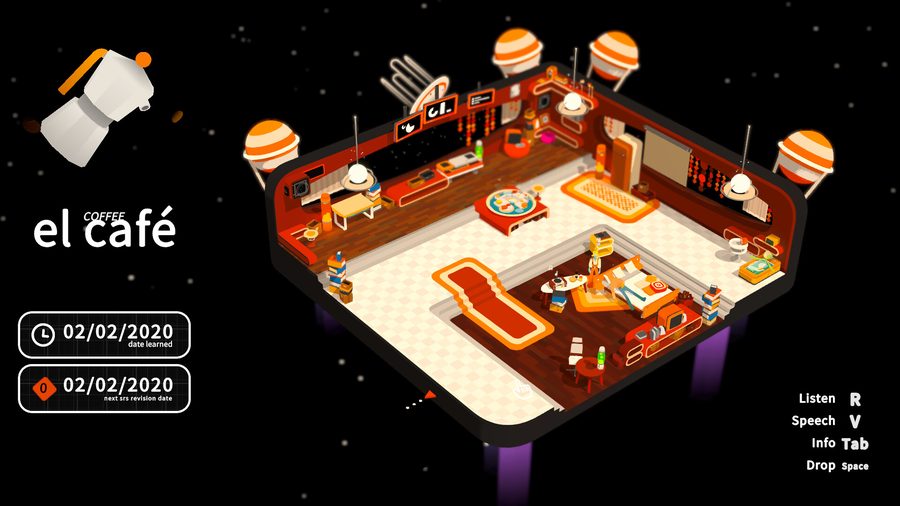
Screenshot from the Noun Town Steam store page
Unglamorous but genuinely useful, especially for beginners. A good bilingual dictionary specific to their language and level is something most learners reach for constantly, and it rarely goes unused the way a random app subscription sometimes does. Prices usually sit between 10 and 25 dollars depending on the publisher and language.
For someone past the beginner stage, a solid grammar reference is often more welcome than another vocabulary tool. Look for titles specific to their language rather than generic guides, and check recent reviews since editions vary widely in quality. Expect to pay 15 to 40 dollars.
Graded readers, which are books written specifically for learners at a certain proficiency level, are a strong gift for intermediate learners who want real content without being overwhelmed. For advanced learners, an actual novel or short story collection in their target language works well. Getting the level right matters more than the title, so if you are unsure, a graded reader subscription that adjusts to their level is a safer bet than picking a single book yourself.
If they are already using a free tier of an app and mentioning the paywall, gifting a year of the paid version is a reliable choice because you know they already like the format. This is a weaker gift for someone who has never tried the app, since you cannot know in advance whether they will enjoy it. Annual subscriptions for popular apps typically run 70 to 150 dollars.
Physical flashcard sets or a subscription to a spaced repetition tool suit methodical learners who like tracking their own progress. These tend to be cheaper gifts, often under 20 dollars, and work well as a stocking filler alongside something bigger.
For learners who are serious and want conversation practice, a block of sessions with an online tutor can be one of the most valuable gifts available, since speaking practice is the hardest thing to get from books or apps alone. Prices vary enormously by language and tutor experience, from roughly 10 dollars a session up to 40 or more.
A subscription to a streaming service with strong content in their target language, or a foreign news outlet, gives learners real listening practice outside of formal study. This works especially well for intermediate to advanced learners who are ready to consume authentic content rather than learner materials.
| Gift | Typical price | Best for |
|---|---|---|
| Flashcard deck or phrasebook | $10 - $20 | Beginners, stocking fillers |
| Noun Town on Steam | $19.99 One-time | Gamers learning any of 12 languages |
| Grammar reference book | $15 - $40 | Intermediate to advanced learners |
| Graded reader subscription | $8 - $15/month | Intermediate learners wanting real content |
| Tutor session block | $40 - $200 | Learners wanting conversation practice |
| Full app subscription | $70 - $150/year | Existing free-tier users |
Buying for a gamer who is also learning a language? There is a free demo on Steam so they can try before you commit.
Try Noun Town on SteamIt depends on how far along they are, but reliable choices include a well-reviewed grammar book for their specific language, a bilingual dictionary, a language learning game or app subscription, or a subscription to a graded reader service. For beginners, something visual and low pressure tends to land better than a dense textbook.
Good gifts exist at every price point. A bilingual dictionary or phrasebook can cost under 15 dollars, a one-time purchase language game like Noun Town is 19.99 dollars, and a full year of a subscription app can run 70 to 150 dollars. There is no minimum spend required to give something genuinely useful.
A paid subscription can be a good gift if the person is already using the free tier and would benefit from the extra features. It is a weaker gift if they have never tried the app, since you cannot know whether they will actually enjoy the format.
Avoid generic phrasebooks for languages they are not actually studying, joke or novelty items that do not teach anything useful, and expensive courses without checking their refund policy first. Also be cautious with subscriptions, since committing someone to a recurring cost on their behalf can feel like an obligation rather than a gift.
Beginners generally do best with something low pressure and visual: a picture dictionary, a language learning game, flashcard sets, or a subscription to a graded reader app. Dense grammar reference books tend to be more useful once someone already has a base of vocabulary.
Advanced learners often appreciate native-language novels, subscriptions to foreign news outlets or streaming services in that language, tickets to a film in the original language, or a session with an online tutor. At this stage, real content in the target language usually beats another learning tool.
Yes. A game like Noun Town combines something the person already enjoys, playing on PC or Mac, with the language practice they are trying to fit into their routine. It works well as a gift specifically because it does not feel like homework.
It suits anyone learning Japanese, Korean, Mandarin, Spanish, French, German, Italian, Russian, Greek, Egyptian Arabic or English who also enjoys gaming. It is a one-time purchase of 19.99 dollars on Steam for PC and Mac, with no ads and nothing paywalled after purchase, and there is a free demo if you want them to try it before you buy the full game.
Yes. Steam has a built in gifting feature. You buy the game on the store page, choose to send it as a gift, and enter the recipient's Steam friend details or email. They receive a notification and can accept it into their own library.
A kanji study tool like WaniKani suits learners focused specifically on reading, while a language learning game such as Noun Town suits learners who want vocabulary and listening practice in a more relaxed format. Many Japanese learners use both at different stages.