
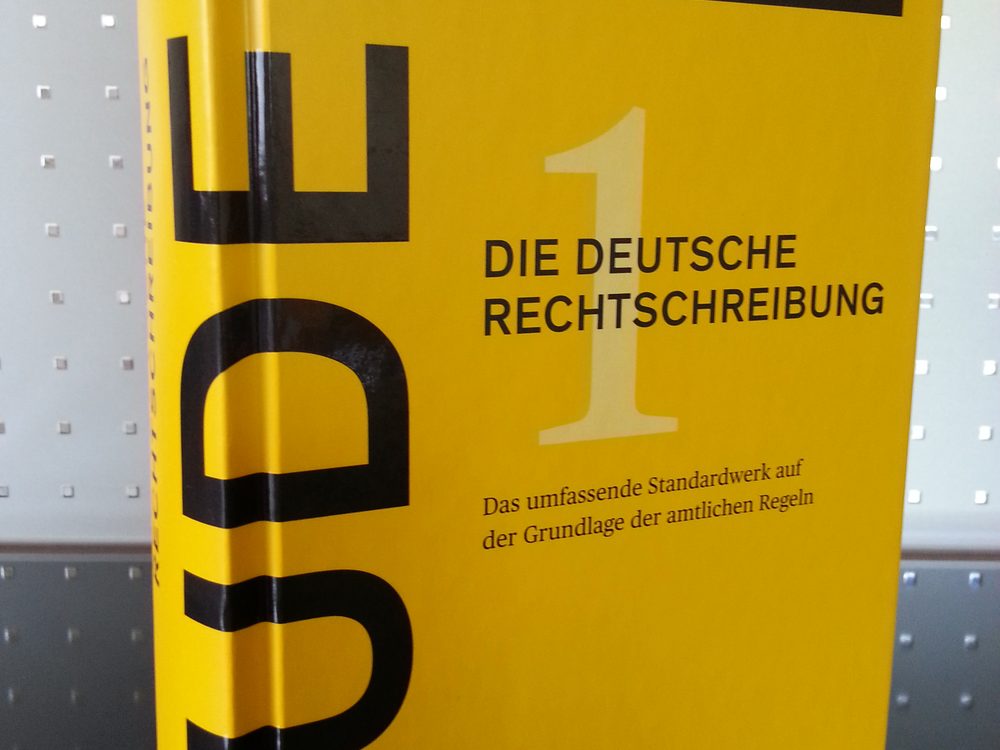
Photo: Kalligraf / Wikimedia Commons (CC BY-SA 4.0)
Every German noun takes one of three genders: der (masculine), die (feminine) or das (neuter), and unlike Spanish or French, there's a genuine third option to get wrong. Learners are often told the whole system is arbitrary and simply has to be memorised word by word. That's an exaggeration. Linguists have catalogued dozens of ending and category based rules that correctly predict the gender of a large share of everyday German nouns, and knowing them turns a hopeless guessing game into an educated one.
Short answer: German has three genders, not two. Endings like -ung, -heit and -schaft are reliably feminine, -chen and -lein are always neuter, and -er often marks masculine agent nouns. Compound words take the gender of their last component. A genuine minority of nouns still need to be memorised individually, but far fewer than the "it's all random" reputation suggests.
Spanish and French learners only have to choose between masculine and feminine. German adds a third option, das, which means every noun decision has three possible outcomes instead of two. That alone makes German gender feel harder even before you get into the actual rules, simply because there's more to hold in your head at once.
It also means the intuitions that work for other European languages don't transfer. A word that "feels" feminine in French might be das in German, and there's rarely a way to predict which of the three categories a completely new word will land in just from its meaning. Der Mond (the moon) is masculine in German but feminine in French and Spanish, which is a small but genuinely confusing example of how little the genders line up across languages.
The result is a language that has picked up a reputation for having completely random noun gender. That reputation isn't entirely fair, and the myths below are worth taking apart one at a time.
There's no way to guess German gender, you just have to memorise every single noun on its own.
RealityDozens of documented ending and category rules cover a large share of common nouns. The truly unpredictable remainder is smaller than most learners assume, it's just rarely taught as a structured set of rules in beginner courses.
If a word ends in -e, it's feminine.
RealityUsually true (die Blume, die Sprache, die Katze) but there are well known exceptions, including der Junge (boy) and der Käse (cheese). Treat -e as a strong hint, not a guarantee.
Male and female versions of a job title are the same word with a different article swapped in front.
RealityGerman usually marks the feminine form with the suffix -in, changing the word itself, not just the article. Der Lehrer (male teacher) becomes die Lehrerin (female teacher), and this -in pattern is one of the most dependable rules in the whole language.
Every English loanword automatically becomes das in German.
RealityNeuter is the common default for new loanwords, giving you das Handy, das Internet and das Meeting, but it isn't universal. Der Computer, die App and der Laptop all break that default, so recently borrowed words still need to be checked individually.
Once the myths are cleared up, the actual rules are straightforward to apply. Here are the endings worth knowing first, roughly in order of how reliable they are.
| Ending | Usual gender | Examples |
|---|---|---|
| -chen, -lein | das (neuter) | das Mädchen, das Fräulein |
| -ung, -heit, -keit, -schaft | die (feminine) | die Zeitung, die Freiheit, die Möglichkeit, die Freundschaft |
| -tät, -ion | die (feminine) | die Universität, die Nation |
| -er (people, agents) | der (masculine) | der Lehrer, der Bäcker, der Fahrer |
| -ismus | der (masculine) | der Kapitalismus, der Optimismus |
| infinitive used as a noun | das (neuter) | das Lesen, das Schwimmen, das Essen |
None of these are exceptionless, German grammar rarely offers a rule without at least a few holdouts, but each one is reliable enough to use as a first guess before falling back on memory. The -chen and -lein diminutive rule in particular has no known exceptions at all, which makes it worth learning first.
German is famous for building long words by sticking shorter ones together, and the good news is that gender doesn't get more complicated as the word gets longer. A compound noun always takes the gender of its final component, no matter how many words are stacked in front of it.
Das Schlafzimmer (bedroom) is neuter because das Zimmer (room) is neuter, regardless of Schlaf- attached to the front. Die Fußballmannschaft (football team) is feminine because die Mannschaft (team) is feminine, even though der Fußball (football) on its own is masculine. Once you know the gender of the final piece, you know the gender of the whole word, however long it gets.
This rule alone removes a huge amount of the anxiety around long German words. A term like Geschwindigkeitsbegrenzung (speed limit) looks intimidating, but it ends in -ung, so it's feminine, full stop. You don't need to parse every piece to get the article right.

Screenshot from the Noun Town Steam store page, showing a timed recall challenge similar to guessing a noun's gender under pressure
When you hit an unfamiliar noun mid conversation, running through a fixed order beats trying to recall a long list of exceptions from scratch.
Working through this order doesn't make you immune to mistakes, German speakers themselves occasionally disagree on rarer or newer words, but it shrinks the pool of nouns you're relying on pure memory for down to a manageable size.
Getting an article wrong in German rarely breaks communication. Say "der Buch" instead of "das Buch" and a German speaker will still understand you're talking about a book. The risk is the same one that shows up in Spanish and every other gendered language: an error that doesn't get corrected by confusion can sit in your speech unnoticed for a long time.
According to research summarised by the Institut für Deutsche Sprache, Germany's federally funded institute for German language research, gender assignment in German is governed by a genuine mix of phonological, morphological and semantic rules rather than being purely arbitrary, even though the full system is more complex than any single blog post can cover. The grammatical gender article on Wikipedia has a useful overview of how this compares across other languages, including languages that dropped gender entirely, like English.
Learning nouns inside a 3D scene with the article attached from the first exposure, rather than adding gender on as an afterthought, tends to avoid this problem before it starts. The Goethe-Institut, Germany's official cultural and language institute, also publishes free themed vocabulary resources that pair the article with every noun by default, which is worth following as a habit no matter what you're learning from.
Want to learn German nouns with der, die or das attached from the very first time you see them?
Try Noun Town on SteamThree: masculine (der), feminine (die) and neuter (das). This is one more than Spanish, French or Italian, which only have masculine and feminine, and it is part of why German gender has a reputation for being harder to learn.
Not entirely. Dozens of ending and category based rules, covering things like -ung, -chen, -er and -ismus, correctly predict the gender of a large share of everyday nouns. A genuine minority of nouns still have to be memorised individually, but it is smaller than the language's reputation suggests.
A compound noun always takes the gender of its final component, regardless of how long the word is or how many pieces it is built from. Das Schlafzimmer takes its gender from das Zimmer (room), and die Fußballmannschaft takes its gender from die Mannschaft (team).
Usually, but not always. Many English loanwords default to neuter, such as das Handy, das Internet and das Meeting. Others do not follow that default, including der Computer, die App and der Laptop, so loanwords still need to be learned individually rather than assumed to be das.
Nouns ending in -heit, -keit, -schaft, -ung, -tät and -ion are almost always feminine, such as die Freiheit, die Freundschaft, die Zeitung and die Nation. These endings are considered some of the most dependable gender rules in the language.
Diminutive endings -chen and -lein are always neuter, such as das Mädchen and das Fräulein, even when the underlying word would otherwise be a different gender. Nouns made from an infinitive verb, like das Lesen (reading) or das Schwimmen (swimming), are also always neuter.
Yes. German is one of the 12 languages in Noun Town, and every noun is introduced with der, die or das attached inside a 3D scene, alongside native speaker audio, so the article is learned as part of the word rather than as a separate grammar rule.
The core ending based rules can be learned within a few weeks of focused practice. The FSI classifies German as a Category II language, estimating around 750 classroom hours for professional working proficiency overall, and comfortable, largely error free gender use tends to develop somewhere within that timeline through repeated exposure.
Most native speakers absorb gender through years of hearing nouns paired with their article rather than studying rules explicitly, the same way English speakers rarely think about why an adjective goes before a noun. Ask a German speaker to explain a rule and they will often get the right answer by instinct without being able to state the pattern.