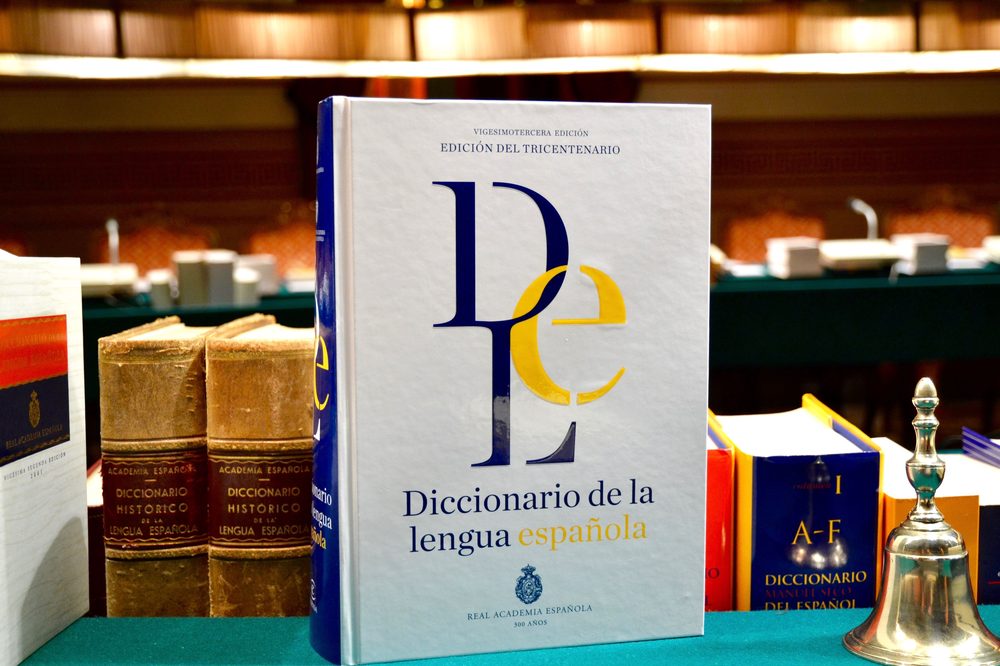
Photo: Real Academia Española / Wikimedia Commons (CC BY-SA 4.0)
Every Spanish noun is either masculine or feminine, and that single choice decides whether you say el or la, un or una, and how any adjective attached to the noun has to be spelled. There is no neuter option and no way to skip it. The good news is that the ending of a word predicts its gender correctly in the large majority of everyday cases, which means the "which article" question has a real answer rather than being pure memorisation.
Short answer: Nouns ending in -o are almost always masculine (el libro) and nouns ending in -a are almost always feminine (la casa). A short list of common exceptions, such as la mano and el día, breaks that pattern, and several other endings like -ción and -miento predict gender reliably even when a word doesn't end in -o or -a.
Spanish has kept the two way gender system that most Romance languages inherited from Latin. Every noun, not just words for people and animals, is classified as masculine or feminine, and that classification isn't optional decoration. It changes the article in front of the word, and it usually changes the ending of any adjective describing it too.
This trips up English speaking learners because English abandoned grammatical gender for objects a very long time ago. A table isn't masculine or feminine in English, it's just "the table." In Spanish, la mesa carries a gender the same way a person does, and there's no getting around it once you start forming full sentences.
The practical upshot is that gender has to be learned at the same time as the word itself, not bolted on afterwards. Learning "mesa means table" and then trying to work out la mesa or el mesa later is much harder than learning "la mesa" as one unbreakable unit from the start.
Spanish gender looks unpredictable until you notice that a handful of endings do almost all of the work. These six patterns cover a large share of the nouns you'll actually run into day to day.
1.Ends in -o → masculine. El libro (book), el zapato (shoe), el teléfono (phone). This is the most reliable ending in the language.
2.Ends in -a → feminine. La casa (house), la mesa (table), la ventana (window). Also very reliable, with a known set of exceptions covered below.
3.Ends in -ción or -sión → feminine. La nación (nation), la decisión (decision), la televisión (television). Almost no exceptions.
4.Ends in -dad, -tad or -tud → feminine. La ciudad (city), la libertad (freedom), la actitud (attitude).
5.Ends in -miento → masculine. El pensamiento (thought), el movimiento (movement), el conocimiento (knowledge).
6.Category overrides ending. Days of the week, months, colours, languages, numbers and points of the compass are all masculine, regardless of how they end: el lunes, el español, el rojo, el norte.
None of these rules require a linguistics background to use. Most native speakers couldn't recite them explicitly either, they just absorbed the pattern through thousands of hours of hearing words paired with their article. Learning the pattern directly is a shortcut through that process.
Every rule above has a short list of exceptions attached to it, and the -o and -a rule has the most famous ones. These are common enough that they're worth learning by name rather than relying on the general pattern.
Feminine words that end in -o:
Masculine words that end in -a:
Notice how many of the -a exceptions share something in common. El problema, el tema, el sistema, el clima, el idioma and el planeta all came into Spanish from Ancient Greek, where the ending was already grammatically neuter or masculine rather than feminine. Spanish borrowed the word and kept the gender that came with it, which is why this whole cluster breaks the usual -a pattern in the same direction.
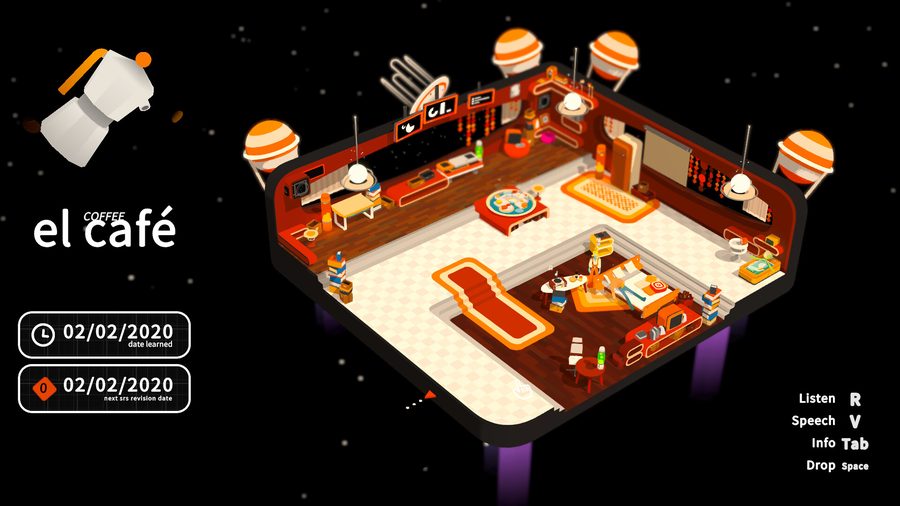
Screenshot from the Noun Town Steam store page, showing a Spanish vocabulary scene where the article is learned with the word from the start
When you're mid conversation and unsure of a word's gender, running through a fixed sequence is faster than trying to remember a long list. Here's the order most learners find works best.
Step 1: Check the ending. Does it end in -o, -a, -ción, -dad or -miento? If so, you likely already have the answer from the rules above.
Step 2: Check whether it's on the exception list. A small, fixed set of common words breaks the -o/-a pattern. If the word is one of them, use the exception rather than the general rule.
Step 3: Check the category. If the word doesn't fit an ending rule, ask whether it belongs to a fixed masculine category, a day, a colour, a language, a number, before guessing at random.
This isn't a perfect system. The Real Academia Española, Spain's official language authority, documents a genuine minority of nouns that simply have to be memorised on their own, with no reliable pattern attached. But running the three step check first means you're only relying on raw memory for a small remainder, not the whole vocabulary.
A gender mistake rarely stops a Spanish speaker from understanding you. Say "el mesa" instead of "la mesa" and most people will know exactly what you meant. But that's also exactly why the mistake is dangerous: because it doesn't get corrected by confusion, it can sit unnoticed in your speech for years.
The deeper problem is that gender mistakes compound. Once you've memorised a noun without its correct article, every adjective you attach to it afterwards inherits the error too. Fixing "la problema" after months of repetition is much harder than learning "el problema" correctly on day one, because by then the wrong version has had time to become automatic.
Learning nouns inside a spatial, contextual scene rather than from a plain translated word list helps here, because the article is presented as part of the object every single time you see it, not as a separate grammar fact to apply after the fact. According to the Common European Framework of Reference for Languages, accurate use of grammatical gender is one of the markers that separates lower and higher proficiency levels in Spanish, so it's worth the extra attention early rather than treating it as a detail to clean up later.
Resources like the Instituto Cervantes, Spain's official institute for teaching and promoting the Spanish language internationally, publish free grammar guides that go into more depth on gender than any single blog post can, and they're worth bookmarking once you've got the core patterns above down.
Want to learn Spanish nouns with the right article attached from the very first time you see them?
Try Noun Town on SteamTwo: masculine and feminine. Every Spanish noun is one or the other, and the article (el, la, un, una) along with any adjectives attached to it has to agree with that gender.
No. English mostly lost grammatical gender centuries ago, aside from pronouns like he, she and it. In Spanish, gender is a required grammatical feature of every noun, not just people and animals, so a table (la mesa) and a book (el libro) each carry a gender with no connection to their real world meaning.
La mano (hand), la foto (photo), la moto (motorbike) and la radio in most dialects are feminine despite ending in -o. El día (day), el mapa (map), el problema (problem) and el sofá (sofa) are masculine despite ending in -a. There are fewer than twenty of these in everyday use, so they are worth memorising as a fixed list.
Most of them, like el problema, el tema, el sistema, el clima, el idioma and el planeta, come from Ancient Greek, where the equivalent ending was already grammatically neuter or masculine. Spanish borrowed the word and the gender at the same time, which is why they break the usual -a pattern.
Yes. Most Spanish adjectives change their ending to match the gender and number of the noun they describe, so el libro rojo (the red book) becomes la mesa roja (the red table). This is one of the main practical reasons gender needs to be learned alongside every noun rather than added on later.
Endings are still useful. Words ending in -ción, -sión, -dad, -tad or -tud are almost always feminine, such as la nación and la ciudad. Words ending in -miento or -aje are almost always masculine, such as el pensamiento and el viaje. Categories help too: days of the week, months, colours, languages and numbers are all masculine.
Yes. Spanish is one of the 12 languages in Noun Town, and every noun is introduced with its article attached inside a 3D scene, alongside native speaker audio, so the gender is learned as part of the word from the very first time you see it.
Most learners pick up the core endings based patterns within a few weeks of regular exposure, since a small number of rules cover the majority of common nouns. Full native level intuition on rarer exception words tends to build gradually over months of reading and listening.